Talamonti Giuseppe, Picano Marco, Fragale Maria, Marcati Eleonora, Meccariello Giulia, Boeris Davide, Cenzato Marco
Department of Neurosurgery, ASST Niguarda, 20162 Milan, Italy.
La Sapienza, University of Rome, 00185 Rome, Italy.
J Clin Med. 2023 Apr 13;12(8):2853. doi: 10.3390/jcm12082853.
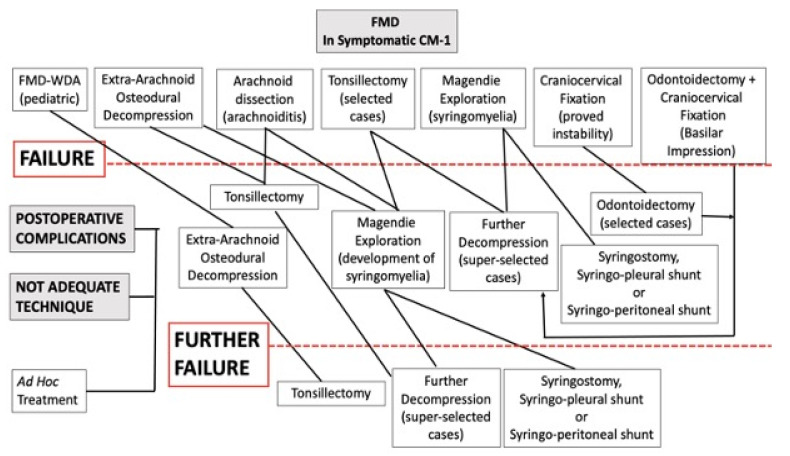
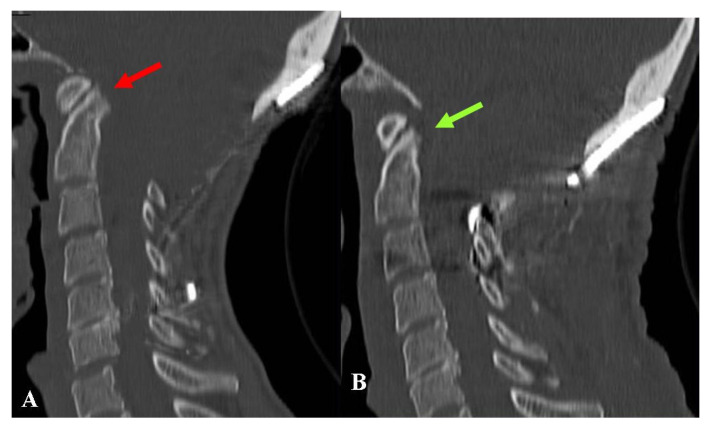
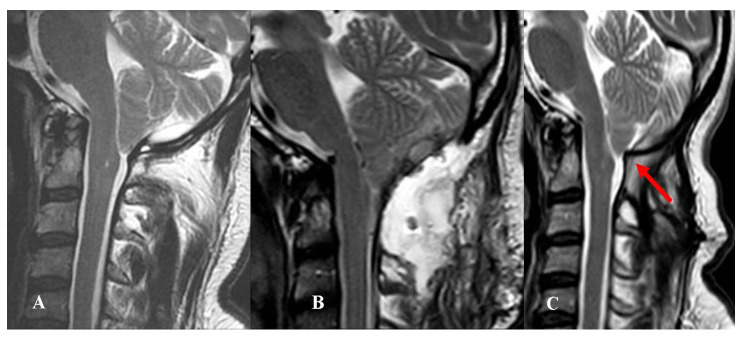
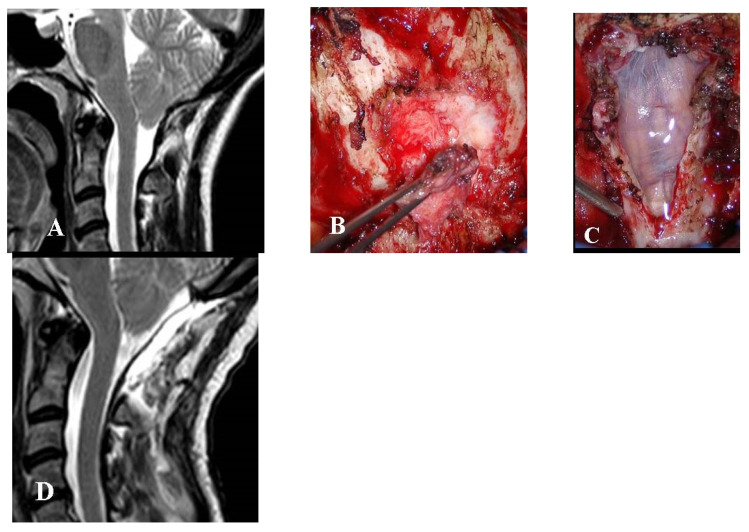
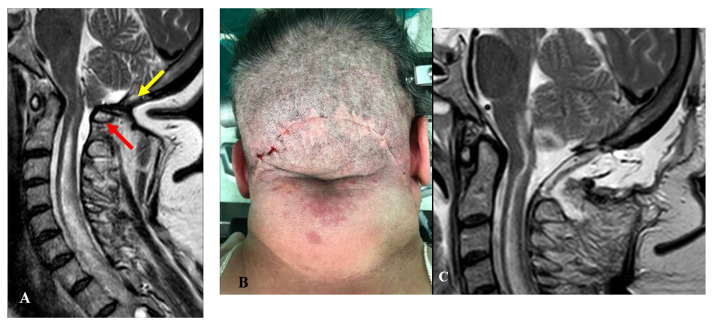
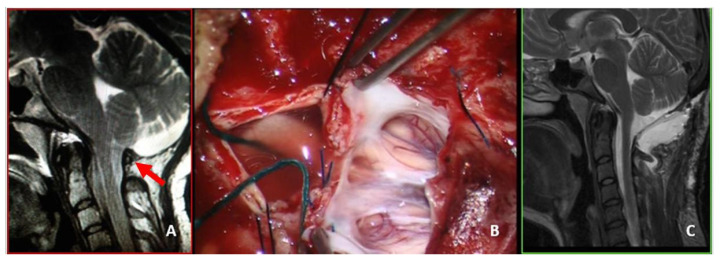
(1) Background: The issue of unsuccessful surgery for Chiari-1 malformation (CM-1), as well as its potential causes and possible solutions, remains poorly documented and studied. (2) Methods: From a retrospective review of a personal series of 98 patients undergoing treatment for CM-1 during the past 10 years, we created two study groups. Group 1: 8 patients (8.1%) requiring additional surgeries owing to postoperative complications (7 cerebrospinal fluid leakage, 1 extradural hematoma); 7 patients (7.1%) undergoing reoperations for failed decompression during the follow-up. Group 2: During the same period, we also managed 19 patients who had previously been operated on elsewhere: 8 patients who required adequate CM-1 treatment following extradural section of the filum terminale; 11 patients requiring reoperations for failed decompression. Failed decompression was managed by adequate osteodural decompression, which was associated with tonsillectomy (6 cases), subarachnoid exploration (8 cases), graft substitution (6 cases), and occipito-cervical fixation/revision (1 case). (3) Results: There was no mortality or surgical morbidity in Group 1. However, one patient's condition worsened due to untreatable syrinx. In Group 2, there were two cases of mortality, and surgical morbidity was represented by functional limitation and pain in the patient who needed revision of the occipitocervical fixation. Twenty patients improved (58.8%), 6 remained unchanged (32.3%), 1 worsened (2.9%) and 2 died (5.9%). (4) Conclusions: The rate of complications remains high in CM-1 treatment. Unfortunately, a certain rate of treatment failure is unavoidable, but it appears that a significant number of re-operations could have been avoided using proper indications and careful technique.
(1) 背景:Chiari-1 畸形(CM-1)手术失败的问题及其潜在原因和可能的解决方法,目前仍缺乏充分的文献记载和研究。(2) 方法:通过回顾性分析过去 10 年中接受 CM-1 治疗的 98 例患者的个人病例系列,我们创建了两个研究组。第 1 组:8 例患者(8.1%)因术后并发症(7 例脑脊液漏,1 例硬膜外血肿)需要再次手术;7 例患者(7.1%)在随访期间因减压失败而接受再次手术。第 2 组:在同一时期,我们还处理了 19 例先前在其他地方接受过手术的患者:8 例在终丝硬膜外切断术后需要进行充分的 CM-1 治疗的患者;11 例因减压失败需要再次手术的患者。减压失败通过充分的骨膜减压处理,同时进行扁桃体切除术(6 例)、蛛网膜下腔探查(8 例)、移植物置换(6 例)和枕颈固定/翻修(1 例)。(3) 结果:第 1 组无死亡或手术并发症。然而,有 1 例患者因无法治疗的脊髓空洞症病情恶化。在第 2 组中,有 2 例死亡,手术并发症表现为需要翻修枕颈固定的患者出现功能受限和疼痛。20 例患者病情改善(58.8%),6 例无变化(32.3%),1 例恶化(2.9%),2 例死亡(5.9%)。(4) 结论:CM-1 治疗中的并发症发生率仍然很高。不幸的是,一定比例的治疗失败是不可避免的,但似乎通过适当的适应症和仔细的技术操作,可以避免大量的再次手术。