Bartolucci Maria Lavinia, Incerti Parenti Serena, Bortolotti Francesco, Della Godenza Veronica, Vandi Stefano, Pizza Fabio, Plazzi Giuseppe, Alessandri-Bonetti Giulio
Department of Biomedical and Neuromotor Sciences, University of Bologna, 40125 Bologna, Italy.
IRCCS Istituto delle Scienze Neurologiche di Bologna, 40139 Bologna, Italy.
J Clin Med. 2023 Apr 20;12(8):2997. doi: 10.3390/jcm12082997.
The gold standard for the diagnosis of sleep bruxism (SB) is laboratory polysomnography (L-PSG) recording. However, many clinicians still define SB using patients' self-assessment and/or clinical tooth wear (TW). The purpose of this cross-sectional controlled study was to compare the prevalence of TW, head-neck muscles sensitivity and Temporomandibular Disorders (TMD) between SB and non-SB patients diagnosed with L-PSG in a cohort of patient with sleep disorders (SD).
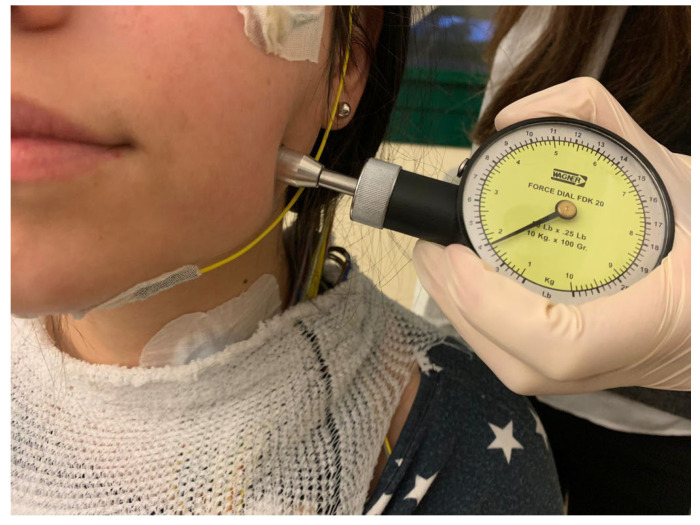
102 adult subjects with suspected SD underwent L-PSG recording to assess the presence of sleep disorder and SB. TW was clinically analyzed using TWES 2.0. The pressure pain threshold (PPT) of masticatory muscles were assessed using a Fisher algometer. Diagnostic criteria for TMD (DC/TMD) were used to evaluate the presence of TMD. SB self-assessment questionnaires were administered. TWES score, PPT, TMD prevalence and questionnaire results were compared between SB and non-SB patients.
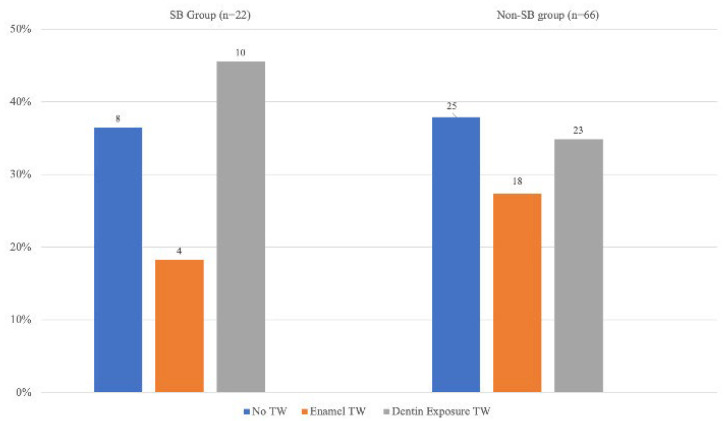
22 SB patients and 66 non-SB patients with SD were included. No significant differences emerged between groups in regards to TW, the PPT values, or SB's self-assessment questionnaires as well the prevalence of TMD.
in a SD population, TW is not pathognomonic of active SB and SB self-assessment is not reliable. There seems to be no correlation between SB, TMD and head/neck muscle sensitivity.
睡眠磨牙症(SB)诊断的金标准是实验室多导睡眠图(L-PSG)记录。然而,许多临床医生仍通过患者自我评估和/或临床牙齿磨损(TW)来定义SB。这项横断面对照研究的目的是比较睡眠障碍(SD)患者队列中,经L-PSG诊断的SB患者和非SB患者之间TW、头颈肌肉敏感性和颞下颌关节紊乱病(TMD)的患病率。
102名疑似SD的成年受试者接受L-PSG记录,以评估睡眠障碍和SB的存在情况。使用TWES 2.0对TW进行临床分析。使用Fisher痛觉计评估咀嚼肌的压痛阈(PPT)。采用TMD诊断标准(DC/TMD)评估TMD的存在情况。发放SB自我评估问卷。比较SB患者和非SB患者之间的TWES评分、PPT、TMD患病率和问卷结果。
纳入22名患有SD的SB患者和66名非SB患者。两组在TW、PPT值、SB自我评估问卷以及TMD患病率方面均未出现显著差异。
在SD人群中,TW并非活动性SB的特征性表现,且SB自我评估不可靠。SB、TMD与头/颈肌肉敏感性之间似乎不存在相关性。