Department of Cardiology, University of Medicine and Pharmacy "Carol Davila", 050474 Bucharest, Romania.
"Theodor Burghele" Clinical Hospital, 050653 Bucharest, Romania.
Medicina (Kaunas). 2023 Apr 10;59(4):742. doi: 10.3390/medicina59040742.
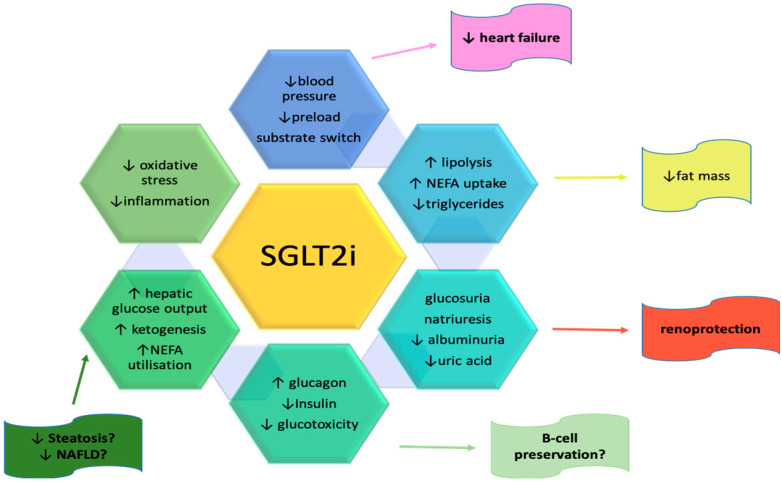
There is a need for innovative pharmaceutical intervention in light of the increasing prevalence of metabolic disease and cardiovascular disease. The kidneys' sodium-glucose cotransporter 2 inhibitors (SGLT2) receptors are targeted to reduce glucose reabsorption by SGLT2. Patients with type 2 diabetes mellitus (T2DM) benefit the most from reduced blood glucose levels, although this is just one of the numerous physiological consequences. To establish existing understanding and possible advantages and risks for SGLT2 inhibitors in clinical practice, this article will explore the influence of SGLT2 inhibitors on six major organ systems. In addition, this literature review will discuss the benefits and potential drawbacks of SGLT2 inhibitors on various organ systems and their potential application in therapeutic settings.
鉴于代谢性疾病和心血管疾病的患病率不断上升,需要创新的药物干预。肾脏的钠-葡萄糖协同转运蛋白 2 抑制剂(SGLT2)受体被靶向以减少 SGLT2 的葡萄糖重吸收。虽然降低血糖水平只是众多生理后果之一,但 2 型糖尿病(T2DM)患者从中受益最多。为了在临床实践中建立对 SGLT2 抑制剂的现有认识以及可能的优势和风险,本文将探讨 SGLT2 抑制剂对六大主要器官系统的影响。此外,本文献综述还将讨论 SGLT2 抑制剂对各种器官系统的益处和潜在缺点及其在治疗环境中的潜在应用。