• 文献检索
  • 文档翻译
  • 深度研究
  • 学术资讯
  • Suppr Zotero 插件Zotero 插件
  • 邀请有礼
  • 套餐&价格
  • 历史记录
应用&插件
Suppr Zotero 插件Zotero 插件浏览器插件Mac 客户端Windows 客户端微信小程序
定价
高级版会员购买积分包购买API积分包
服务
文献检索文档翻译深度研究API 文档MCP 服务
关于我们
关于 Suppr公司介绍联系我们用户协议隐私条款
关注我们

Suppr 超能文献

核心技术专利:CN118964589B侵权必究
粤ICP备2023148730 号-1Suppr @ 2026

文献检索

告别复杂PubMed语法,用中文像聊天一样搜索,搜遍4000万医学文献。AI智能推荐,让科研检索更轻松。

立即免费搜索

文件翻译

保留排版,准确专业,支持PDF/Word/PPT等文件格式,支持 12+语言互译。

免费翻译文档

深度研究

AI帮你快速写综述,25分钟生成高质量综述,智能提取关键信息,辅助科研写作。

立即免费体验

分析在不同插入时间下,18650 锂离子电池在氯化钙、自来水和去离子水中的失活动力学。

Analysis of Deactivation of 18,650 Lithium-Ion Cells in CaCl, Tap Water and Demineralized Water for Different Insertion Times.

机构信息

Technische Hochschule Ingolstadt, CARISSMA Institute of Electric, Connected and Secure Mobility (C-ECOS), 85049 Ingolstadt, Germany.

EDAG Engineering GmbH, 85053 Ingolstadt, Germany.

出版信息

Sensors (Basel). 2023 Apr 11;23(8):3901. doi: 10.3390/s23083901.

DOI:10.3390/s23083901
PMID:37112241
原文链接:https://pmc.ncbi.nlm.nih.gov/articles/PMC10140900/
Abstract

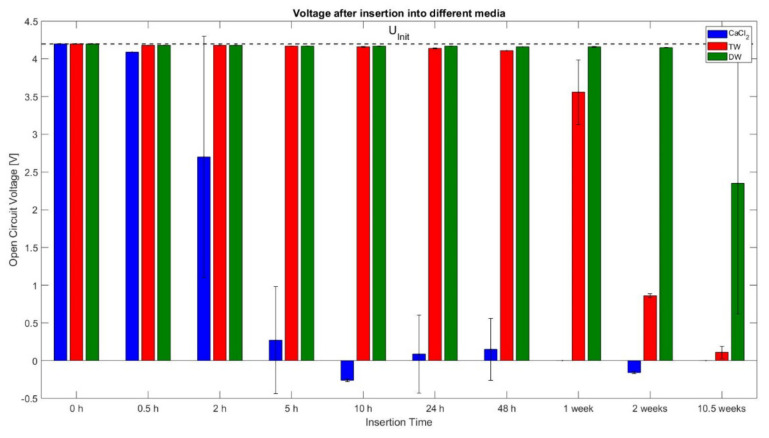
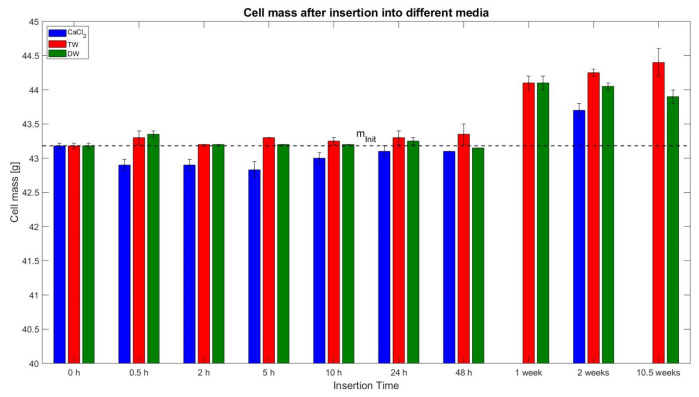
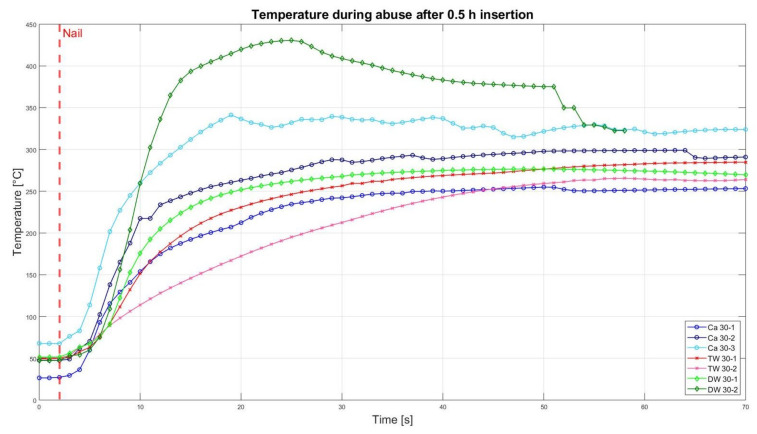
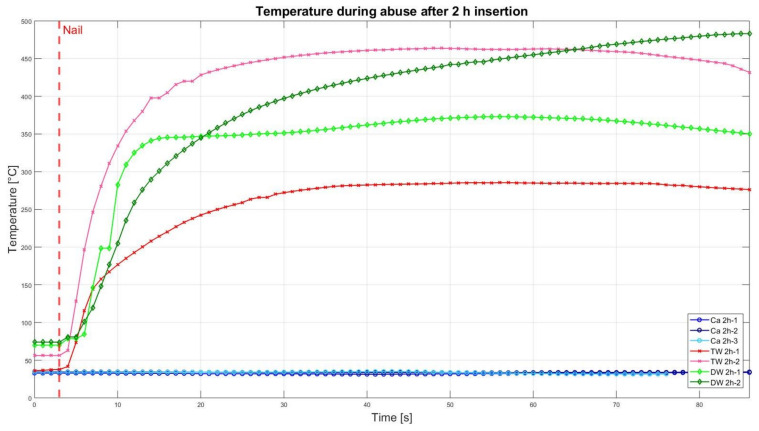
The deployment of battery-powered electric vehicles in the market has created a naturally increasing need for the safe deactivation and recycling of batteries. Various deactivating methods for lithium-ion cells include electrical discharging or deactivation with liquids. Such methods are also useful for cases where the cell tabs are not accessible. In the literature analyses, different deactivation media are used, but none include the use of calcium chloride (CaCl) salt. As compared to other media, the major advantage of this salt is that it can capture the highly reactive and hazardous molecules of Hydrofluoric acid. To analyse the actual performance of this salt in terms of practicability and safety, this experimental research aims to compare it against regular Tap Water and Demineralized Water. This will be accomplished by performing nail penetration tests on deactivated cells and comparing their residual energy against each other. Moreover, these three different media and respective cells are analysed after deactivation, i.e., based on conductivity measurements, cell mass, flame photometry, fluoride content, computer tomography and pH value. It was found that the cells deactivated in the CaCl solution did not show any signs of Fluoride ions, whereas cells deactivated in TW showed the emergence of Fluoride ions in the 10th week of the insertion. However, with the addition of CaCl in TW, the deactivation process > 48 h for TW declines to 0.5-2 h, which could be an optimal solution for real-world situations where deactivating cells at a high pace is essential.

摘要

市场上电池供电的电动汽车的部署,对电池的安全停用和回收提出了自然增长的需求。锂离子电池的各种停用方法包括电气放电或用液体进行停用。对于电池极耳无法接触的情况,这些方法也很有用。在文献分析中,使用了不同的停用介质,但没有一种包括氯化钙(CaCl)盐的使用。与其他介质相比,这种盐的主要优点是它可以捕获高反应性和有害的氢氟酸分子。为了分析这种盐在实用性和安全性方面的实际性能,本实验研究旨在将其与普通自来水和去离子水进行比较。这将通过对停用后的电池进行指甲穿透测试并相互比较其剩余能量来实现。此外,对三种不同的介质和相应的电池进行了停用后的分析,即基于电导率测量、电池质量、火焰光度法、氟含量、计算机断层扫描和 pH 值。结果发现,在 CaCl 溶液中停用的电池没有显示出任何氟离子的迹象,而在 TW 中停用的电池在插入的第 10 周显示出氟离子的出现。然而,在 TW 中加入 CaCl 后,TW 的停用过程(>48 小时)下降到 0.5-2 小时,这可能是在需要快速停用电池的实际情况下的最佳解决方案。
https://cdn.ncbi.nlm.nih.gov/pmc/blobs/df81/10140900/8043b177aea5/sensors-23-03901-g021.jpg
https://cdn.ncbi.nlm.nih.gov/pmc/blobs/df81/10140900/01836aafeb6b/sensors-23-03901-g001.jpg
https://cdn.ncbi.nlm.nih.gov/pmc/blobs/df81/10140900/41245dccae15/sensors-23-03901-g002.jpg
https://cdn.ncbi.nlm.nih.gov/pmc/blobs/df81/10140900/f09246e9e1fb/sensors-23-03901-g003.jpg
https://cdn.ncbi.nlm.nih.gov/pmc/blobs/df81/10140900/50cdf7d26bec/sensors-23-03901-g004.jpg
https://cdn.ncbi.nlm.nih.gov/pmc/blobs/df81/10140900/263fdea23201/sensors-23-03901-g005.jpg
https://cdn.ncbi.nlm.nih.gov/pmc/blobs/df81/10140900/07c26a473926/sensors-23-03901-g006.jpg
https://cdn.ncbi.nlm.nih.gov/pmc/blobs/df81/10140900/129fa0afbb7a/sensors-23-03901-g007.jpg
https://cdn.ncbi.nlm.nih.gov/pmc/blobs/df81/10140900/6329ece731e1/sensors-23-03901-g008.jpg
https://cdn.ncbi.nlm.nih.gov/pmc/blobs/df81/10140900/0b934343ca4c/sensors-23-03901-g009.jpg
https://cdn.ncbi.nlm.nih.gov/pmc/blobs/df81/10140900/5319c758b77f/sensors-23-03901-g010.jpg
https://cdn.ncbi.nlm.nih.gov/pmc/blobs/df81/10140900/70d15252c11f/sensors-23-03901-g011.jpg
https://cdn.ncbi.nlm.nih.gov/pmc/blobs/df81/10140900/3e3e117d0f58/sensors-23-03901-g012.jpg
https://cdn.ncbi.nlm.nih.gov/pmc/blobs/df81/10140900/67a47fdb69c4/sensors-23-03901-g013.jpg
https://cdn.ncbi.nlm.nih.gov/pmc/blobs/df81/10140900/d89d96d447d6/sensors-23-03901-g014.jpg
https://cdn.ncbi.nlm.nih.gov/pmc/blobs/df81/10140900/95d3454770b6/sensors-23-03901-g015.jpg
https://cdn.ncbi.nlm.nih.gov/pmc/blobs/df81/10140900/64a9149024b4/sensors-23-03901-g016.jpg
https://cdn.ncbi.nlm.nih.gov/pmc/blobs/df81/10140900/e7976c5d9038/sensors-23-03901-g017.jpg
https://cdn.ncbi.nlm.nih.gov/pmc/blobs/df81/10140900/d34962de7acf/sensors-23-03901-g018.jpg
https://cdn.ncbi.nlm.nih.gov/pmc/blobs/df81/10140900/2e1a43b75392/sensors-23-03901-g019.jpg
https://cdn.ncbi.nlm.nih.gov/pmc/blobs/df81/10140900/262456cca31b/sensors-23-03901-g020.jpg
https://cdn.ncbi.nlm.nih.gov/pmc/blobs/df81/10140900/8043b177aea5/sensors-23-03901-g021.jpg
https://cdn.ncbi.nlm.nih.gov/pmc/blobs/df81/10140900/01836aafeb6b/sensors-23-03901-g001.jpg
https://cdn.ncbi.nlm.nih.gov/pmc/blobs/df81/10140900/41245dccae15/sensors-23-03901-g002.jpg
https://cdn.ncbi.nlm.nih.gov/pmc/blobs/df81/10140900/f09246e9e1fb/sensors-23-03901-g003.jpg
https://cdn.ncbi.nlm.nih.gov/pmc/blobs/df81/10140900/50cdf7d26bec/sensors-23-03901-g004.jpg
https://cdn.ncbi.nlm.nih.gov/pmc/blobs/df81/10140900/263fdea23201/sensors-23-03901-g005.jpg
https://cdn.ncbi.nlm.nih.gov/pmc/blobs/df81/10140900/07c26a473926/sensors-23-03901-g006.jpg
https://cdn.ncbi.nlm.nih.gov/pmc/blobs/df81/10140900/129fa0afbb7a/sensors-23-03901-g007.jpg
https://cdn.ncbi.nlm.nih.gov/pmc/blobs/df81/10140900/6329ece731e1/sensors-23-03901-g008.jpg
https://cdn.ncbi.nlm.nih.gov/pmc/blobs/df81/10140900/0b934343ca4c/sensors-23-03901-g009.jpg
https://cdn.ncbi.nlm.nih.gov/pmc/blobs/df81/10140900/5319c758b77f/sensors-23-03901-g010.jpg
https://cdn.ncbi.nlm.nih.gov/pmc/blobs/df81/10140900/70d15252c11f/sensors-23-03901-g011.jpg
https://cdn.ncbi.nlm.nih.gov/pmc/blobs/df81/10140900/3e3e117d0f58/sensors-23-03901-g012.jpg
https://cdn.ncbi.nlm.nih.gov/pmc/blobs/df81/10140900/67a47fdb69c4/sensors-23-03901-g013.jpg
https://cdn.ncbi.nlm.nih.gov/pmc/blobs/df81/10140900/d89d96d447d6/sensors-23-03901-g014.jpg
https://cdn.ncbi.nlm.nih.gov/pmc/blobs/df81/10140900/95d3454770b6/sensors-23-03901-g015.jpg
https://cdn.ncbi.nlm.nih.gov/pmc/blobs/df81/10140900/64a9149024b4/sensors-23-03901-g016.jpg
https://cdn.ncbi.nlm.nih.gov/pmc/blobs/df81/10140900/e7976c5d9038/sensors-23-03901-g017.jpg
https://cdn.ncbi.nlm.nih.gov/pmc/blobs/df81/10140900/d34962de7acf/sensors-23-03901-g018.jpg
https://cdn.ncbi.nlm.nih.gov/pmc/blobs/df81/10140900/2e1a43b75392/sensors-23-03901-g019.jpg
https://cdn.ncbi.nlm.nih.gov/pmc/blobs/df81/10140900/262456cca31b/sensors-23-03901-g020.jpg
https://cdn.ncbi.nlm.nih.gov/pmc/blobs/df81/10140900/8043b177aea5/sensors-23-03901-g021.jpg

相似文献

1
Analysis of Deactivation of 18,650 Lithium-Ion Cells in CaCl, Tap Water and Demineralized Water for Different Insertion Times.分析在不同插入时间下,18650 锂离子电池在氯化钙、自来水和去离子水中的失活动力学。
Sensors (Basel). 2023 Apr 11;23(8):3901. doi: 10.3390/s23083901.
2
Lithium-ion batteries towards circular economy: A literature review of opportunities and issues of recycling treatments.锂离子电池迈向循环经济:回收处理的机遇和问题的文献综述。
J Environ Manage. 2020 Jun 15;264:110500. doi: 10.1016/j.jenvman.2020.110500. Epub 2020 Apr 2.
3
Challenging the concept of electrochemical discharge using salt solutions for lithium-ion batteries recycling.挑战使用盐溶液回收锂离子电池的电化学放电概念。
Waste Manag. 2018 Jun;76:242-249. doi: 10.1016/j.wasman.2018.03.045. Epub 2018 Apr 1.
4
Investigation of the Storage Behavior of Shredded Lithium-Ion Batteries from Electric Vehicles for Recycling Purposes.用于回收目的的电动汽车锂离子电池碎片存储行为研究。
ChemSusChem. 2015 Oct 26;8(20):3433-8. doi: 10.1002/cssc.201500920. Epub 2015 Sep 11.
5
Electrochemical Mechanism of Recovery of Nickel Metal from Waste Lithium Ion Batteries by Molten Salt Electrolysis.熔盐电解从废旧锂离子电池中回收金属镍的电化学机理
Materials (Basel). 2021 Nov 15;14(22):6875. doi: 10.3390/ma14226875.
6
Stabilisation of halophilic malate dehydrogenase from Haloarcula marismortui by divalent cations -- effects of temperature, water isotope, cofactor and pH.来自死海嗜盐菌的嗜盐苹果酸脱氢酶的二价阳离子稳定作用——温度、水同位素、辅因子和pH值的影响
Eur J Biochem. 1997 Oct 15;249(2):607-11. doi: 10.1111/j.1432-1033.1997.00607.x.
7
The effect of tap water, carbonated water, sodium bicarbonate, and calcium chloride on blood acid-base balance in cockerels subjected to heat stress.
Poult Sci. 1985 Jan;64(1):107-13. doi: 10.3382/ps.0640107.
8
Recycling chains for lithium-ion batteries: A critical examination of current challenges, opportunities and process dependencies.锂离子电池回收链:对当前挑战、机遇及工艺依赖性的批判性审视
Waste Manag. 2022 Feb 1;138:125-139. doi: 10.1016/j.wasman.2021.11.038. Epub 2021 Dec 6.
9
Energy and environmental assessment of a traction lithium-ion battery pack for plug-in hybrid electric vehicles.插电式混合动力汽车牵引锂离子电池组的能量与环境评估
J Clean Prod. 2019 Apr 1;215:634-649. doi: 10.1016/j.jclepro.2019.01.056.
10
Improving Fast and Safe Transfer of Lithium Ions in Solid-State Lithium Batteries by Porosity and Channel Structure of Polymer Electrolyte.通过聚合物电解质的孔隙率和通道结构改善固态锂电池中锂离子的快速安全传输
ACS Appl Mater Interfaces. 2021 Oct 20;13(41):48525-48535. doi: 10.1021/acsami.1c11489. Epub 2021 Oct 8.

本文引用的文献

1
Challenging the concept of electrochemical discharge using salt solutions for lithium-ion batteries recycling.挑战使用盐溶液回收锂离子电池的电化学放电概念。
Waste Manag. 2018 Jun;76:242-249. doi: 10.1016/j.wasman.2018.03.045. Epub 2018 Apr 1.
2
Toxic fluoride gas emissions from lithium-ion battery fires.锂离子电池火灾产生的有毒含氟气体排放。
Sci Rep. 2017 Aug 30;7(1):10018. doi: 10.1038/s41598-017-09784-z.
3
Generation and detection of metal ions and volatile organic compounds (VOCs) emissions from the pretreatment processes for recycling spent lithium-ion batteries.
从回收废旧锂离子电池的预处理过程中产生和检测金属离子和挥发性有机化合物(VOCs)的排放。
Waste Manag. 2016 Jun;52:221-7. doi: 10.1016/j.wasman.2016.03.011. Epub 2016 Mar 22.