Desnouveaux Laura, Poly Betty, Edmond Mathilde, Aphezberro Cathy, Coulon David, Boutet Francis, Le Coz Christine, Fargeau Francisca, Linard Cyril, Caillol Pierre, Duffaud Anaïs M, Servonnet Aurélie, Ferhani Ouamar, Trousselard Marion, Taudon Nicolas, Canini Frédéric, Claverie Damien
Unité de Développements Analytiques et Bioanalyse, Département Plateformes et Recherche Technologique, Institut de Recherche Biomédicale des Armées (IRBA), Brétigny-sur-Orge, France.
Unité de Neurophysiologie du Stress, Département Neurosciences & Contraintes Opérationnelles, Institut de Recherche Biomédicale des Armées (IRBA), Brétigny-sur-Orge, France.
Front Neurosci. 2023 Apr 11;17:1047848. doi: 10.3389/fnins.2023.1047848. eCollection 2023.
Depending on the individual, exposure to an intense stressor may, or may not, lead to a stress-induced pathology. Predicting the physiopathological evolution in an individual is therefore an important challenge, at least for prevention. In this context, we developed an ethological model of simulated predator exposure in rats: we call this the multisensorial stress model (MSS). We hypothesized that: (i) MSS exposure can induce stress-induced phenotypes, and (ii) an electrocorticogram (ECoG) recorded before stress exposure can predict phenotypes observed after stress.
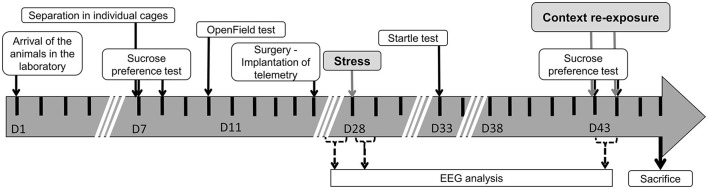
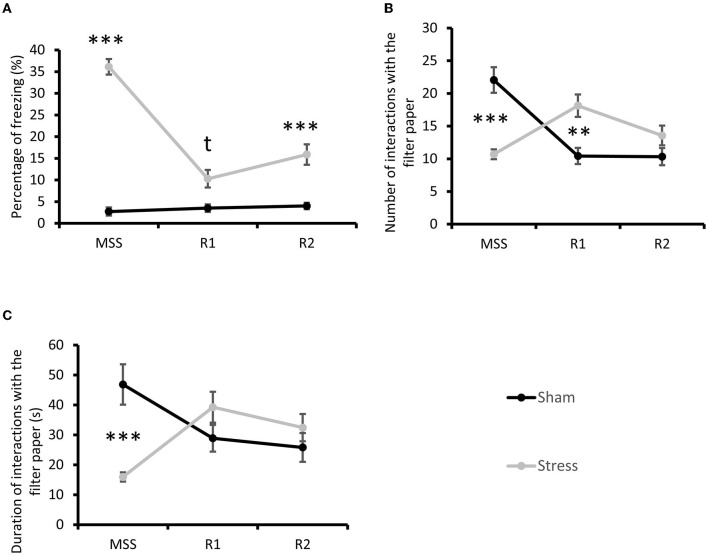
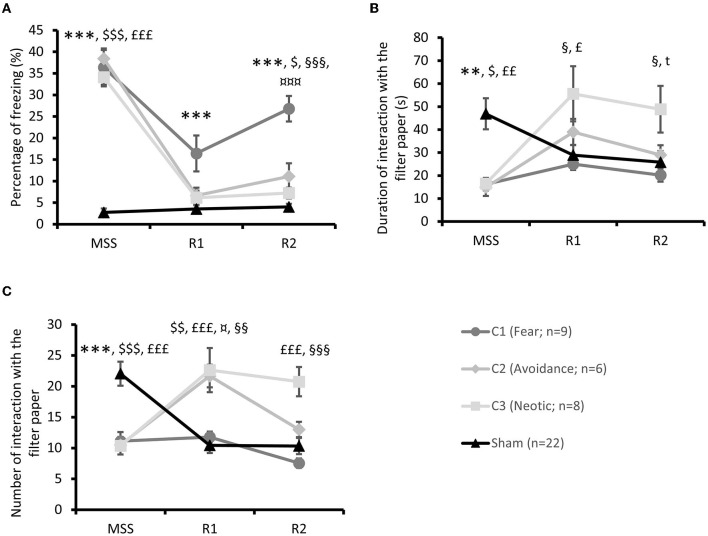
Forty-five Sprague Dawley rats were equipped with ECoG telemetry and divided into two groups. The Stress group ( = 23) was exposed to an MSS that combined synthetic fox feces odor deposited on filter paper, synthetic blood odor, and 22 kHz rodent distress calls; the Sham group ( = 22) was not exposed to any sensorial stimulus. Fifteen days after initial exposure, the two groups were re-exposed to a context that included a filter paper soaked with water as a traumatic object (TO) reminder. During this re-exposure, freezing behavior and avoidance of the filter paper were measured.
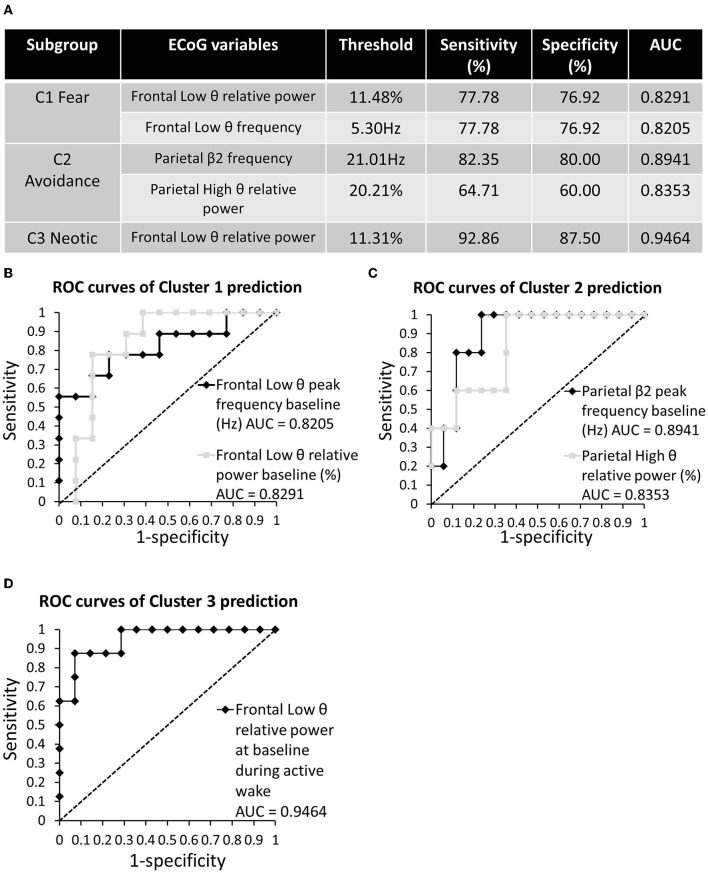
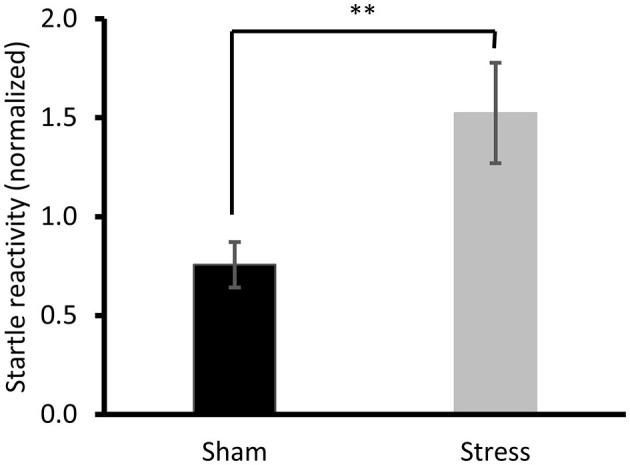
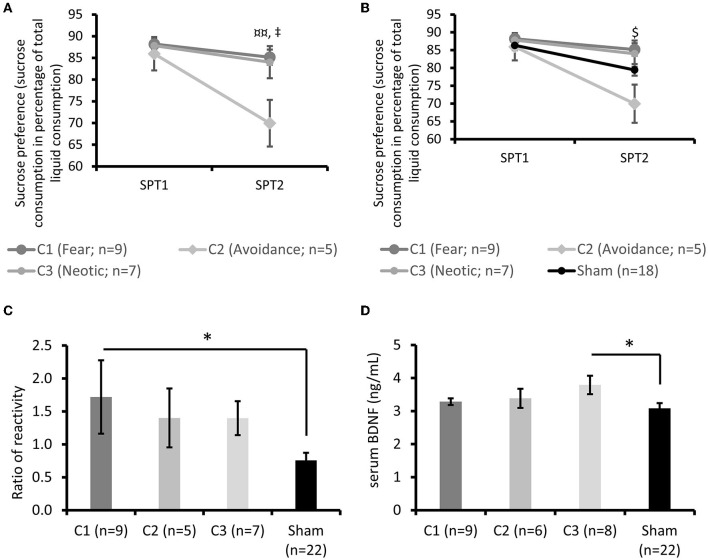
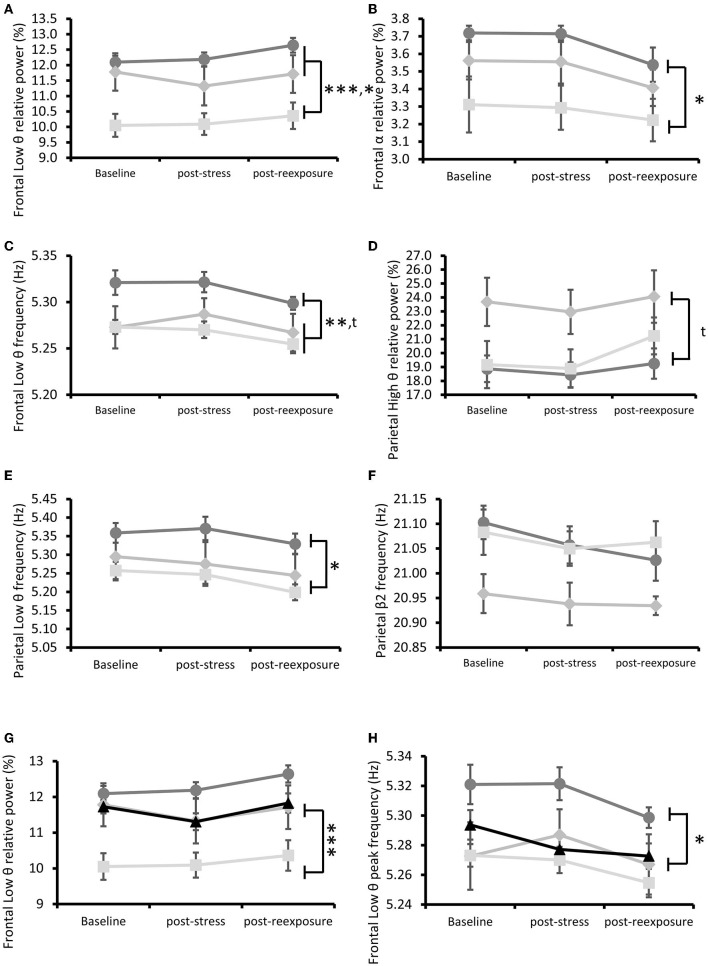
Three behaviors were observed in the Stress group: 39% developed a fear memory phenotype (freezing, avoidance, and hyperreactivity); 26% developed avoidance and anhedonia; and 35% made a full recovery. We also identified pre-stress ECoG biomarkers that accurately predicted cluster membership. Decreased chronic 24 h frontal Low θ relative power was associated with resilience; increased frontal Low θ relative power was associated with fear memory; and decreased parietal β2 frequency was associated with the avoidant-anhedonic phenotype.
These predictive biomarkers open the way to preventive medicine for stress-induced diseases.
根据个体差异,暴露于强烈应激源可能会,也可能不会,导致应激诱导的病理学变化。因此,预测个体的生理病理演变是一项重要挑战,至少在预防方面如此。在此背景下,我们开发了一种大鼠模拟捕食者暴露的行为学模型:我们称之为多感官应激模型(MSS)。我们假设:(i)MSS暴露可诱导应激诱导的表型,以及(ii)应激暴露前记录的脑电图(ECoG)可预测应激后观察到的表型。
45只Sprague Dawley大鼠配备了ECoG遥测设备,并分为两组。应激组(n = 23)暴露于一种MSS,该MSS结合了沉积在滤纸上的合成狐狸粪便气味、合成血液气味和22 kHz啮齿动物求救声;假手术组(n = 22)未暴露于任何感官刺激。初次暴露15天后,两组再次暴露于一个包含用水浸湿的滤纸作为创伤性物体(TO)提示物的环境中。在这次再暴露期间,测量冻结行为和对滤纸的回避情况。
在应激组中观察到三种行为:39%出现恐惧记忆表型(冻结、回避和反应过度);26%出现回避和快感缺失;35%完全恢复。我们还确定了应激前的ECoG生物标志物,这些标志物能准确预测聚类成员。慢性24小时额叶低θ相对功率降低与恢复力相关;额叶低θ相对功率增加与恐惧记忆相关;顶叶β2频率降低与回避 - 快感缺失表型相关。
这些预测性生物标志物为应激诱导疾病的预防医学开辟了道路。