Department of Applied Physics, Yale University, New Haven, CT 06511.
Integrated Graduate Program in Physics Engineering Biology, Yale University, New Haven, CT 06511.
Mol Biol Cell. 2023 Jul 1;34(8):ar78. doi: 10.1091/mbc.E23-04-0119. Epub 2023 Apr 26.
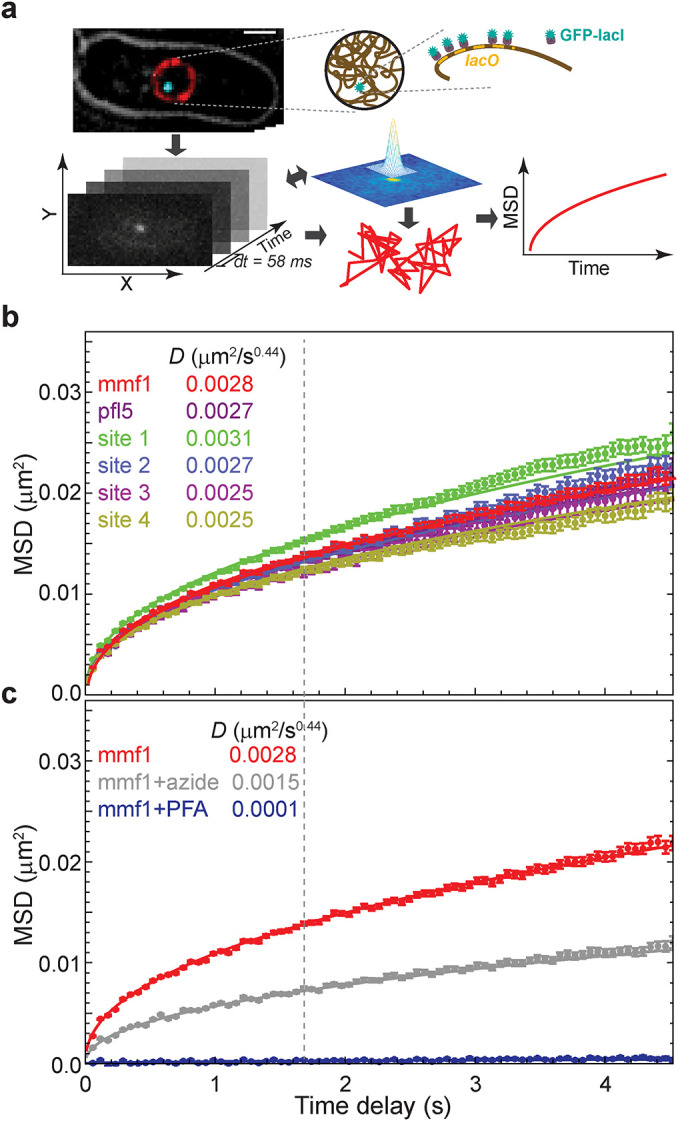
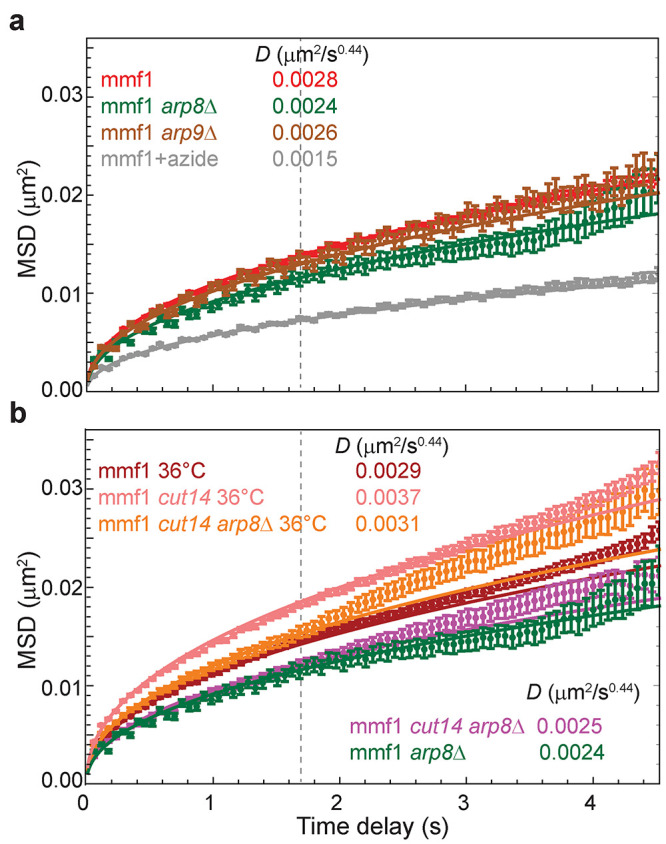
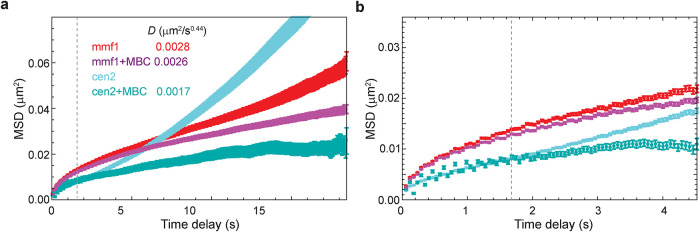
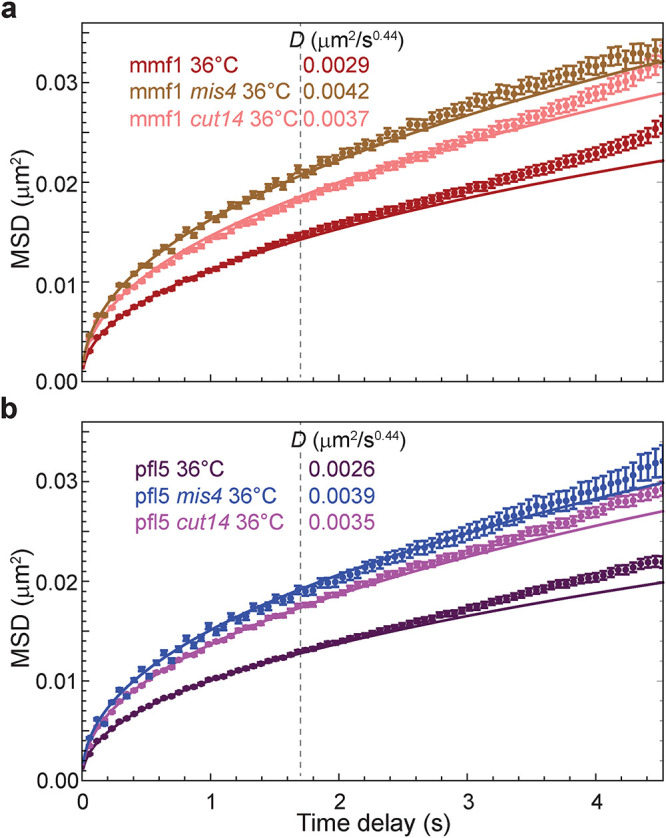
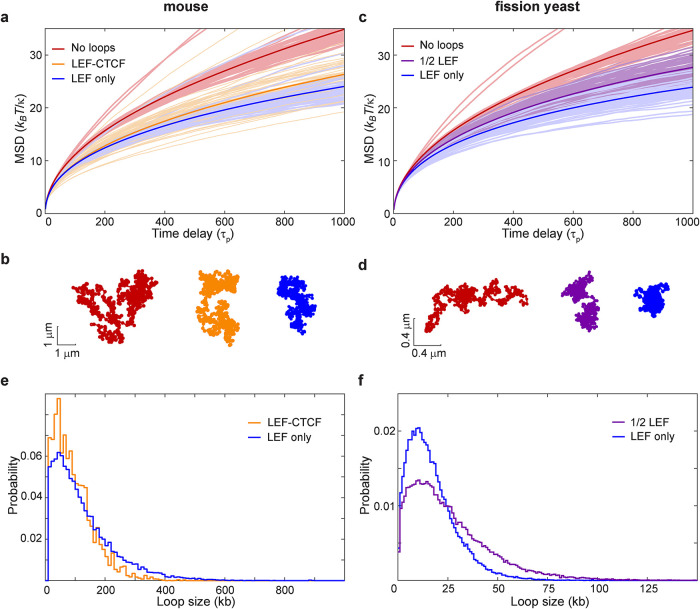
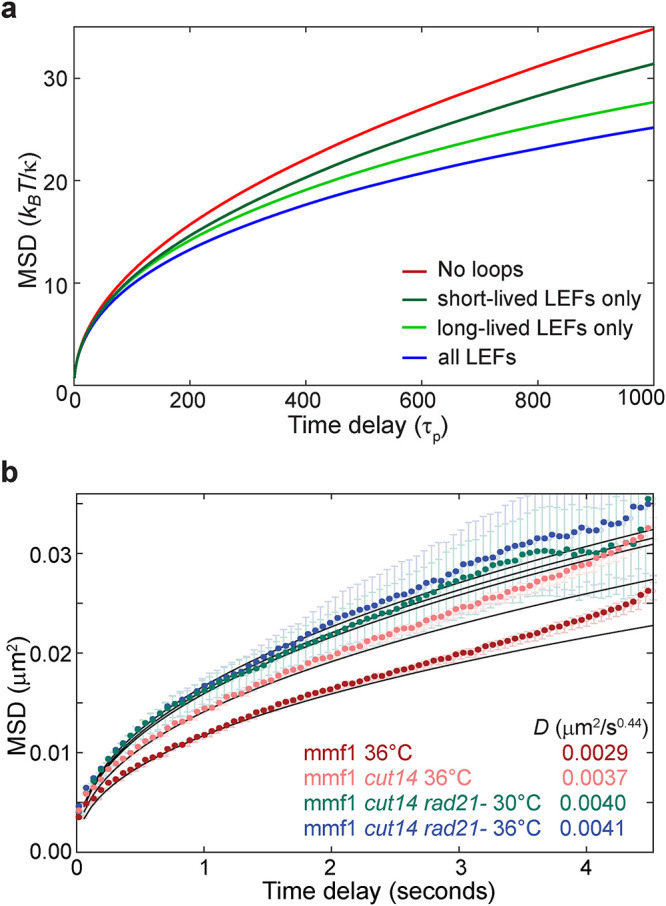
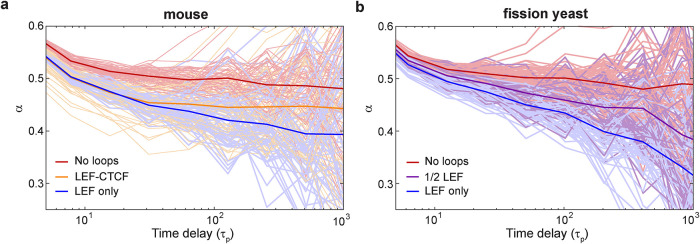
The chromosomes-DNA polymers and their binding proteins-are compacted into a spatially organized, yet dynamic, three-dimensional structure. Recent genome-wide chromatin conformation capture experiments reveal a hierarchical organization of the DNA structure that is imposed, at least in part, by looping interactions arising from the activity of loop extrusion factors. The dynamics of chromatin reflects the response of the polymer to a combination of thermal fluctuations and active processes. However, how chromosome structure and enzymes acting on chromatin together define its dynamics remains poorly understood. To gain insight into the structure-dynamics relationship of chromatin, we combine high-precision microscopy in living cells with systematic genetic perturbations and Rouse model polymer simulations. We first investigated how the activity of two loop extrusion factors, the cohesin and condensin complexes, influences chromatin dynamics. We observed that deactivating cohesin, or to a lesser extent condensin, increased chromatin mobility, suggesting that loop extrusion constrains rather than agitates chromatin motion. Our corresponding simulations reveal that the introduction of loops is sufficient to explain the constraining activity of loop extrusion factors, highlighting that the conformation adopted by the polymer plays a key role in defining its dynamics. Moreover, we find that the number of loops or residence times of loop extrusion factors influence the dynamic behavior of the chromatin polymer. Last, we observe that the activity of the INO80 chromatin remodeler, but not the SWI/SNF or RSC complexes, is critical for ATP-dependent chromatin mobility in fission yeast. Taking the data together, we suggest that thermal and INO80-dependent activities exert forces that drive chromatin fluctuations, which are constrained by the organization of the chromosome into loops.
染色体-DNA 聚合物及其结合蛋白被压缩成一个空间组织的、动态的三维结构。最近的全基因组染色质构象捕获实验揭示了 DNA 结构的一种层次组织,这种组织至少部分是由环挤出因子的活性引起的环相互作用所施加的。染色质的动力学反映了聚合物对热波动和主动过程的组合的响应。然而,染色体结构和作用于染色质的酶如何共同定义其动力学仍然知之甚少。为了深入了解染色质的结构-动力学关系,我们将活细胞中的高精度显微镜与系统的遗传扰动和 Rouse 模型聚合物模拟相结合。我们首先研究了两种环挤出因子,即黏连蛋白和凝聚蛋白复合物的活性如何影响染色质动力学。我们观察到,去激活黏连蛋白,或者在较小程度上去激活凝聚蛋白,会增加染色质的流动性,这表明环挤出会限制而不是搅动染色质的运动。我们相应的模拟表明,环的引入足以解释环挤出因子的限制活性,这突出表明聚合物的构象在定义其动力学方面起着关键作用。此外,我们发现环的数量或环挤出因子的停留时间会影响染色质聚合物的动态行为。最后,我们观察到 INO80 染色质重塑酶的活性,但不是 SWI/SNF 或 RSC 复合物的活性,对于裂殖酵母中 ATP 依赖性染色质流动性是至关重要的。综合这些数据,我们认为热和 INO80 依赖性活动会产生力,推动染色质波动,而这些波动又受到染色体形成环的组织的限制。