Faculty of Biology and Medicine, University of Lausanne, Lausanne, Switzerland.
Service of Endocrinology, Diabetes and Metabolism, Lausanne University Hospital, Lausanne, Switzerland.
Obes Surg. 2023 Jul;33(7):2072-2082. doi: 10.1007/s11695-023-06595-2. Epub 2023 May 5.
Conflicting results have been reported regarding the predictive value of preoperative psychological assessment and weight outcome after bariatric surgery. This might be attributed to different factors affecting early weight loss and long-term weight loss. Herein, we investigated whether preoperative psychiatric profile was associated with preoperative BMI and with both early (1 year) and long-term (5 years) weight loss after Roux-en-Y gastric bypass (RYGB).
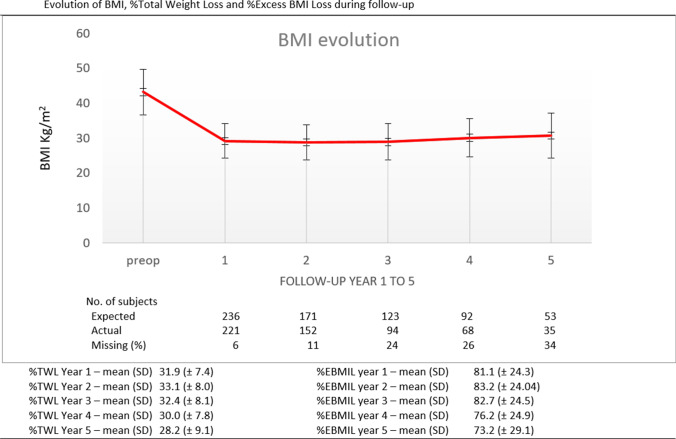
Prospective observational cohort study of patients undergoing RYGB between 2013 and 2019. Symptoms related to anxiety, depression, eating disorder, and alcohol use disorders were assessed by employing validated, specific psychometric tests (STAI-S/T, BDI-II, BITE, AUDIT-C) prior to surgery. Pre-operative BMI, early weight loss (1 year), and long-term weight evolution (up to 5 years) were registered.
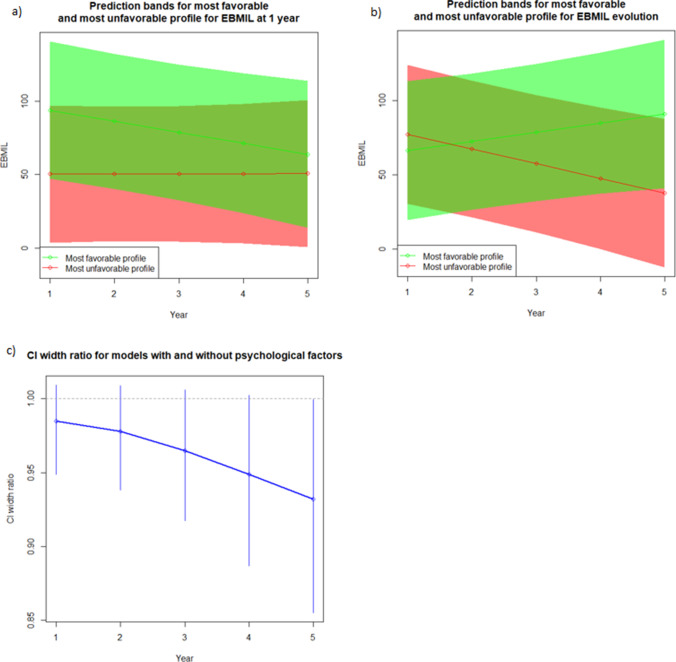
Two hundred thirty six patients (81% women) were included in the present study. Linear longitudinal mixed model showed a significant effect of preoperative high anxiety (STAI-S) on long-term weight outcome, after controlling for gender, age and type 2 diabetes. Patient with high preoperative anxiety score regained weight faster than those experiencing low anxiety (each year percent excess BMI loss (%EBMIL) - 4.02%, ± 1.72, p = 0.021). No other pre-operative psychiatric symptoms have been shown to have an impact on long-term weight loss. In addition, no significant association was found between any of the pre-operative psychiatric variables and pre-operative BMI, or early weight loss (%EBMIL) at 1-year post-RYGB.
Herein we identified high anxiety score (STAI-S) as a predictor for long-term weight regain. Thus, long-term psychiatric surveillance of these patients and the development of tailored management tools could serve as a means to prevent weight regain.
术前心理评估与减重手术后体重结果的预测价值存在相互矛盾的结果。这可能归因于影响早期减重和长期减重的不同因素。在此,我们研究了术前精神状态是否与术前 BMI 以及 Roux-en-Y 胃旁路术(RYGB)后早期(1 年)和长期(5 年)体重减轻有关。
这是一项前瞻性观察队列研究,纳入了 2013 年至 2019 年间接受 RYGB 的患者。手术前通过使用经过验证的特定心理计量测试(STAI-S/T、BDI-II、BITE、AUDIT-C)评估与焦虑、抑郁、饮食障碍和酒精使用障碍相关的症状。记录术前 BMI、早期体重减轻(1 年)和长期体重变化(长达 5 年)。
本研究共纳入 236 例患者(81%为女性)。线性纵向混合模型显示,在校正性别、年龄和 2 型糖尿病后,术前高焦虑(STAI-S)对长期体重结局有显著影响。术前焦虑评分高的患者比焦虑评分低的患者体重增加更快(每年超重体重损失百分比(%EBMIL)-4.02%,±1.72,p=0.021)。没有其他术前精神症状显示与长期体重减轻有关。此外,术前任何一种精神状态变量与术前 BMI 或 RYGB 后 1 年的早期体重减轻(%EBMIL)均无显著相关性。
我们发现高焦虑评分(STAI-S)是长期体重反弹的预测因素。因此,对这些患者进行长期精神监测并制定个性化的管理工具可能有助于预防体重反弹。