Medical Research Council (MRC), Uganda Virus Research Institute (UVRI) and London School of Hygiene and Tropical Medicine (LSHTM), Uganda Research Unit, Entebbe, Uganda.
Department of Immunology, Uganda Virus Research Institute, Entebbe, Uganda.
Front Immunol. 2023 Apr 19;14:1148877. doi: 10.3389/fimmu.2023.1148877. eCollection 2023.
We investigated whether prior SARS-CoV-2-specific IFN-γ and antibody responses in Ugandan COVID-19 pre-pandemic specimens aligned to this population's low disease severity.
We used nucleoprotein (N), spike (S), NTD, RBD, envelope, membrane, SD1/2-directed IFN-γ ELISpots, and an S- and N-IgG antibody ELISA to screen for SARS-CoV-2-specific cross-reactivity.
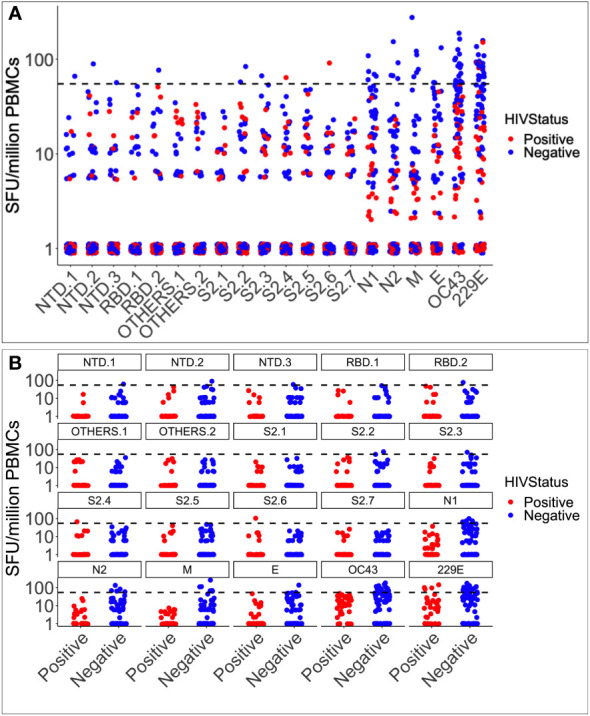
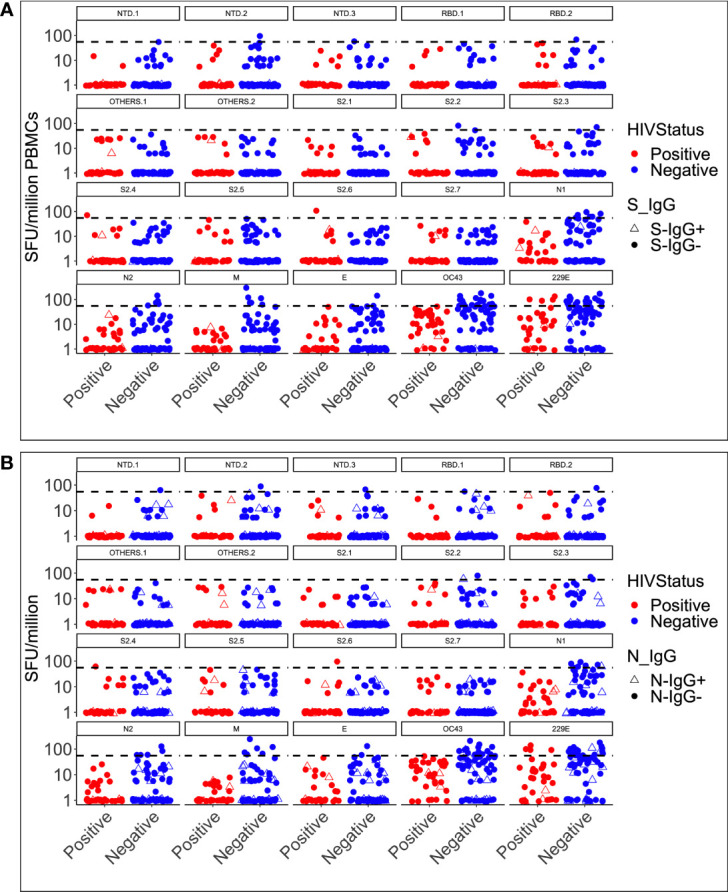
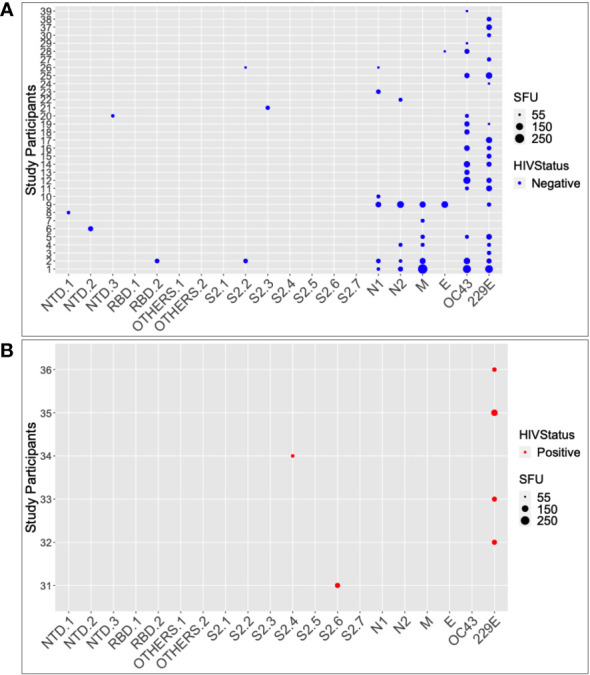
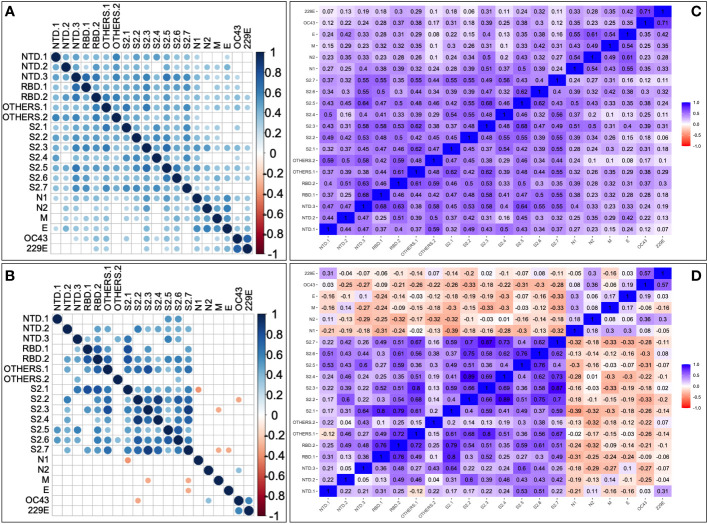
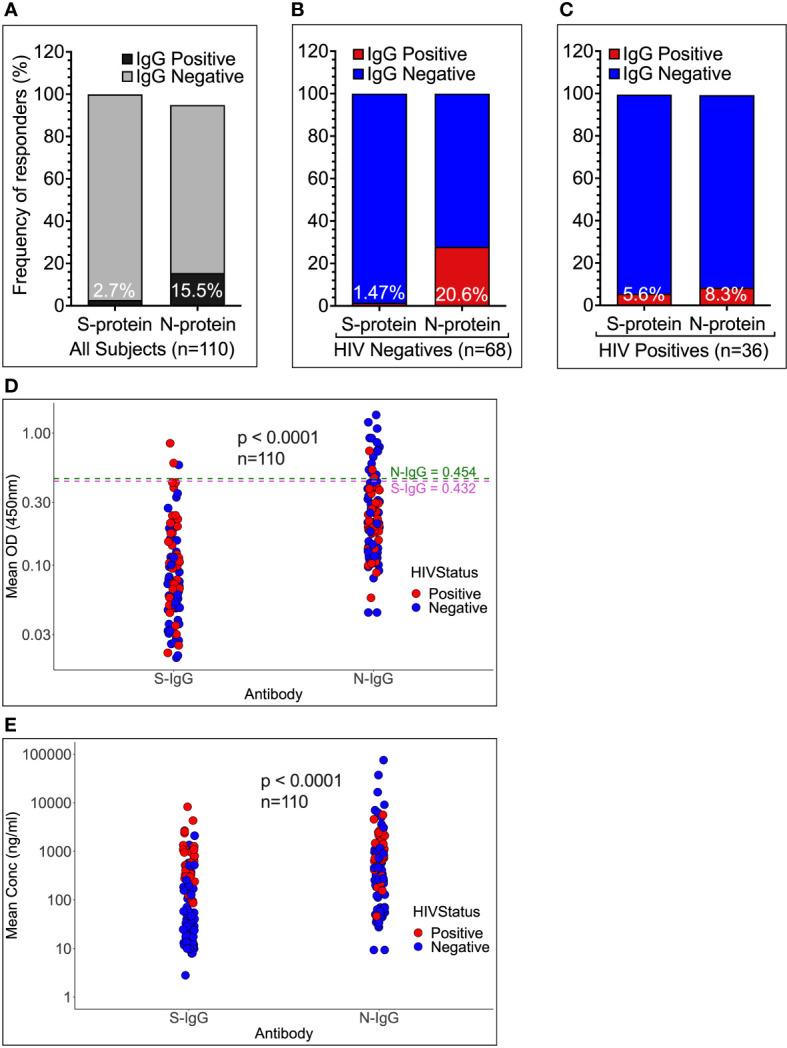
HCoV-OC43-, HCoV-229E-, and SARS-CoV-2-specific IFN-γ occurred in 23, 15, and 17 of 104 specimens, respectively. Cross-reactive IgG was more common against the nucleoprotein (7/110, 15.5%; p = 0.0016, Fishers' Exact) than the spike (3/110, 2.72%). Specimens lacking anti-HuCoV antibodies had higher rates of pre-epidemic SARS-CoV-2-specific IFN-γ cross-reactivity (p-value = 0.00001, Fishers' exact test), suggesting that exposure to additional factors not examined here might play a role. SARS-CoV-2-specific cross-reactive antibodies were significantly less common in HIV-positive specimens (p=0.017; Fishers' Exact test). Correlations between SARS-CoV-2- and HuCoV-specific IFN-γ responses were consistently weak in both HIV negative and positive specimens.
These findings support the existence of pre-epidemic SARS-CoV-2-specific cellular and humoral cross-reactivity in this population. The data do not establish that these virus-specific IFN-γ and antibody responses are entirely specific to SARS-CoV-2. Inability of the antibodies to neutralise SARS-CoV-2 implies that prior exposure did not result in immunity. Correlations between SARS-CoV-2 and HuCoV-specific responses were consistently weak, suggesting that additional variables likely contributed to the pre-epidemic cross-reactivity patterns. The data suggests that surveillance efforts based on the nucleoprotein might overestimate the exposure to SARS-CoV-2 compared to inclusion of additional targets, like the spike protein. This study, while limited in scope, suggests that HIV-positive people are less likely than HIV-negative people to produce protective antibodies against SARS-CoV-2.
我们研究了乌干达 COVID-19 大流行前样本中的 SARS-CoV-2 特异性 IFN-γ 和抗体反应是否与该人群的疾病严重程度低有关。
我们使用核蛋白(N)、刺突(S)、NTD、RBD、包膜、膜、SD1/2 定向 IFN-γ ELISpot 和 S 和 N-IgG 抗体 ELISA 来筛选 SARS-CoV-2 特异性交叉反应。
在 104 份标本中,分别有 23、15 和 17 份标本检测到 HCoV-OC43、HCoV-229E 和 SARS-CoV-2 特异性 IFN-γ。针对核蛋白(7/110,15.5%;p=0.0016,Fisher 精确检验)的交叉反应 IgG 比针对刺突(3/110,2.72%)更常见。缺乏抗 HuCoV 抗体的标本具有更高的流行前 SARS-CoV-2 特异性 IFN-γ 交叉反应率(p 值=0.00001,Fisher 精确检验),这表明可能有其他未在此处检查的因素在起作用。在 HIV 阳性标本中,SARS-CoV-2 特异性交叉反应抗体明显较少(p=0.017;Fisher 精确检验)。在 HIV 阴性和阳性标本中,SARS-CoV-2 和 HuCoV 特异性 IFN-γ 反应之间的相关性始终较弱。
这些发现支持在该人群中存在流行前 SARS-CoV-2 特异性细胞和体液交叉反应。数据并不能确定这些病毒特异性 IFN-γ 和抗体反应完全针对 SARS-CoV-2。抗体不能中和 SARS-CoV-2 意味着先前的暴露没有导致免疫。SARS-CoV-2 和 HuCoV 特异性反应之间的相关性始终较弱,这表明可能还有其他变量导致流行前的交叉反应模式。数据表明,基于核蛋白的监测可能会高估与 SARS-CoV-2 的接触,而包括刺突蛋白等其他靶标则不然。这项研究虽然范围有限,但表明与 HIV 阴性人群相比,HIV 阳性人群产生针对 SARS-CoV-2 的保护性抗体的可能性较小。