Ankunda Violet, Katende Joseph Ssebwana, Oluka Gerald Kevin, Sembera Jackson, Baine Claire, Odoch Geoffrey, Ejou Peter, Kato Laban, Kaleebu Pontiano, Serwanga Jennifer
Viral Pathogens Research Theme, Medical Research Council, Uganda Virus Research Institute and London School of Hygiene and Tropical Medicine, Uganda Research Unit, Entebbe, Uganda.
Department of Immunology, Uganda Virus Research Institute, Entebbe, Uganda.
Front Immunol. 2024 Feb 16;15:1325387. doi: 10.3389/fimmu.2024.1325387. eCollection 2024.
This study aimed to delineate longitudinal antibody responses to the Pfizer-BioNTech BNT162b2 COVID-19 vaccine within the Ugandan subset of the Sub-Saharan African (SSA) demographic, filling a significant gap in global datasets.
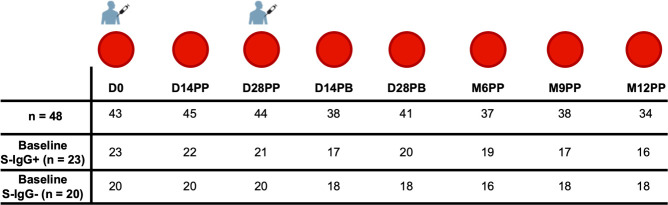
We enrolled 48 participants and collected 320 specimens over 12 months after the primary vaccination dose. A validated enzyme-linked immunosorbent assay (ELISA) was used to quantify SARS-CoV-2-specific IgG, IgM, and IgA antibody concentrations (ng/ml) and optical densities (ODs). Statistical analyses included box plots, diverging bar graphs, and the Wilcoxon test with Bonferroni correction.
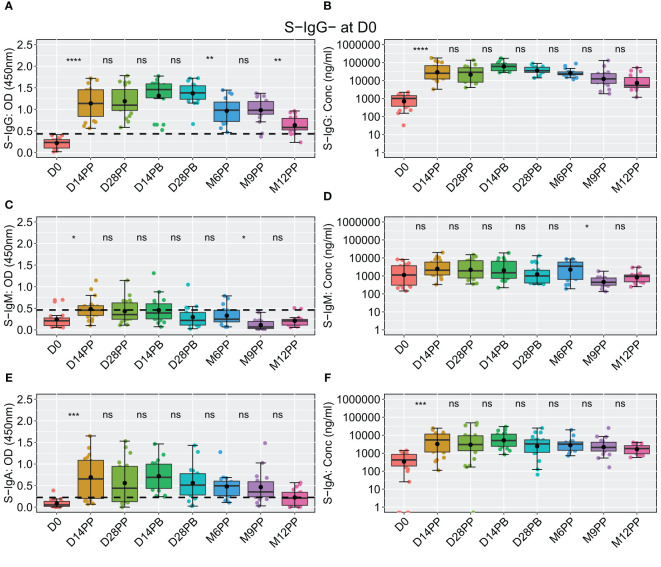
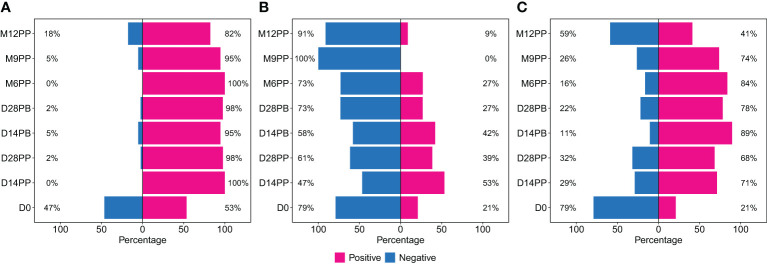
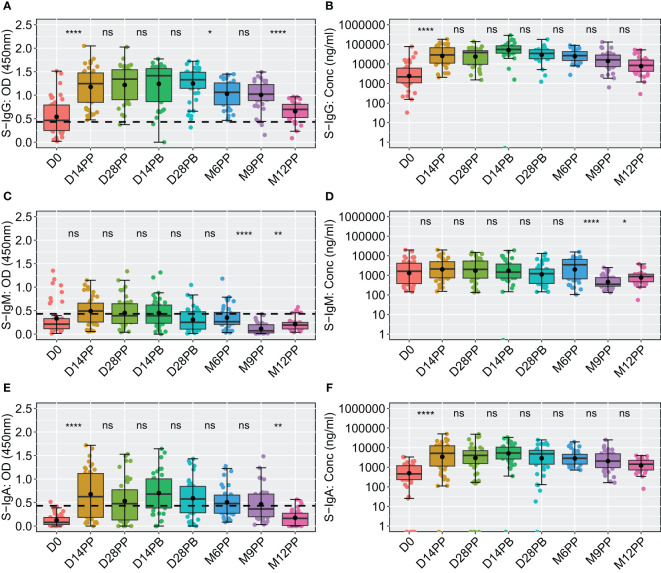
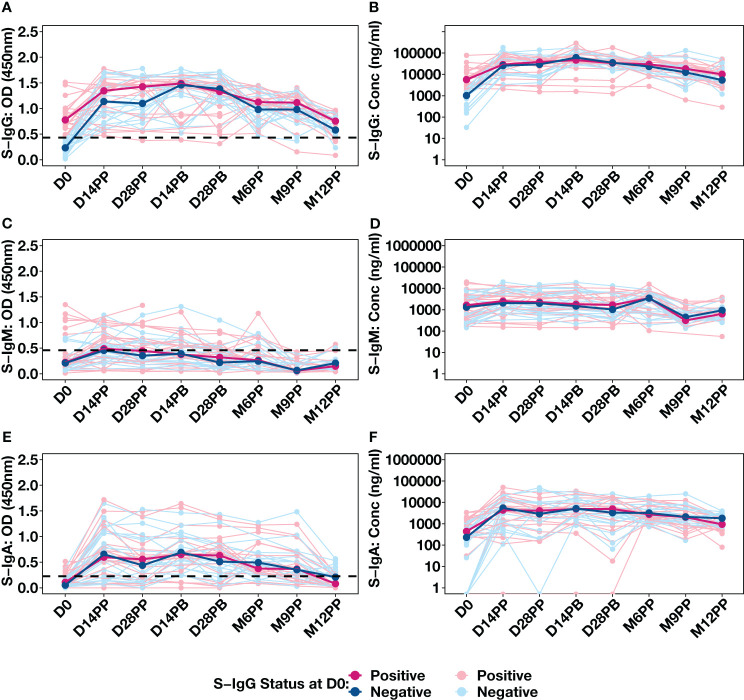
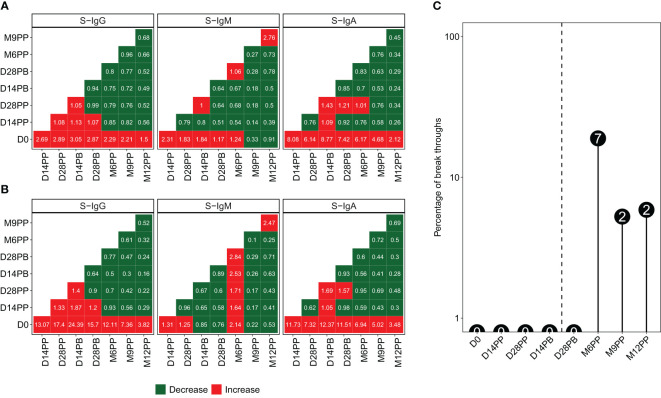
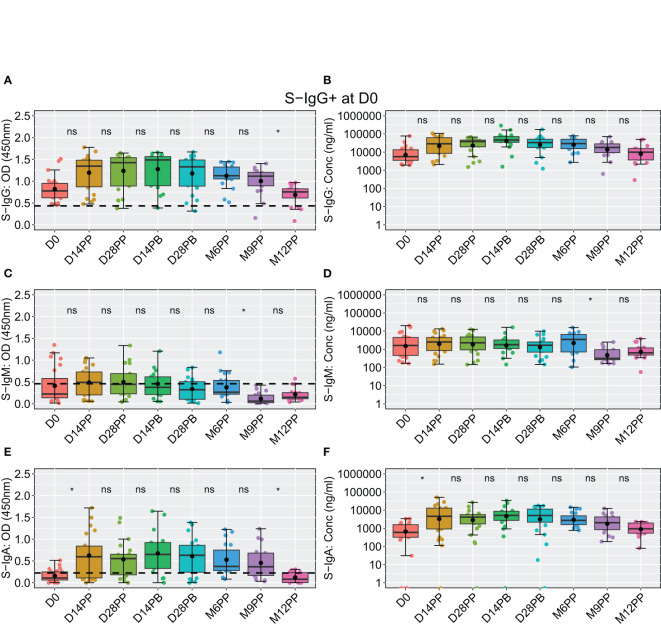
We noted a robust S-IgG response within 14 days of the primary vaccine dose, which was consistent with global data. There was no significant surge in S-IgG levels after the booster dose, contrasting trends in other global populations. The S-IgM response was transient and predominantly below established thresholds for this population, which reflects its typical early emergence and rapid decline. S-IgA levels rose after the initial dose then decreased after six months, aligning with the temporal patterns of mucosal immunity. Eleven breakthrough infections were noted, and all were asymptomatic, regardless of the participants' initial S-IgG serostatus, which suggests a protective effect from vaccination.
The Pfizer-BioNTech BNT162b2 COVID-19 vaccine elicited strong S-IgG responses in the SSA demographic. The antibody dynamics distinctly differed from global data highlighting the significance of region-specific research and the necessity for customised vaccination strategies.
本研究旨在描绘撒哈拉以南非洲(SSA)人口中乌干达子集对辉瑞 - 生物科技公司的BNT162b2新冠疫苗的纵向抗体反应,填补全球数据集中的一个重大空白。
我们招募了48名参与者,并在初次接种疫苗剂量后的12个月内收集了320份样本。使用经过验证的酶联免疫吸附测定(ELISA)来量化新冠病毒特异性IgG、IgM和IgA抗体浓度(ng/ml)以及光密度(OD)。统计分析包括箱线图、发散条形图以及采用Bonferroni校正的Wilcoxon检验。
我们注意到在初次疫苗剂量后的14天内出现了强烈的S-IgG反应,这与全球数据一致。加强剂量后S-IgG水平没有显著激增,这与其他全球人群的趋势形成对比。S-IgM反应是短暂的,并且主要低于该人群既定的阈值,这反映了其典型的早期出现和快速下降。S-IgA水平在初次剂量后上升,然后在六个月后下降,与黏膜免疫的时间模式一致。记录到11例突破性感染,所有感染均无症状,无论参与者最初的S-IgG血清状态如何,这表明疫苗具有保护作用。
辉瑞 - 生物科技公司的BNT162b2新冠疫苗在SSA人群中引发了强烈的S-IgG反应。抗体动态与全球数据明显不同,突出了区域特异性研究的重要性以及定制疫苗接种策略的必要性。