Upper Airways Research Laboratory, Department of Head and Skin, Ghent University, Ghent, Belgium.
Institute of Biology and Biomedicine, National Research Lobachevsky State University of Nizhny Novgorod, Nizhny Novgorod, Russia.
Front Immunol. 2023 Apr 19;14:1040493. doi: 10.3389/fimmu.2023.1040493. eCollection 2023.
Recent studies strongly implicated mast cell-derived proteases as regulators of IL-33 activity by enzymatic cleavage in its central domain. A better understanding of the role of mast cell proteases on IL-33 activity is needed. We aimed to compare the expression of mast cell proteases in C57BL/6 and BALB/c mice, their role in the cleavage of IL-33 cytokine, and their contribution to allergic airway inflammation.
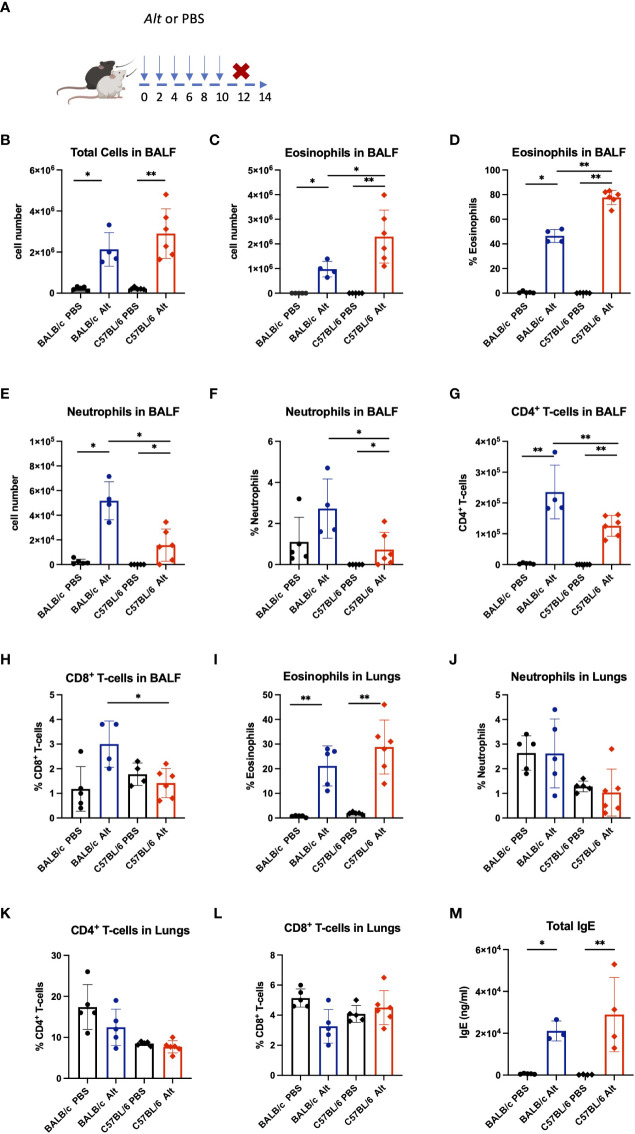
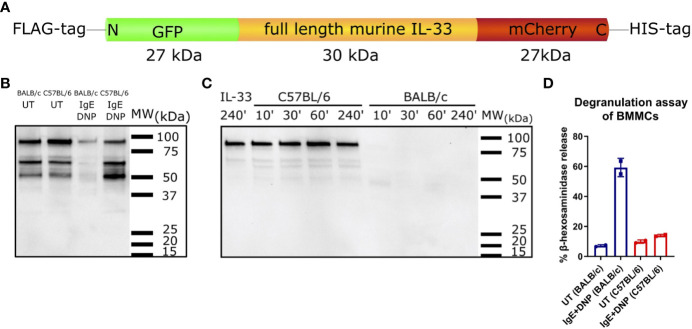
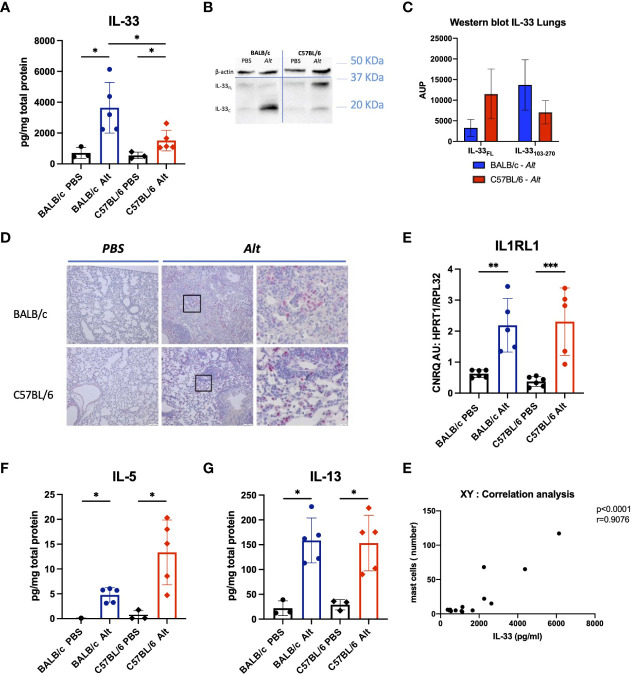
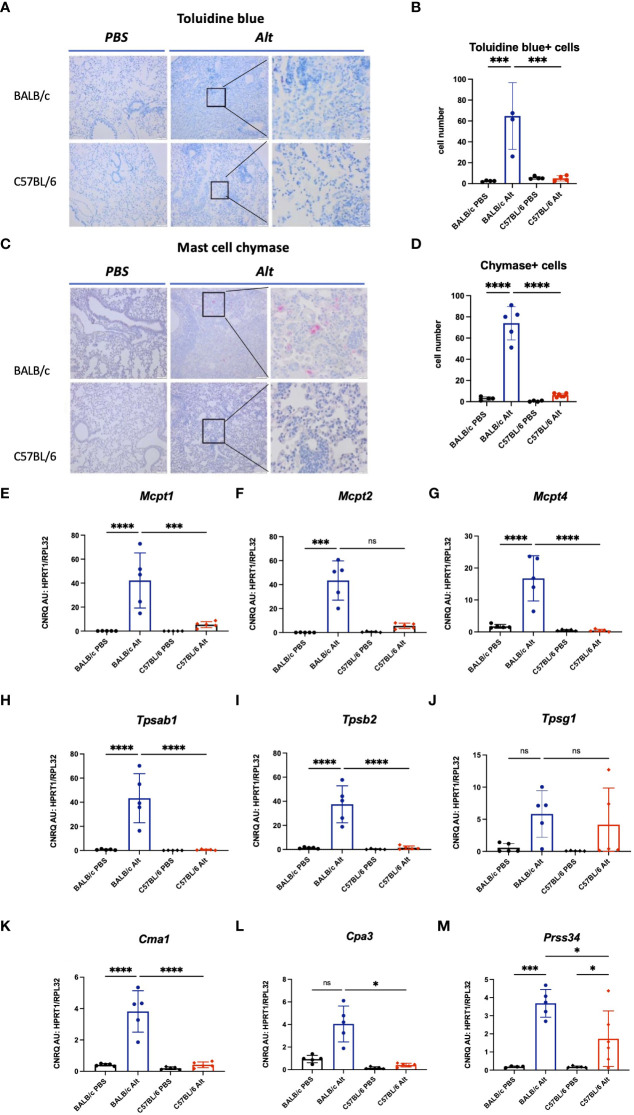
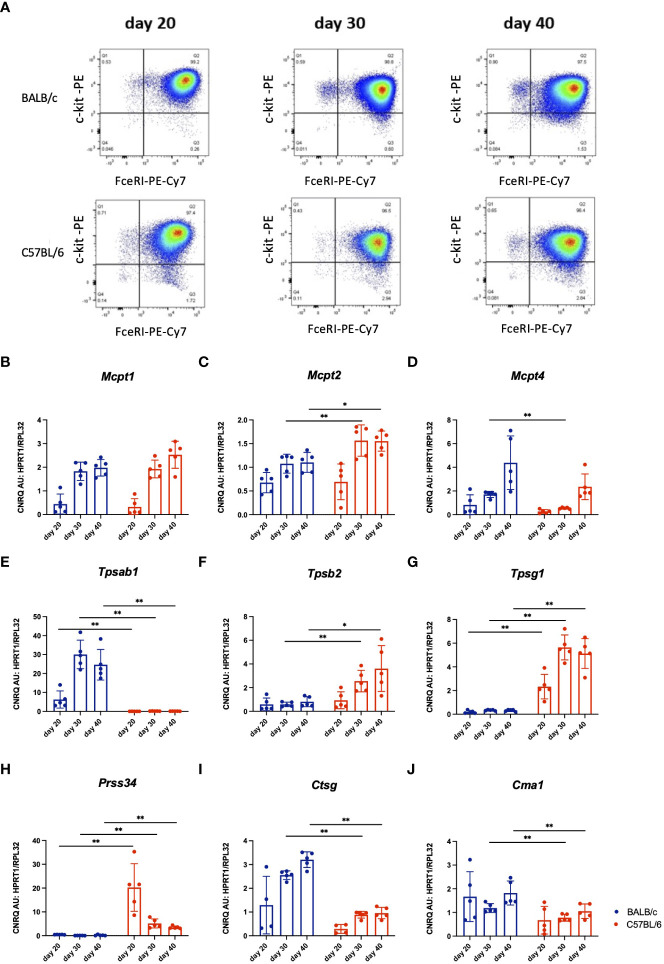
, full-length IL-33 protein was efficiently degraded by mast cell supernatants of BALB/c mice in contrast to the mast cell supernatants from C57BL/6 mice. RNAseq analysis indicated major differences in the gene expression profiles of bone marrow-derived mast cells from C57BL/6 and BALB/c mice. In - treated C57BL/6 mice the full-length form of IL-33 was mainly present, while in BALB/c mice, the processed shorter form of IL-33 was more prominent. The observed cleavage pattern of IL-33 was associated with a nearly complete lack of mast cells and their proteases in the lungs of C57BL/6 mice. While most inflammatory cells were similarly increased in -treated C57BL/6 and BALB/c mice, C57BL/6 mice had significantly more eosinophils in the bronchoalveolar lavage fluid and IL-5 protein levels in their lungs than BALB/c mice.
Our study demonstrates that lung mast cells differ in number and protease content between the two tested mouse strains and could affect the processing of IL-33 and inflammatory outcome of -induced airway inflammation. We suggest that mast cells and their proteases play a regulatory role in IL-33-induced lung inflammation by limiting its proinflammatory effect the IL-33/ST2 signaling pathway.
最近的研究强烈表明,肥大细胞衍生的蛋白酶通过对其中心结构域的酶切作用,作为白细胞介素-33(IL-33)活性的调节剂。需要更好地了解肥大细胞蛋白酶在 IL-33 活性中的作用。我们旨在比较 C57BL/6 和 BALB/c 小鼠中肥大细胞蛋白酶的表达,它们在白细胞介素-33 细胞因子切割中的作用,以及它们对变应性气道炎症的贡献。
与 C57BL/6 小鼠的肥大细胞上清液相比,BALB/c 小鼠的肥大细胞上清液能够有效地降解全长 IL-33 蛋白。RNAseq 分析表明,C57BL/6 和 BALB/c 小鼠骨髓来源的肥大细胞的基因表达谱存在主要差异。在 IL-33 处理的 C57BL/6 小鼠中,主要存在全长形式的 IL-33,而在 BALB/c 小鼠中,加工后的短形式的 IL-33 更为突出。观察到的 IL-33 切割模式与 C57BL/6 小鼠肺部肥大细胞及其蛋白酶的几乎完全缺失有关。虽然在 IL-33 处理的 C57BL/6 和 BALB/c 小鼠中大多数炎症细胞都有类似的增加,但 C57BL/6 小鼠的支气管肺泡灌洗液中的嗜酸性粒细胞和肺部中的 IL-5 蛋白水平明显高于 BALB/c 小鼠。
我们的研究表明,在这两种测试的小鼠品系中,肺部肥大细胞在数量和蛋白酶含量上存在差异,并且可能影响 IL-33 的加工和 诱导的气道炎症的炎症结果。我们认为,肥大细胞及其蛋白酶通过限制其促炎作用来调节 IL-33 诱导的肺部炎症 IL-33/ST2 信号通路。