Makhija Sangeet, Griffett Joshua D, Veerakanellore Giri Babu, Burris Thomas P, Elgendy Bahaa, Griffett Kristine
Department of Anatomy, Physiology, and Pharmacology, College of Veterinary Medicine, Auburn University, Auburn, AL, United States.
Center for Clinical Pharmacology, Washington University School of Medicine, University of Health Sciences & Pharmacy, St. Louis, MO, United States.
Front Pharmacol. 2023 Apr 19;14:1171931. doi: 10.3389/fphar.2023.1171931. eCollection 2023.
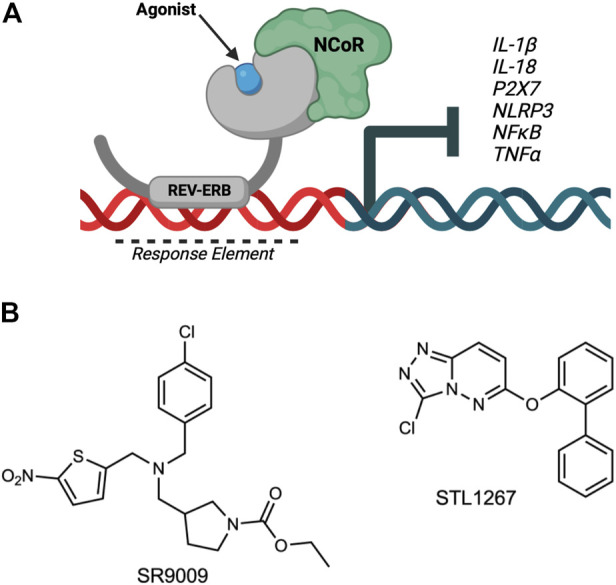
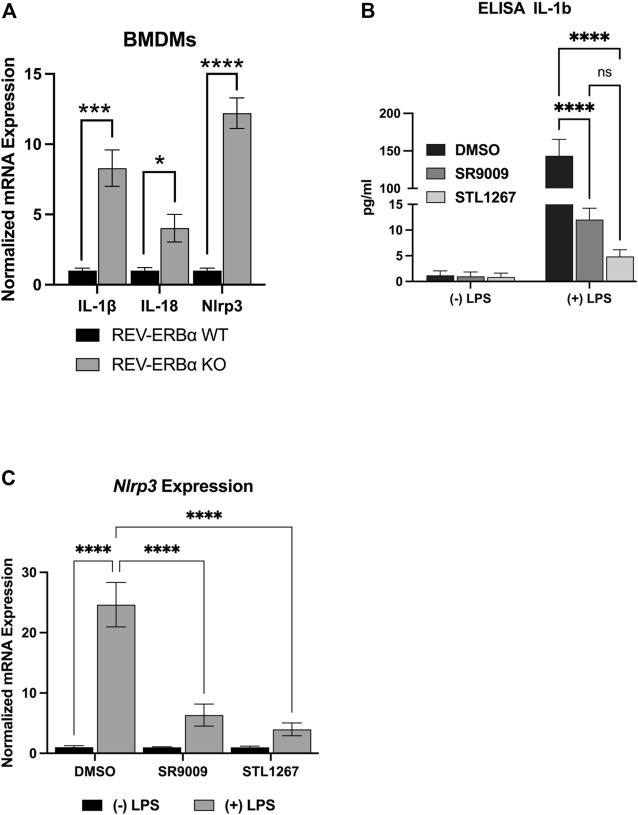
Pain is a complex problem affecting millions of people worldwide. The current therapies to reduce pain are limited as many treatment options inadequately address the causes of pain, lead to tolerance of the drug, or have adverse effects including abuse potential. While there are many causes of pain, one underlying mechanism to the pathogenesis and maintenance of pain conditions is chronic inflammation driven by the NLRP3 inflammasome. Several inflammasome inhibitors are currently under investigation however have the potential to suppress the functioning of the innate immune system, which may cause unwanted affects in patients. Here, we show that the nuclear receptor REV-ERB can suppress the activation of the inflammasome when pharmacologically activated with small molecule agonists. Additionally, REV-ERB activation appears to have analgesic potential in a model of acute inflammatory pain, likely as a result of inflammasome suppression.
疼痛是一个复杂的问题,影响着全球数百万人。目前减轻疼痛的疗法有限,因为许多治疗选择无法充分解决疼痛的原因,会导致药物耐受性,或产生包括滥用可能性在内的不良反应。虽然疼痛有多种原因,但疼痛病症发病机制和维持的一个潜在机制是由NLRP3炎性小体驱动的慢性炎症。目前有几种炎性小体抑制剂正在研究中,但它们有可能抑制先天免疫系统的功能,这可能会给患者带来不良影响。在这里,我们表明,当用小分子激动剂进行药理学激活时,核受体REV-ERB可以抑制炎性小体的激活。此外,REV-ERB激活在急性炎性疼痛模型中似乎具有镇痛潜力,这可能是炎性小体抑制的结果。