Department of Microbiology and Immunology, University of Iowa Carver College of Medicine, Iowa City, IA 52242.
Carver Biotechnology Center-Protein Sciences Facility, University of Illinois at Urbana-Champaign, Urbana, IL 61801.
Proc Natl Acad Sci U S A. 2023 May 16;120(20):e2303487120. doi: 10.1073/pnas.2303487120. Epub 2023 May 8.
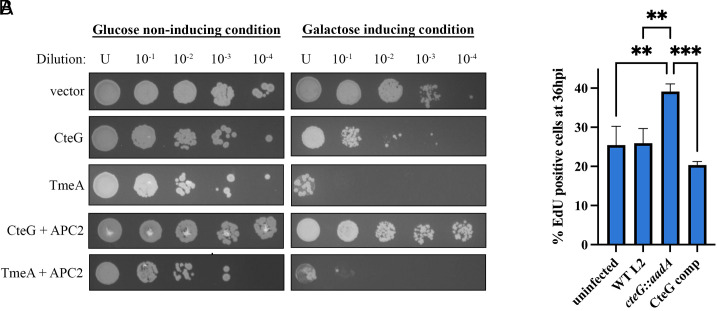
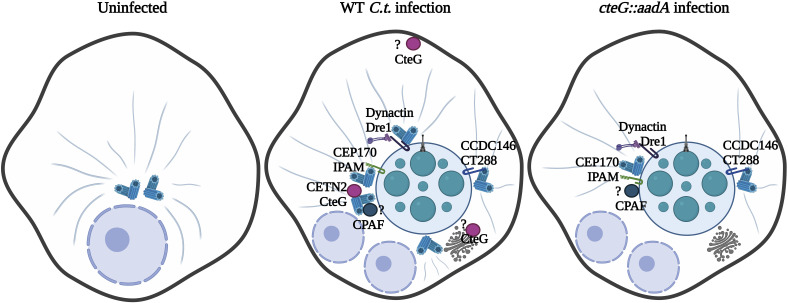
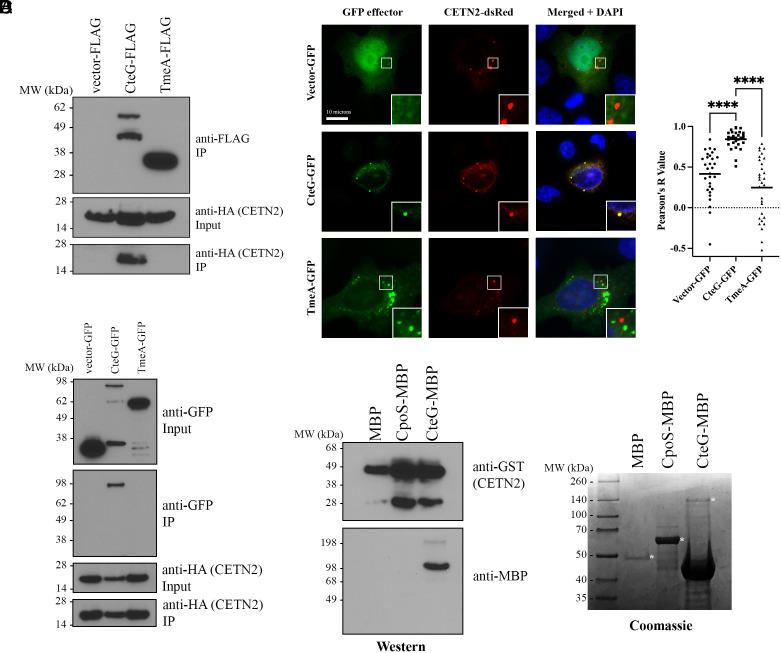
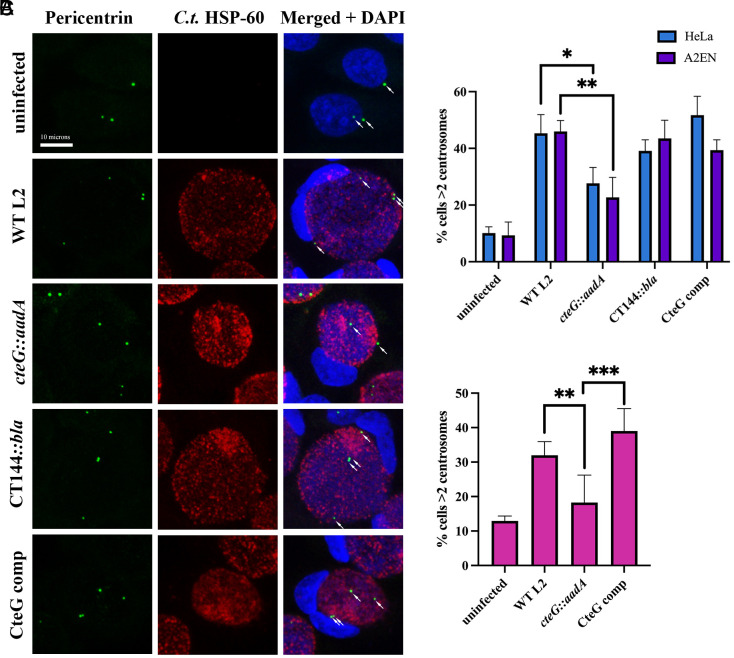
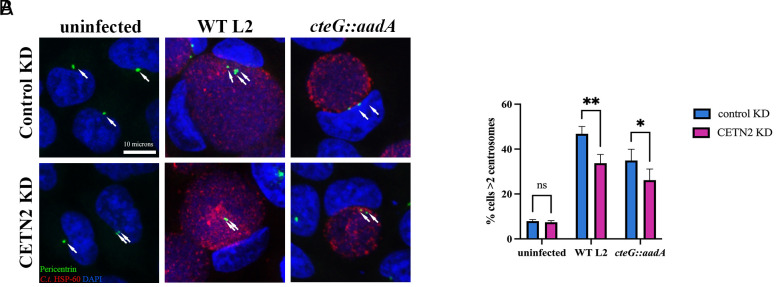
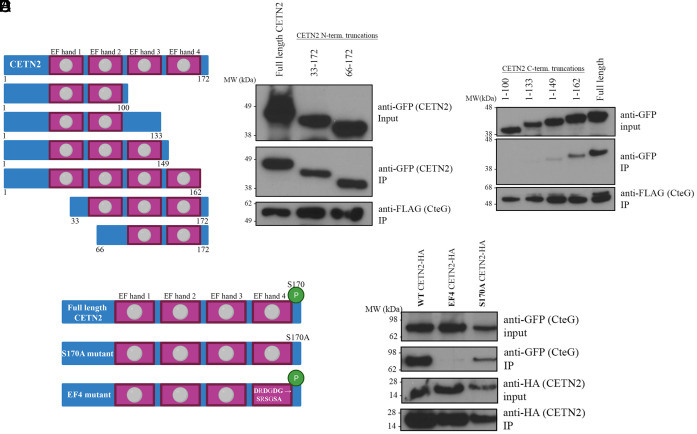
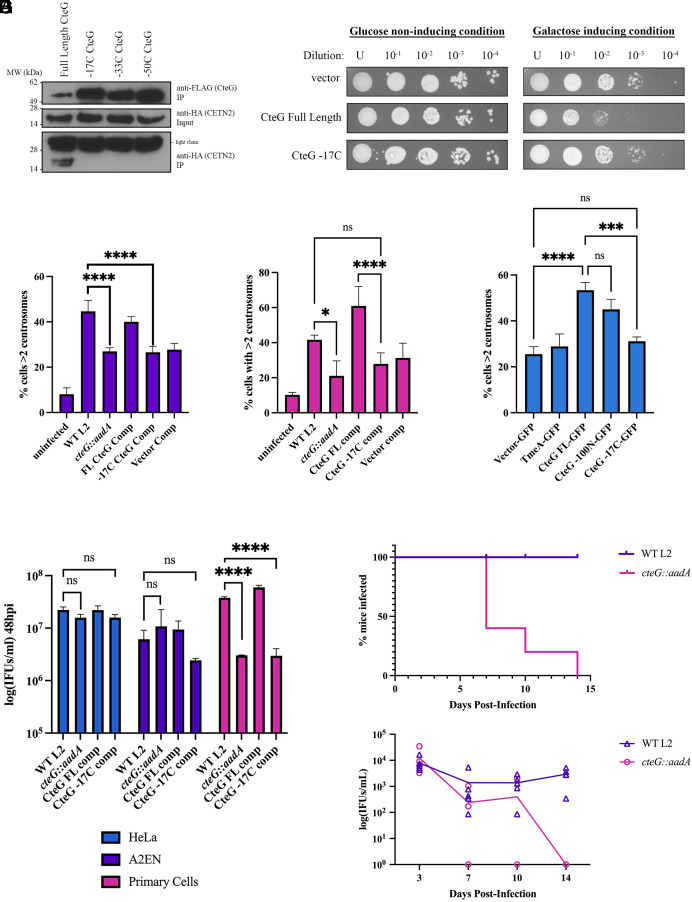
The centrosome is the main microtubule organizing center of the cell and is crucial for mitotic spindle assembly, chromosome segregation, and cell division. Centrosome duplication is tightly controlled, yet several pathogens, most notably oncogenic viruses, perturb this process leading to increased centrosome numbers. Infection by the obligate intracellular bacterium () correlates with blocked cytokinesis, supernumerary centrosomes, and multipolar spindles; however, the mechanisms behind how induces these cellular abnormalities remain largely unknown. Here we show that the secreted effector protein, CteG, binds to centrin-2 (CETN2), a key structural component of centrosomes and regulator of centriole duplication. Our data indicate that both CteG and CETN2 are necessary for infection-induced centrosome amplification, in a manner that requires the C-terminus of CteG. Strikingly, CteG is important for in vivo infection and growth in primary cervical cells but is dispensable for growth in immortalized cells, highlighting the importance of this effector protein to chlamydial infection. These findings begin to provide mechanistic insight into how induces cellular abnormalities during infection, but also indicate that obligate intracellular bacteria may contribute to cellular transformation events. Centrosome amplification mediated by CteG-CETN2 interactions may explain why chlamydial infection leads to an increased risk of cervical or ovarian cancer.
中心体是细胞的主要微管组织中心,对于有丝分裂纺锤体的组装、染色体分离和细胞分裂至关重要。中心体的复制受到严格控制,但几种病原体,尤其是致癌病毒,会扰乱这个过程,导致中心体数量增加。专性细胞内细菌()的感染与胞质分裂阻断、中心体过多和多极纺锤体有关;然而,关于如何诱导这些细胞异常的机制在很大程度上仍然未知。在这里,我们表明分泌效应蛋白 CteG 与中心体蛋白 2(CETN2)结合,后者是中心体的关键结构成分和中心体复制的调节剂。我们的数据表明,CteG 和 CETN2 都是感染诱导的中心体扩增所必需的,这种扩增方式需要 CteG 的 C 末端。引人注目的是,CteG 对于在原代宫颈细胞中的体内感染和生长是重要的,但对于在永生化细胞中的生长是可有可无的,这突出了该效应蛋白对衣原体感染的重要性。这些发现开始为阐明在感染过程中如何诱导细胞异常提供了机制上的见解,但也表明专性细胞内细菌可能有助于细胞转化事件。CteG-CETN2 相互作用介导的中心体扩增可能解释了为什么衣原体感染会增加宫颈癌或卵巢癌的风险。