Department of Nutrition, School of Public Health, Sun Yat-sen University, Guangzhou, PR China.
Division of Advanced Diagnostics, Toronto General Hospital Research Institute, University Health Network, Toronto, ON, Canada.
Nat Commun. 2023 May 9;14(1):2656. doi: 10.1038/s41467-023-38259-1.
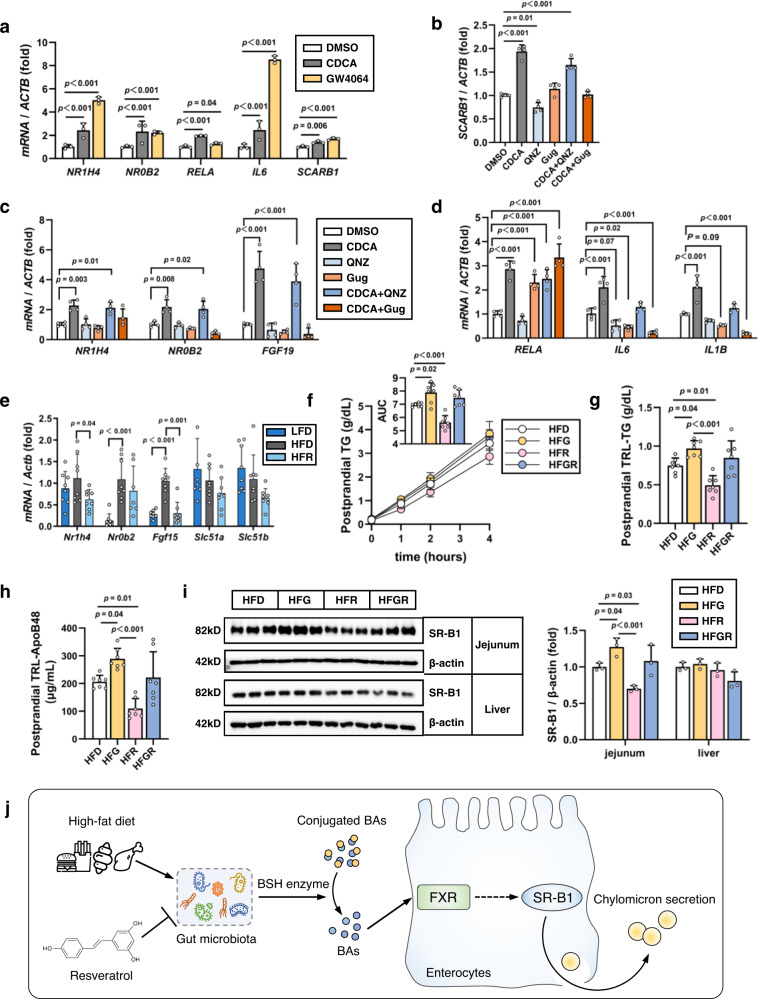
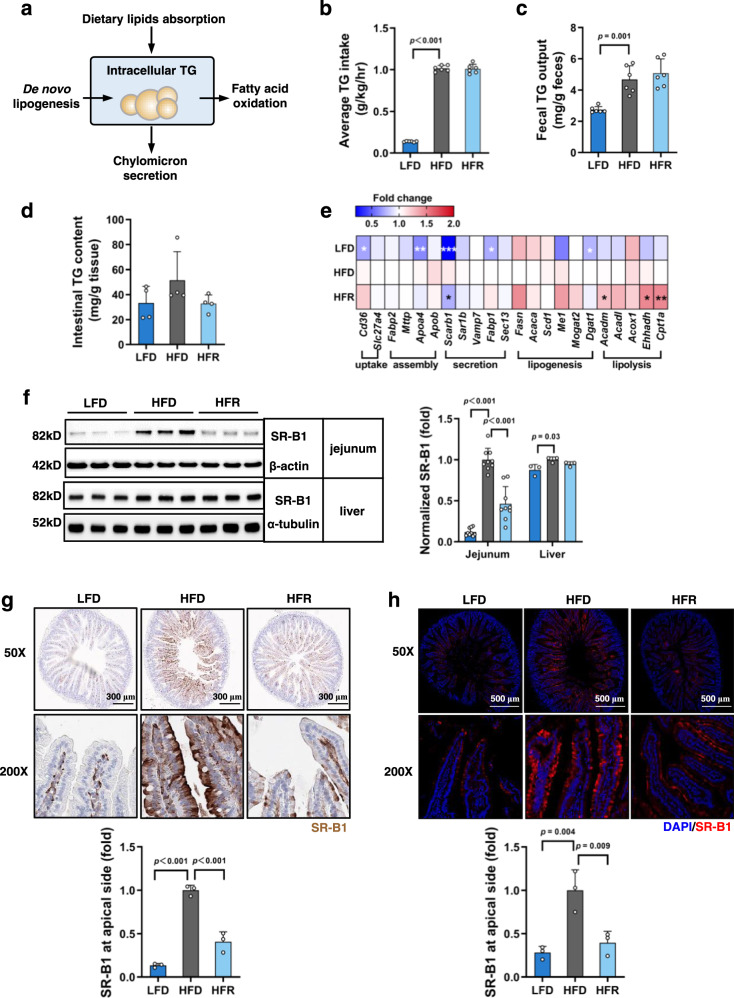
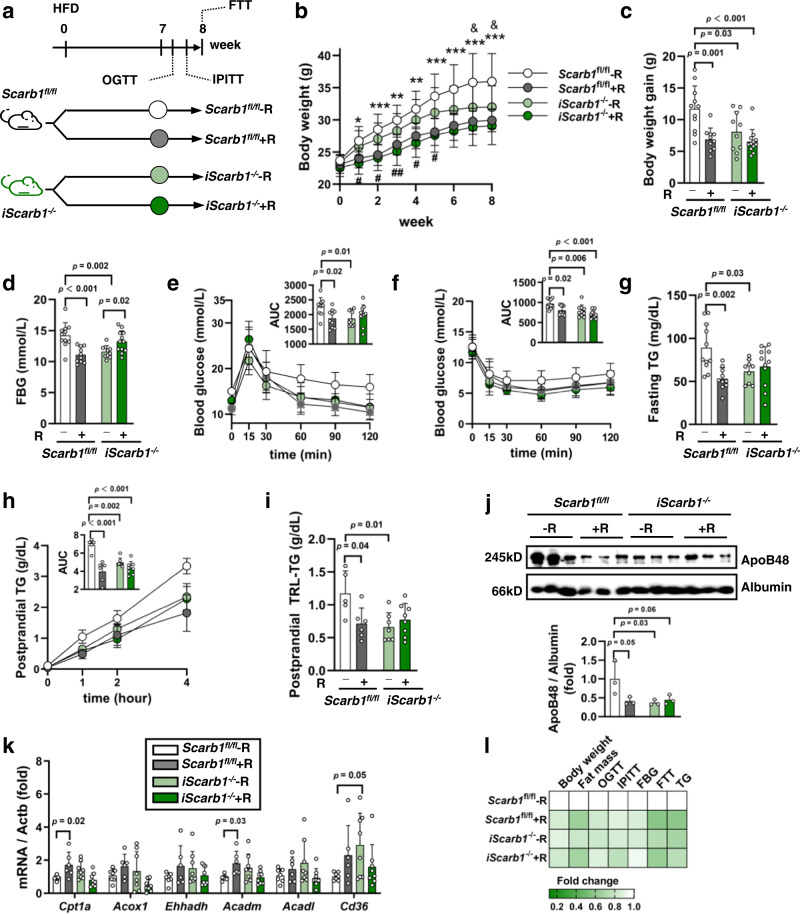
Two common features of dietary polyphenols have hampered our mechanistic understanding of their beneficial effects for decades: targeting multiple organs and extremely low bioavailability. We show here that resveratrol intervention (REV-I) in high-fat diet (HFD)-challenged male mice inhibits chylomicron secretion, associated with reduced expression of jejunal but not hepatic scavenger receptor class B type 1 (SR-B1). Intestinal mucosa-specific SR-B1 mice on HFD-challenge exhibit improved lipid homeostasis but show virtually no further response to REV-I. SR-B1 expression in Caco-2 cells cannot be repressed by pure resveratrol compound while fecal-microbiota transplantation from mice on REV-I suppresses jejunal SR-B1 in recipient mice. REV-I reduces fecal levels of bile acids and activity of fecal bile-salt hydrolase. In Caco-2 cells, chenodeoxycholic acid treatment stimulates both FXR and SR-B1. We conclude that gut microbiome is the primary target of REV-I, and REV-I improves lipid homeostasis at least partially via attenuating FXR-stimulated gut SR-B1 elevation.
靶向多个器官和极低的生物利用度。我们在这里表明,高脂肪饮食(HFD)挑战下的雄性小鼠的白藜芦醇干预(REV-I)抑制乳糜微粒分泌,与回肠但不是肝脏清道夫受体 B 型 1(SR-B1)的表达降低有关。在 HFD 挑战下的肠道黏膜特异性 SR-B1 小鼠表现出改善的脂质稳态,但对 REV-I 几乎没有进一步的反应。纯白藜芦醇化合物不能抑制 Caco-2 细胞中的 SR-B1 表达,而来自接受 REV-I 的小鼠的粪便微生物群移植可抑制受者小鼠的回肠 SR-B1。REV-I 降低粪便胆汁酸水平和粪便胆汁盐水解酶的活性。在 Caco-2 细胞中,鹅去氧胆酸处理刺激 FXR 和 SR-B1。我们得出的结论是,肠道微生物群是 REV-I 的主要靶点,REV-I 通过减轻 FXR 刺激的肠道 SR-B1 升高至少部分改善脂质稳态。