Gonzales Mitzi M, Garbarino Valentina R, Kautz Tiffany, Palavicini Juan Pablo, Lopez-Cruzan Marisa, Dehkordi Shiva Kazempour, Mathews Julia, Zare Habil, Xu Peng, Zhang Bin, Franklin Crystal, Habes Mohamad, Craft Suzanne, Petersen Ronald C, Tchkonia Tamara, Kirkland James, Salardini Arash, Seshadri Sudha, Musi Nicolas, Orr Miranda E
Glenn Biggs Institute for Alzheimer's & Neurodegenerative Diseases, University of Texas Health Science Center at San Antonio, San Antonio, TX, USA.
Department of Neurology, University of Texas Health Science Center at San Antonio, San Antonio, TX, USA.
Res Sq. 2023 Apr 24:rs.3.rs-2809973. doi: 10.21203/rs.3.rs-2809973/v1.
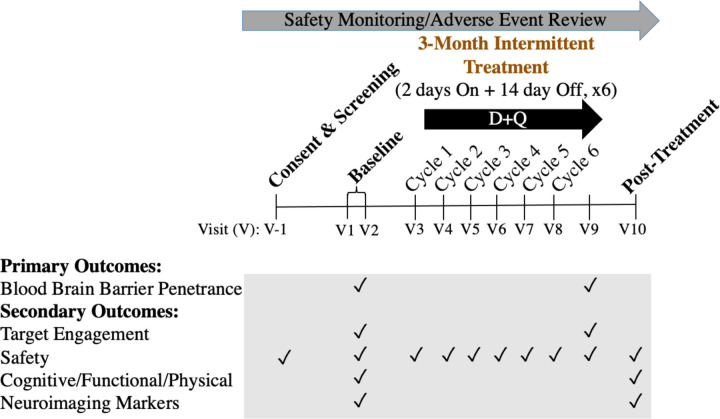
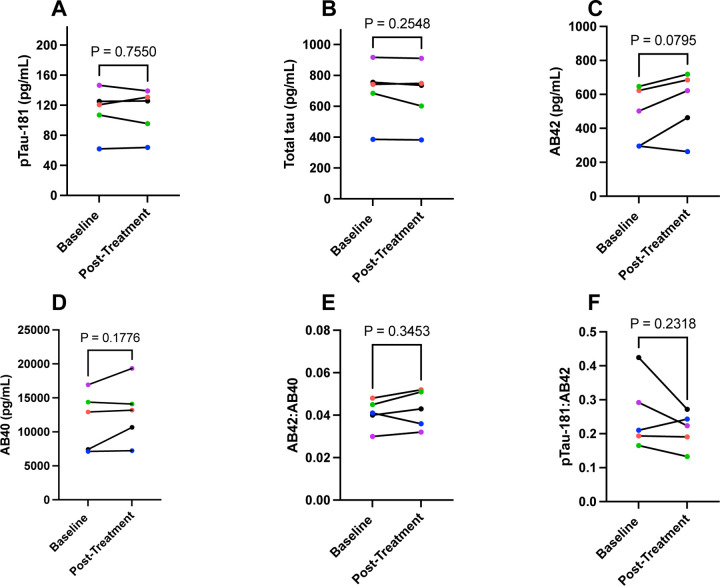
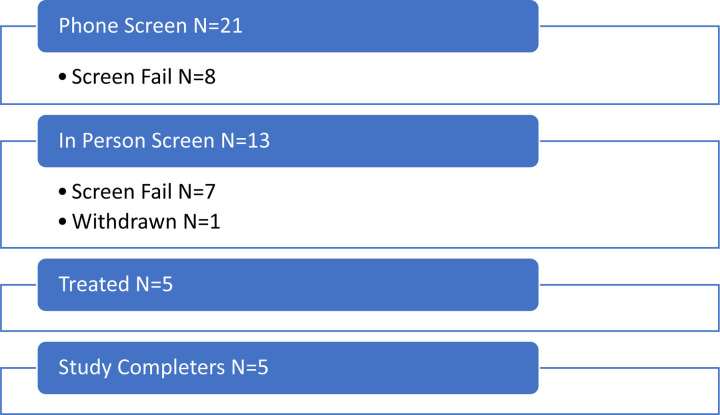
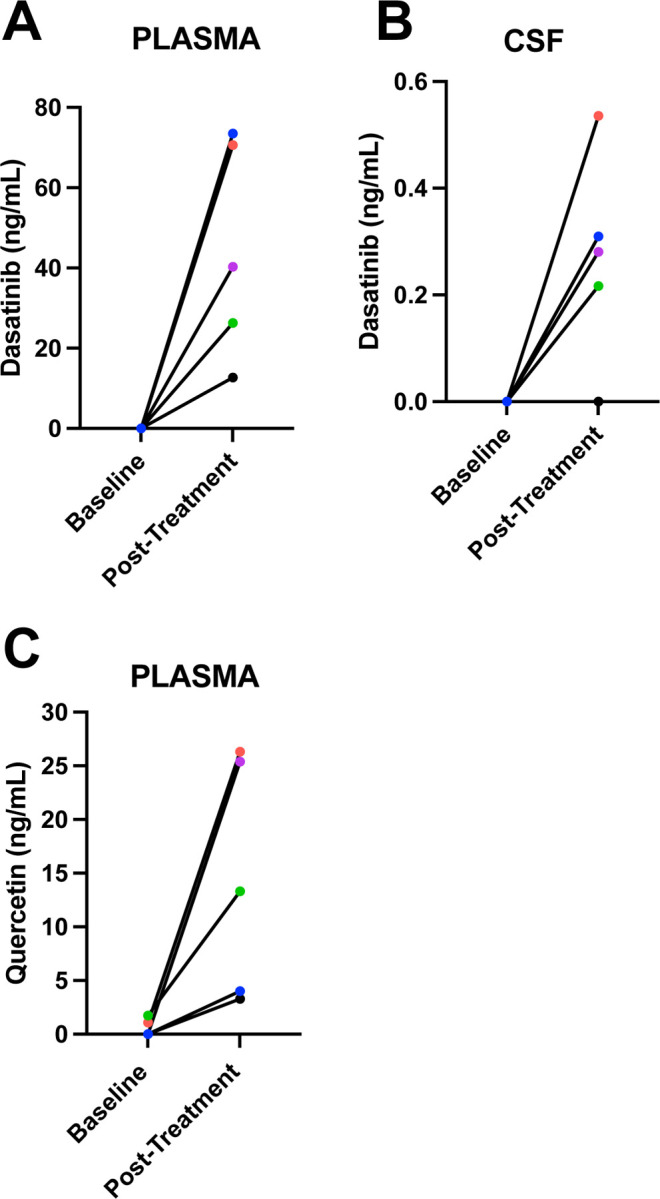
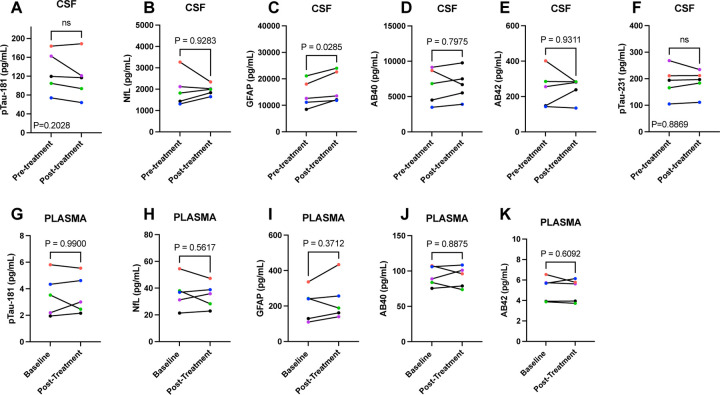
Cellular senescence has been identified as a pathological mechanism linked to tau and amyloid beta (Aβ) accumulation in mouse models of Alzheimer's disease (AD). Clearance of senescent cells using the senolytic compounds dasatinib (D) and quercetin (Q) reduced neuropathological burden and improved clinically relevant outcomes in the mice. Herein, we conducted a vanguard open-label clinical trial of senolytic therapy for AD with the primary aim of evaluating central nervous system (CNS) penetrance, as well as exploratory data collection relevant to safety, feasibility, and efficacy. Participants with early-stage symptomatic AD were enrolled in an open-label, 12-week pilot study of intermittent orally-delivered D+Q. CNS penetrance was assessed by evaluating drug levels in cerebrospinal fluid (CSF) using high performance liquid chromatography with tandem mass spectrometry. Safety was continuously monitored with adverse event reporting, vitals, and laboratory work. Cognition, neuroimaging, and plasma and CSF biomarkers were assessed at baseline and post-treatment. Five participants (mean age: 76±5 years; 40% female) completed the trial. The treatment increased D and Q levels in the blood of all participants ranging from 12.7 to 73.5 ng/ml for D and 3.29-26.30 ng/ml for Q. D levels were detected in the CSF of four participants ranging from 0.281 to 0.536 ng/ml (t(4)=3.123, p=0.035); Q was not detected. Treatment was well-tolerated with no early discontinuation and six mild to moderate adverse events occurring across the study. Cognitive and neuroimaging endpoints did not significantly differ from baseline to post-treatment. CNS levels of IL-6 and GFAP increased from baseline to post-treatment (t(4)=3.913, p=008 and t(4)=3.354, p=0.028, respectively) concomitant with decreased levels of several cytokines and chemokines associated with senescence, and a trend toward higher levels of Aβ42 (t(4)=-2.338, p=0.079). Collectively the data indicate the CNS penetrance of D and provide preliminary support for the safety, tolerability, and feasibility of the intervention and suggest that astrocytes and Aβ may be particularly responsive to the treatment. While early results are promising, fully powered, placebo-controlled studies are needed to evaluate the potential of AD modification with the novel approach of targeting cellular senescence.
细胞衰老已被确定为与阿尔茨海默病(AD)小鼠模型中tau蛋白和β淀粉样蛋白(Aβ)积累相关的病理机制。使用衰老细胞溶解化合物达沙替尼(D)和槲皮素(Q)清除衰老细胞可减轻小鼠的神经病理负担并改善临床相关结果。在此,我们开展了一项针对AD的衰老细胞溶解疗法的先锋开放标签临床试验,主要目的是评估中枢神经系统(CNS)的药物渗透率,以及收集与安全性、可行性和疗效相关的探索性数据。早期有症状的AD参与者被纳入一项为期12周的开放标签间歇性口服D+Q的试点研究。通过使用高效液相色谱串联质谱法评估脑脊液(CSF)中的药物水平来评估CNS药物渗透率。通过不良事件报告、生命体征和实验室检查持续监测安全性。在基线和治疗后评估认知、神经影像学以及血浆和CSF生物标志物。五名参与者(平均年龄:76±5岁;40%为女性)完成了试验。治疗使所有参与者血液中的D和Q水平升高,D的水平范围为12.7至73.5 ng/ml,Q的水平范围为3.29至26.30 ng/ml。四名参与者的CSF中检测到D水平,范围为0.281至0.536 ng/ml(t(4)=3.123,p=0.035);未检测到Q。治疗耐受性良好,无早期停药情况,整个研究中发生了6起轻度至中度不良事件。从基线到治疗后,认知和神经影像学终点无显著差异。CNS中白细胞介素-6(IL-6)和胶质纤维酸性蛋白(GFAP)的水平从基线到治疗后升高(分别为t(4)=3.913,p=0.008和t(4)=3.354,p=0.028),同时与衰老相关的几种细胞因子和趋化因子水平降低,并且Aβ42水平有升高趋势(t(4)=-2.338,p=0.079)。总体而言,数据表明D可穿透CNS,并为该干预措施的安全性、耐受性和可行性提供了初步支持,表明星形胶质细胞和Aβ可能对该治疗特别敏感。虽然早期结果很有前景,但需要进行充分有力的安慰剂对照研究,以评估靶向细胞衰老这一新颖方法对AD进行改善的潜力。