Division of Experimental Hematology and Cancer Biology, Cincinnati Children's Hospital, Cincinnati, OH.
Department of Cancer Biology, University of Cincinnati, Cincinnati, OH.
Blood. 2023 Sep 14;142(11):989-1007. doi: 10.1182/blood.2022018718.
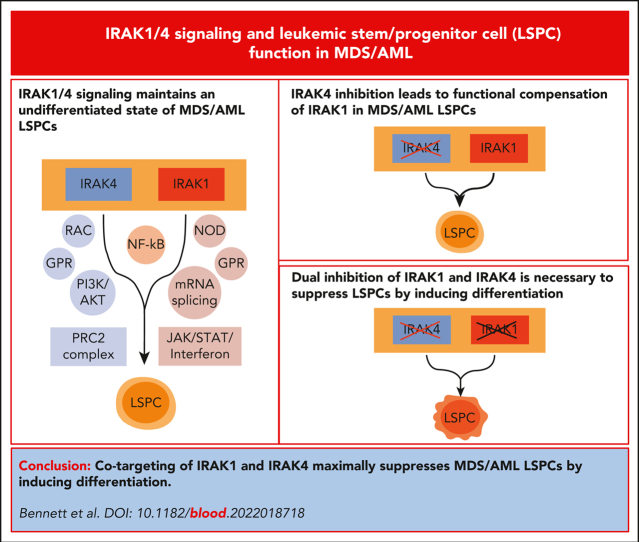
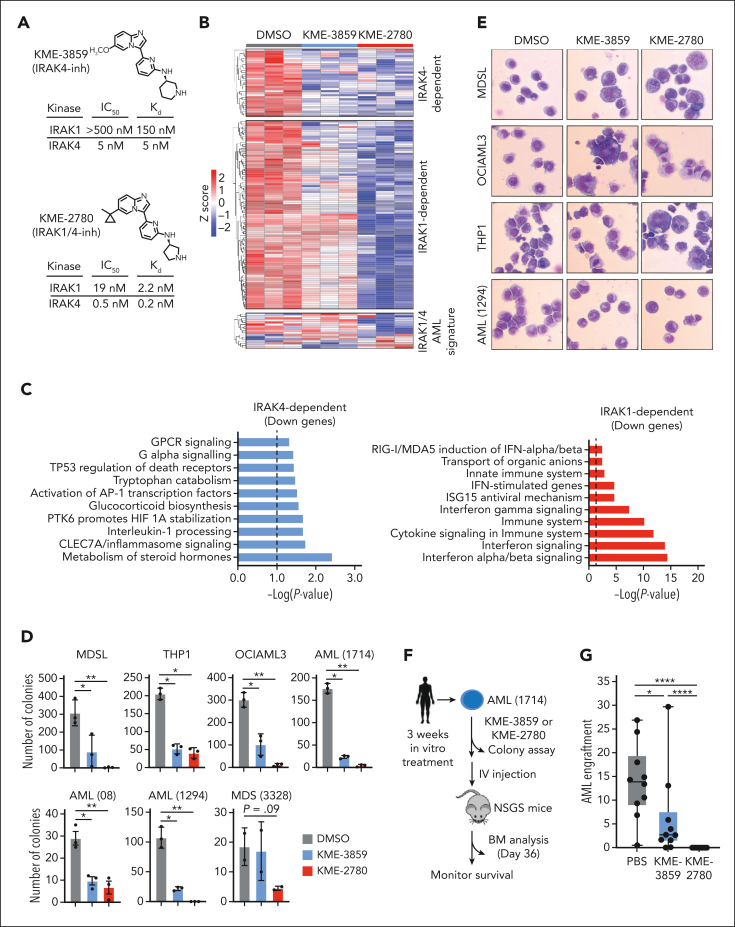
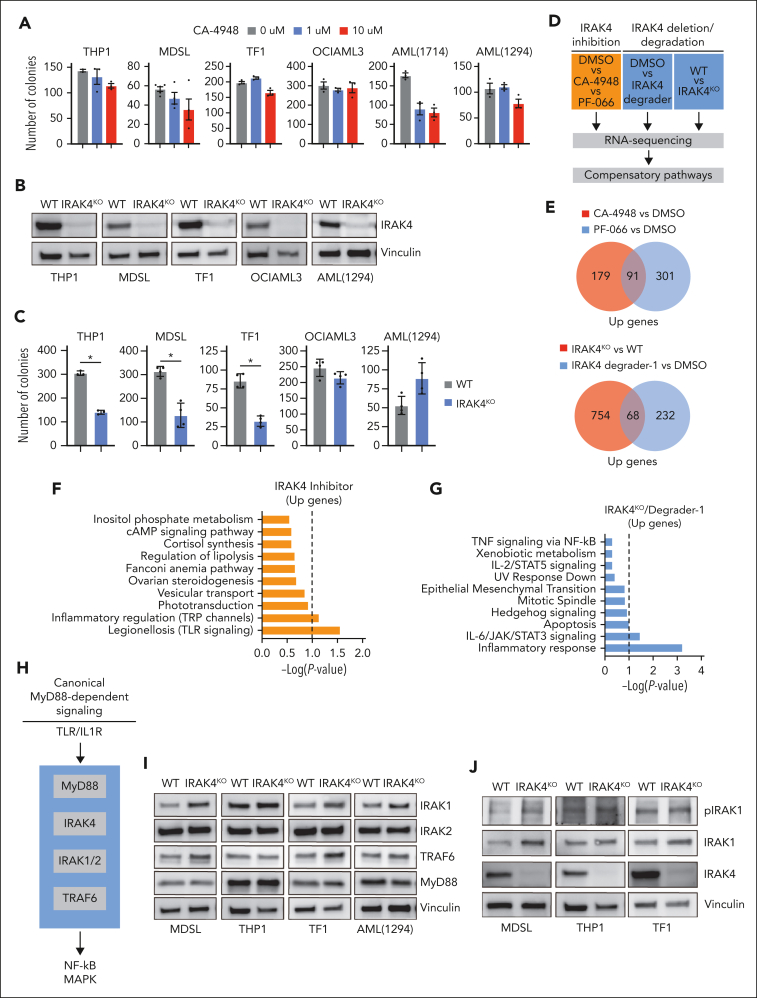
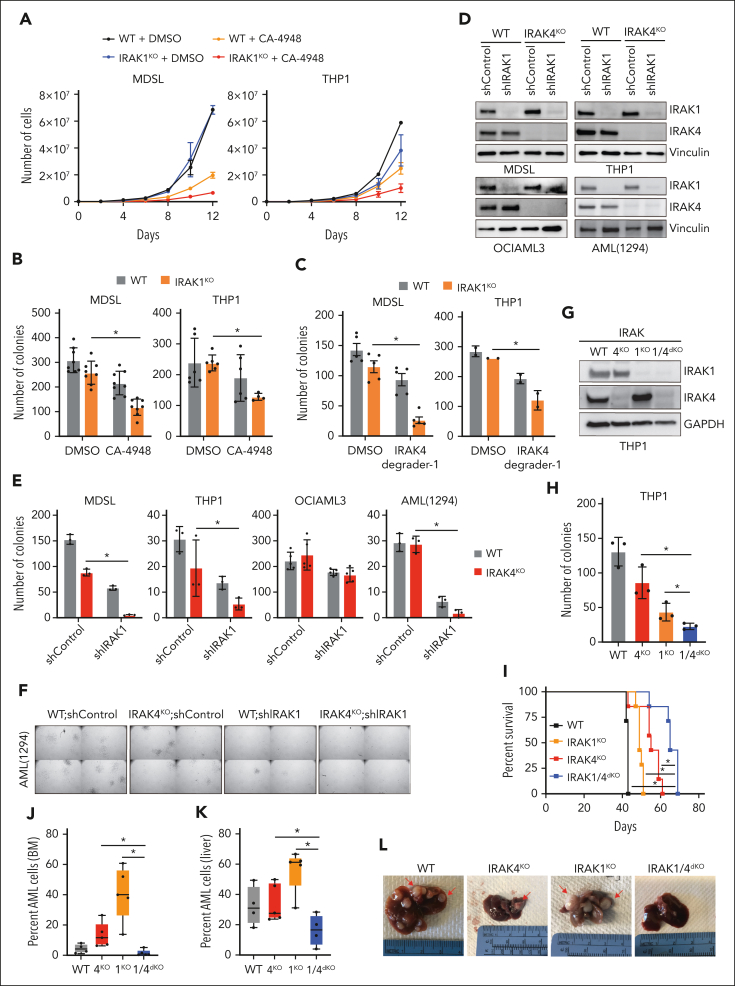
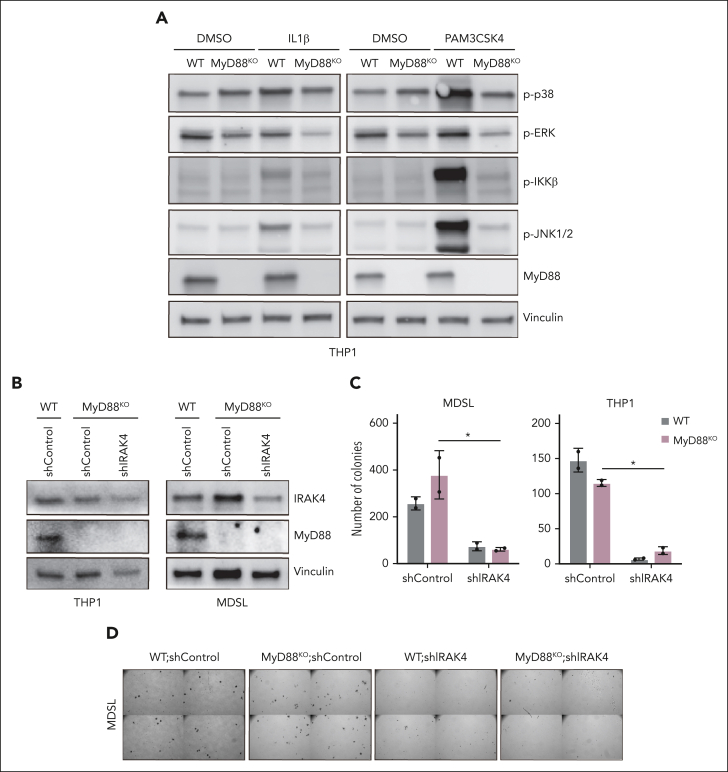
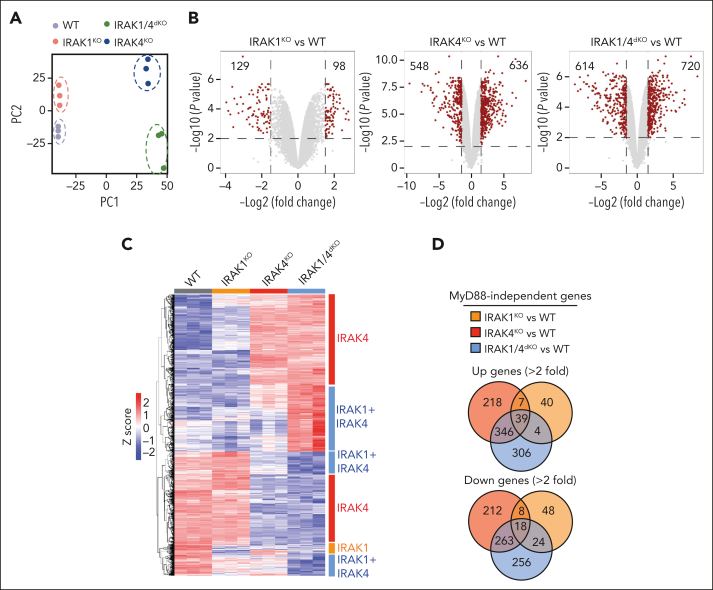
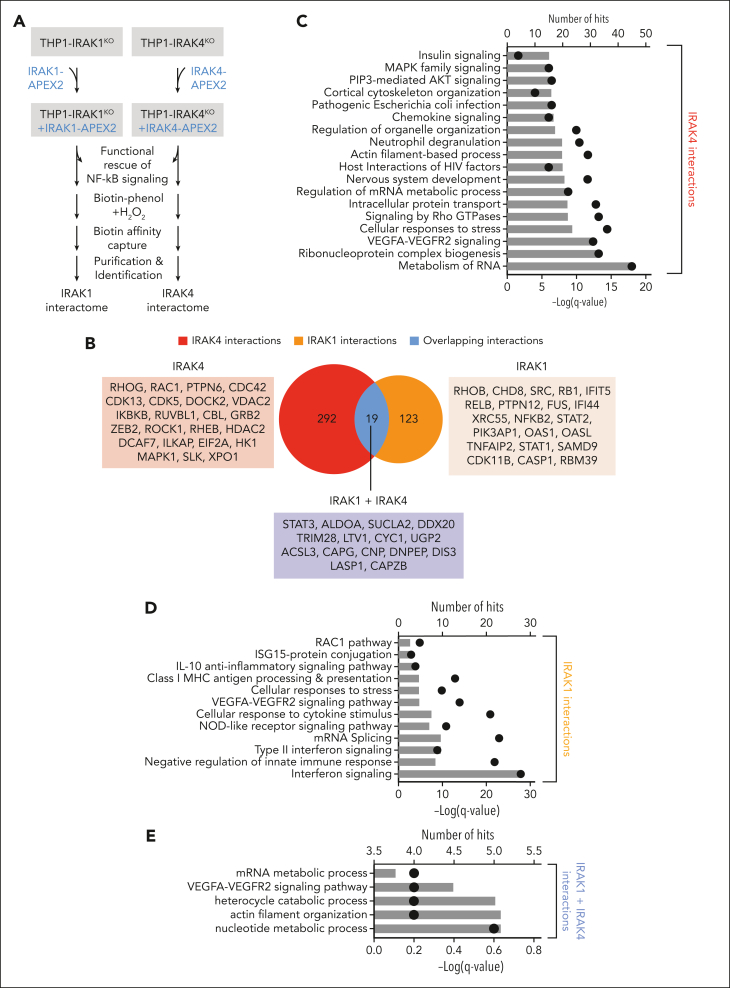
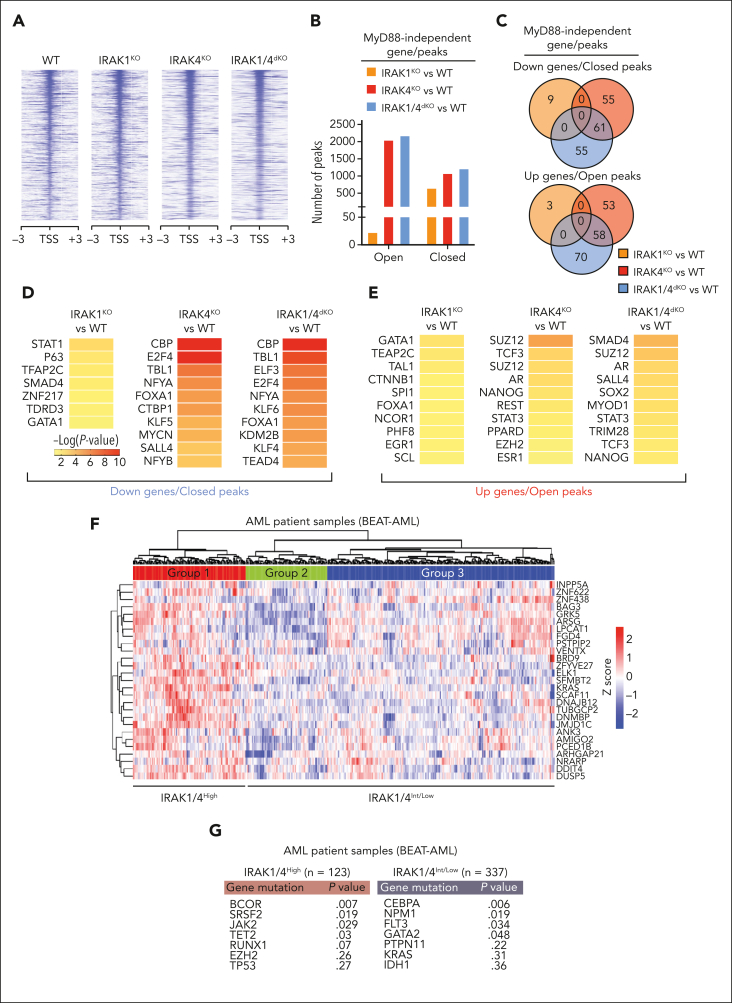
Dysregulation of innate immune signaling is a hallmark of hematologic malignancies. Recent therapeutic efforts to subvert aberrant innate immune signaling in myelodysplastic syndrome (MDS) and acute myeloid leukemia (AML) have focused on the kinase IRAK4. IRAK4 inhibitors have achieved promising, though moderate, responses in preclinical studies and clinical trials for MDS and AML. The reasons underlying the limited responses to IRAK4 inhibitors remain unknown. In this study, we reveal that inhibiting IRAK4 in leukemic cells elicits functional complementation and compensation by its paralog, IRAK1. Using genetic approaches, we demonstrate that cotargeting IRAK1 and IRAK4 is required to suppress leukemic stem/progenitor cell (LSPC) function and induce differentiation in cell lines and patient-derived cells. Although IRAK1 and IRAK4 are presumed to function primarily downstream of the proximal adapter MyD88, we found that complementary and compensatory IRAK1 and IRAK4 dependencies in MDS/AML occur via noncanonical MyD88-independent pathways. Genomic and proteomic analyses revealed that IRAK1 and IRAK4 preserve the undifferentiated state of MDS/AML LSPCs by coordinating a network of pathways, including ones that converge on the polycomb repressive complex 2 complex and JAK-STAT signaling. To translate these findings, we implemented a structure-based design of a potent and selective dual IRAK1 and IRAK4 inhibitor KME-2780. MDS/AML cell lines and patient-derived samples showed significant suppression of LSPCs in xenograft and in vitro studies when treated with KME-2780 as compared with selective IRAK4 inhibitors. Our results provide a mechanistic basis and rationale for cotargeting IRAK1 and IRAK4 for the treatment of cancers, including MDS/AML.
先天免疫信号失调是血液恶性肿瘤的一个标志。最近的治疗努力旨在颠覆骨髓增生异常综合征(MDS)和急性髓系白血病(AML)中异常的先天免疫信号,其重点是激酶 IRAK4。在 MDS 和 AML 的临床前研究和临床试验中,IRAK4 抑制剂已取得了有希望但中等程度的反应。导致对 IRAK4 抑制剂反应有限的原因尚不清楚。在这项研究中,我们揭示了在白血病细胞中抑制 IRAK4 会引起其旁系同源物 IRAK1 的功能互补和代偿。通过遗传方法,我们证明了同时靶向 IRAK1 和 IRAK4 是抑制白血病干细胞/祖细胞(LSPC)功能并在细胞系和患者来源的细胞中诱导分化所必需的。尽管 IRAK1 和 IRAK4 被认为主要在近端衔接蛋白 MyD88 下游发挥作用,但我们发现 MDS/AML 中 IRAK1 和 IRAK4 的互补和代偿依赖性是通过非典型的 MyD88 非依赖性途径发生的。基因组和蛋白质组分析表明,IRAK1 和 IRAK4 通过协调包括聚蛋白抑制复合物 2 复合物和 JAK-STAT 信号在内的一系列途径来维持 MDS/AML LSPC 的未分化状态。为了将这些发现转化为实践,我们设计了一种基于结构的有效且选择性的双重 IRAK1 和 IRAK4 抑制剂 KME-2780。与选择性 IRAK4 抑制剂相比,当用 KME-2780 处理时,MDS/AML 细胞系和患者来源的样本在异种移植和体外研究中显示出 LSPCs 的显著抑制。我们的研究结果为同时靶向 IRAK1 和 IRAK4 治疗癌症(包括 MDS/AML)提供了机制基础和原理。