Department of Experimental Psychology, Helmholtz Institute, Utrecht University, Utrecht, The Netherlands.
Innovative Testing in Life Sciences and Chemistry, University of Applied Sciences Utrecht, Utrecht, The Netherlands.
Sci Rep. 2023 May 12;13(1):7713. doi: 10.1038/s41598-023-34620-y.
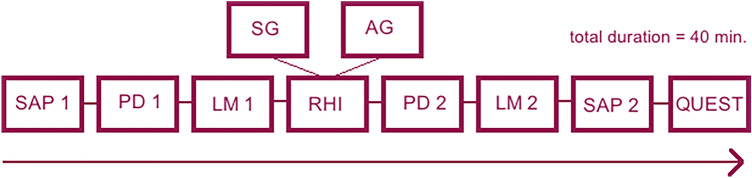
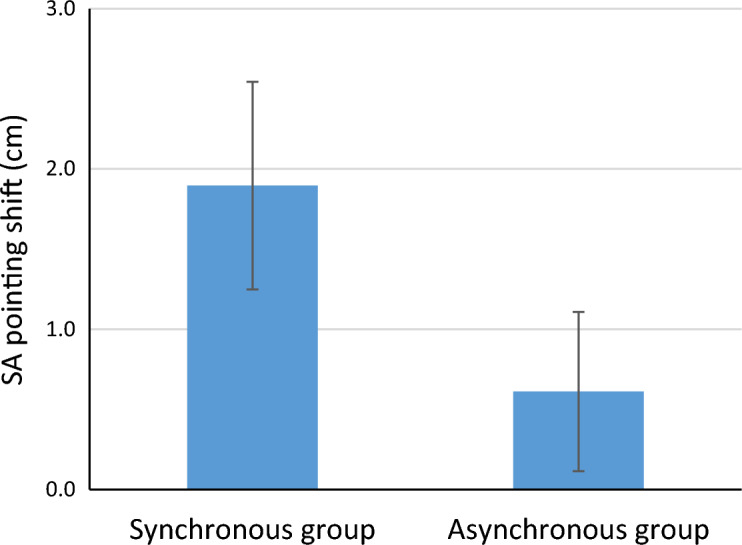
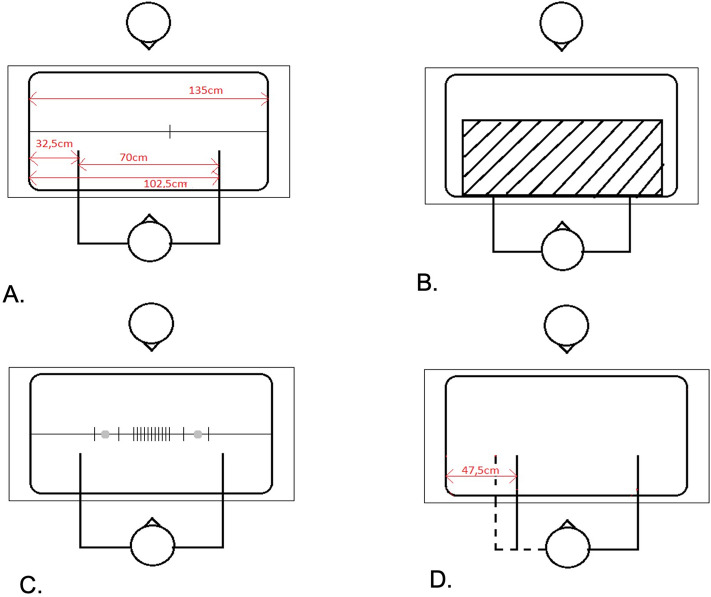
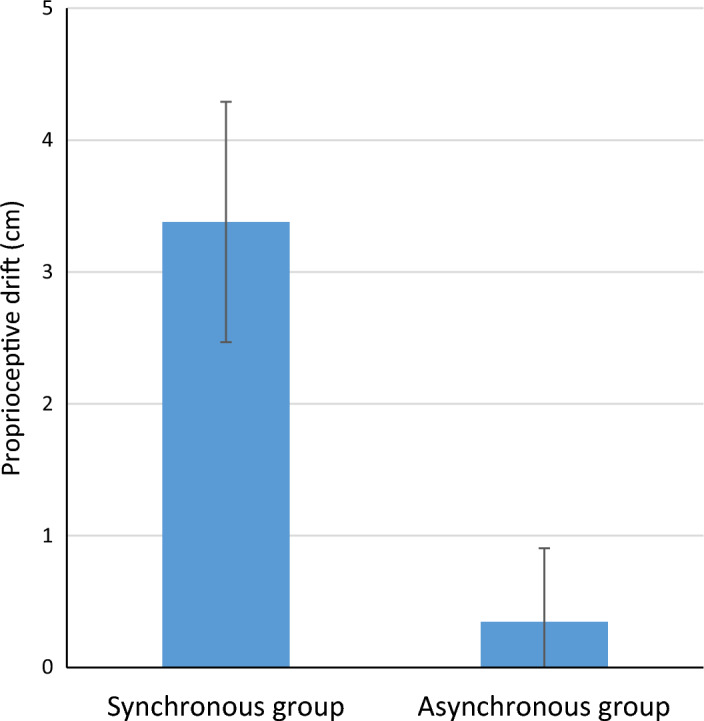
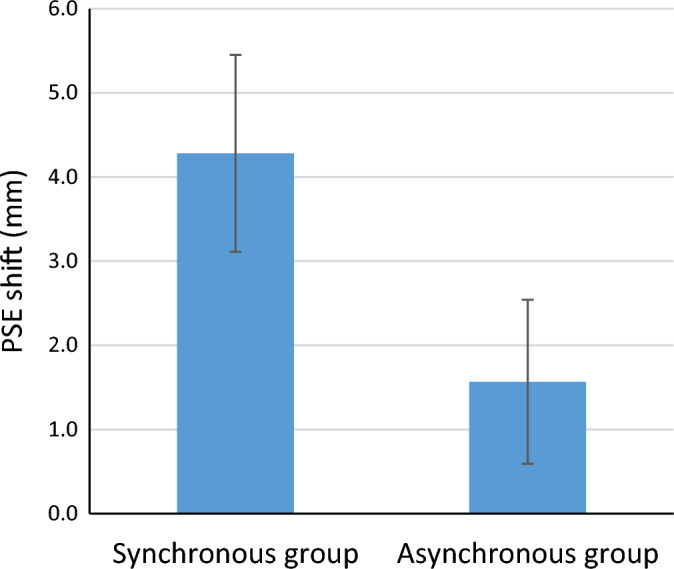
Peripersonal space (PPS), the region immediately surrounding the body is essential for bodily protection and goal directed action. Previous studies have suggested that the PPS is anchored to one's own body and in the current study we investigated whether the PPS could be modulated by changes in perceived body ownership. While theoretically important, this anchoring can also have implications for patients with altered body perception. The rubber hand illusion (RHI) is a way to manipulate body ownership. We hypothesized that after induction of a left hand RHI, the perceived space around the body shifts to the right. Sixty-five participants performed a landmark task before and after a left hand RHI. In the landmark task, participants had to determine whether a vertical landmark line was left or right from the center of a horizontal screen. One group of the participants was exposed to synchronous stroking, the other group experienced asynchronous stroking. Results showed a shift in space to the right (e.g. away from the own arm), but only for the 'synchronous stroking' group. These results suggest that the relevant action space becomes linked to the fake hand. Critically, subjective ownership experience did not correlate with this shift, but proprioceptive drift did. This suggests that multisensory integration of bodily information drives this shift in space around the body and not feelings of ownership.
个体空间(PPS)是指身体周围的区域,它对于身体保护和目标导向的动作至关重要。先前的研究表明,PPS 锚定在自己的身体上,而在本研究中,我们调查了 PPS 是否可以通过感知身体所有权的变化来调节。虽然从理论上讲很重要,但这种锚定也可能对身体感知改变的患者产生影响。橡胶手错觉(RHI)是一种操纵身体所有权的方法。我们假设,在左手 RHI 诱导后,身体周围的感知空间会向右侧移动。65 名参与者在左手 RHI 前后进行了地标任务。在地标任务中,参与者必须确定一条垂直的地标线是在水平屏幕的中心左侧还是右侧。一组参与者接受同步抚摸,另一组参与者接受异步抚摸。结果表明空间向右侧(例如远离自己的手臂)移动,但仅适用于“同步抚摸”组。这些结果表明,相关的动作空间与假手相关联。关键的是,主观所有权体验与这种空间转移不相关,而本体感觉漂移相关。这表明身体信息的多感觉整合驱动了身体周围空间的这种转移,而不是所有权的感觉。