Ibrahim Hisham, Danish Hammad, Morrissey David, Deasy Kevin F, McCarthy Mairead, Dorgan James, Fleming Claire, Howlett Ciara, Twohig Sarah, Vagg Tamara, Murphy Desmond M, Maher Michael, Plant Barry J
Cork Centre for Cystic Fibrosis (3CF), Cork University Hospital, University College Cork, Cork, Ireland.
HRB Clinical Research Facility, University College Cork, Cork, Ireland.
Front Pharmacol. 2023 Apr 27;14:1156621. doi: 10.3389/fphar.2023.1156621. eCollection 2023.
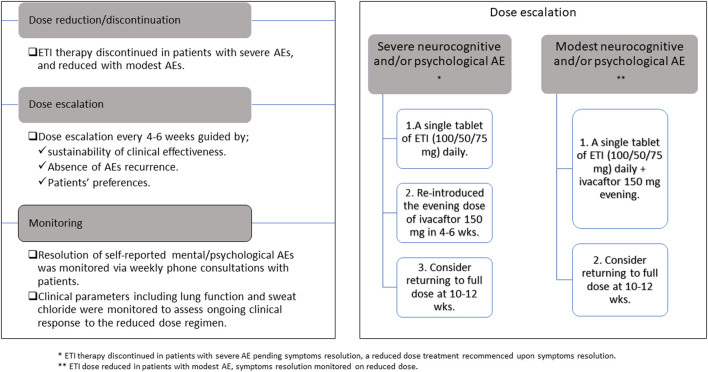
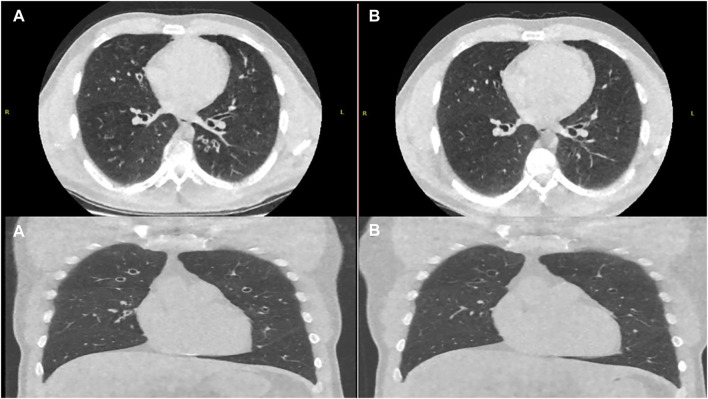
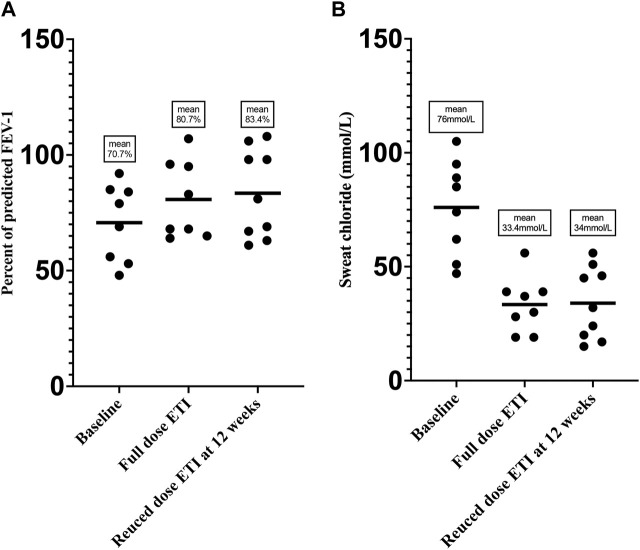
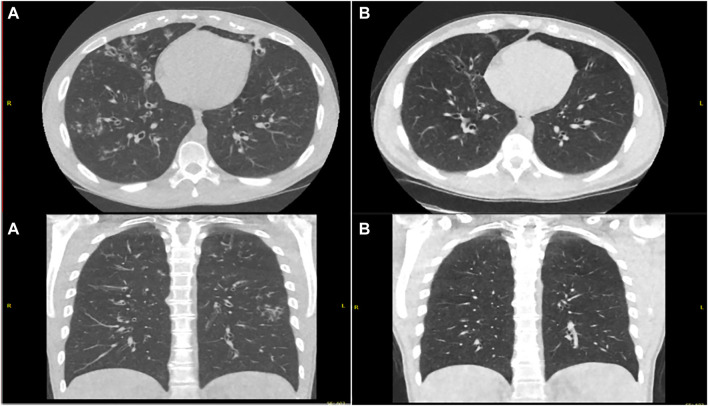
The prevalence of mental health disorders is high among people with Cystic Fibrosis. The psychological symptoms in CF are associated with poor adherence, worse treatment outcomes, and greater health utilization/cost. Mental health and neurocognitive Adverse Events (AEs) have been reported with all available Cystic Fibrosis Transmembrane conductance Regulator (CFTR) modulators in small groups of patients. We report our experience with a dose reduction strategy in 10 of our patients on elexacaftor/tezacaftor/ivacaftor (7.9% of total number of patients) who self-reported developing intense anxiety, irritability, sleep disturbance and/or mental slowness after initiation of full dose treatment. Standard dose elexacaftor/tezacaftor/ivacaftor resulted in 14.3 points improvement in mean Percent Predicted Forced Expiratory Volume in 1 s (ppFEV), and a mean difference in sweat chloride of -39.3 mmol/L. We initially discontinued and/or reduced therapy according to the AEs severity, with a subsequent planned dose escalation every 4-6 weeks guided by sustainability of clinical effectiveness, absence of AEs recurrence, and patients' preferences. Clinical parameters including lung function and sweat chloride were monitored for up to 12 weeks to assess ongoing clinical response to the reduced dose regimen. Dose reduction resulted in resolution of self-reported mental/psychological AEs, without loss of clinical effectiveness (ppFEV was 80.7% on standard dose, and 83.4% at 12 weeks on reduced dose; sweat chloride was 33.4 and 34 mmol/L on standard and reduced dose, respectively). Furthermore, in a subgroup of patients who completed 24 weeks of the reduced dose regimen, repeat low dose Computed Tomography imaging showed a significant response when compared to pre-initiation of elexacaftor/tezacaftor/ivacaftor.
心理健康障碍在囊性纤维化患者中普遍存在。囊性纤维化患者的心理症状与依从性差、治疗效果不佳以及更高的医疗利用/成本相关。在一小部分患者中,所有可用的囊性纤维化跨膜传导调节因子(CFTR)调节剂都报告了心理健康和神经认知不良事件(AE)。我们报告了10例接受依列卡福/替扎卡福/依伐卡福治疗的患者(占患者总数的7.9%)采用剂量减少策略的经验,这些患者在开始全剂量治疗后自我报告出现强烈焦虑、易怒、睡眠障碍和/或思维迟缓。标准剂量的依列卡福/替扎卡福/依伐卡福使一秒用力呼气量预测值百分比(ppFEV)平均提高了14.3个百分点,汗液氯化物平均差异为-39.3 mmol/L。我们最初根据不良事件的严重程度停止和/或减少治疗,随后计划每4-6周根据临床疗效的可持续性、不良事件无复发以及患者的偏好进行剂量递增。对包括肺功能和汗液氯化物在内的临床参数进行长达12周的监测,以评估对减少剂量方案的持续临床反应。剂量减少导致自我报告的精神/心理不良事件得到缓解,且不损失临床疗效(标准剂量时ppFEV为80.7%,减少剂量12周时为83.4%;标准剂量和减少剂量时汗液氯化物分别为33.4和34 mmol/L)。此外,在完成24周减少剂量方案的患者亚组中,与依列卡福/替扎卡福/依伐卡福治疗前相比,重复低剂量计算机断层扫描成像显示有显著反应。