Petrillo Angelica, Smyth Elizabeth C, van Laarhoven Hanneke W M
Medical Oncology Unit, Ospedale del Mare, Via E. Russo, Naples 80147, Italy.
Cambridge University Hospitals NHS Foundation Trust, Cambridge, Cambridgeshire, UK.
Ther Adv Med Oncol. 2023 May 13;15:17588359231173177. doi: 10.1177/17588359231173177. eCollection 2023.
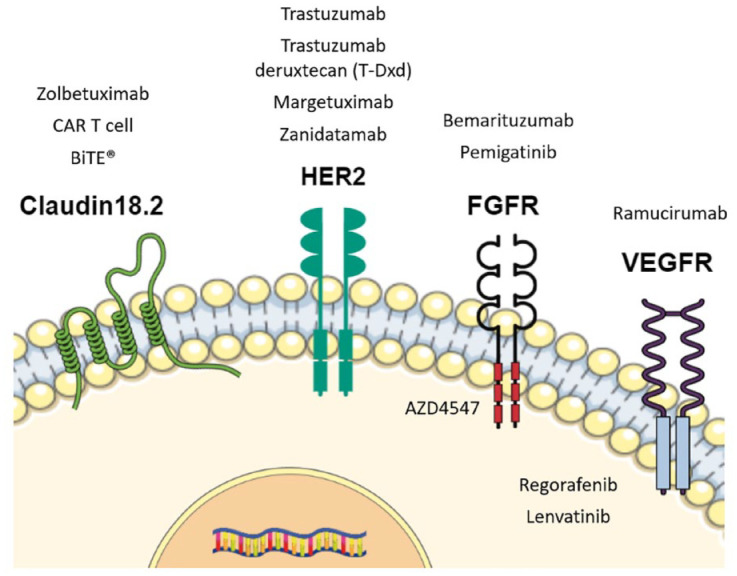
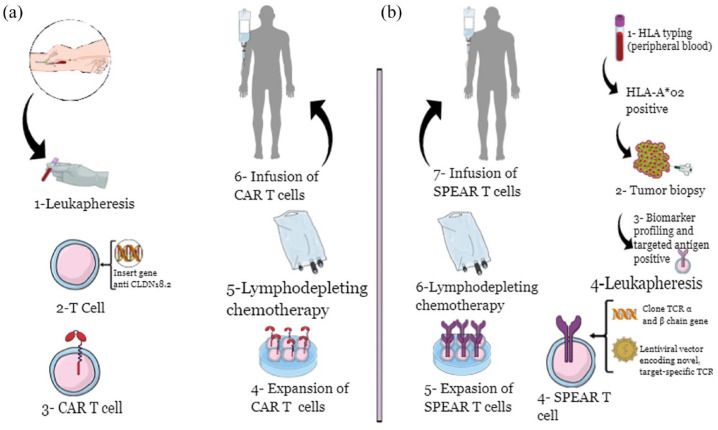
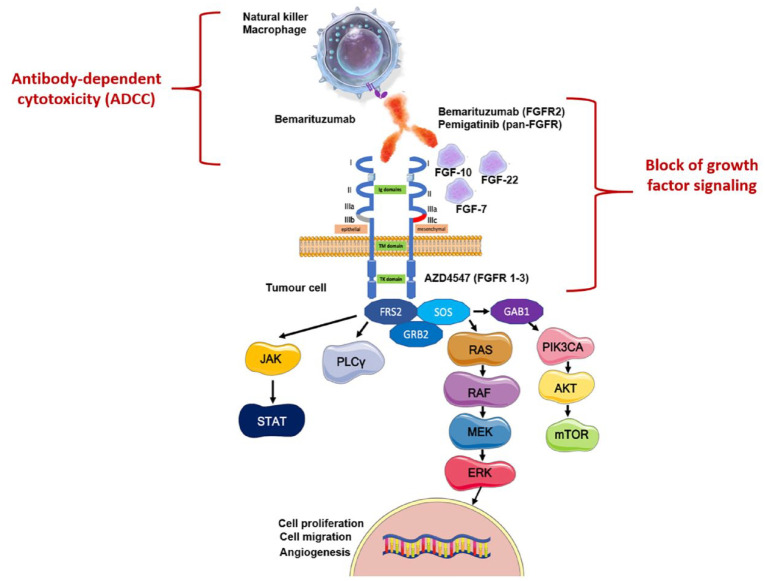
Gastroesophageal adenocarcinoma (GEA) is a heterogeneous disease with a poor prognosis. Chemotherapy has been the cornerstone in treating metastatic diseases. Recently, the introduction of immunotherapy demonstrated improved survival outcomes in localized and metastatic diseases. Beyond immunotherapy, several attempts were made to improve patient survival by understanding the molecular mechanisms of GEA and several molecular classifications were published. In this narrative review, we will discuss emerging targets in GEA, including fibroblast growth factor receptor and Claudin 18.2, as well as the accompanying drugs. In addition, novel agents directed against well-known targets, such as HER2 and angiogenesis, will be discussed, as well as cellular therapies like CAR-T and SPEAR-T cells.
胃食管腺癌(GEA)是一种异质性疾病,预后较差。化疗一直是治疗转移性疾病的基石。最近,免疫疗法的引入显示出在局限性和转移性疾病中可改善生存结果。除免疫疗法外,人们还通过了解GEA的分子机制进行了多次尝试以提高患者生存率,并发表了几种分子分类。在这篇叙述性综述中,我们将讨论GEA中新兴的靶点,包括成纤维细胞生长因子受体和Claudin 18.2,以及相应的药物。此外,还将讨论针对HER2和血管生成等知名靶点的新型药物,以及CAR-T和SPEAR-T细胞等细胞疗法。