Save the Children International, Kathmandu, Nepal.
Independent Contractor, Bogota, Colombia.
BMC Womens Health. 2023 May 17;23(1):269. doi: 10.1186/s12905-023-02425-w.
Adolescent girls and young women (AGYW) in Nepal have disproportionately poor reproductive and maternal health outcomes. In response, Save the Children, the Nepal government, and local partners designed and implemented Healthy Transitions for Nepali Youth, a multi-level integrated intervention. The intervention aimed to improve reproductive, maternal, and newborn health knowledge, attitudes, and behaviors among AGYW, and address gender attitudes and norms in four districts of Karnali Province, Nepal.
Married and unmarried AGYW aged 15-24 were engaged in a small group, curriculum-based intervention; husbands and families received home visits, using short videos to catalyze discussion; communities were engaged through dialogue-based activities; and the health system was made more adolescent-responsive through quality assessments, training, and supervision. An external organization conducted a quantitative survey with a sample of 786 AGYW intervention participants at baseline and 565 of the same AGYW at endline. Pooled linear regressions were estimated for each indicator to assess the statistical significance of differences between baseline and endline. Focus group discussions and key informant interviews were conducted with AGYW, husbands, families, community leadership, and program implementers. Data analysis was done through STATA 14 version and NVivo.
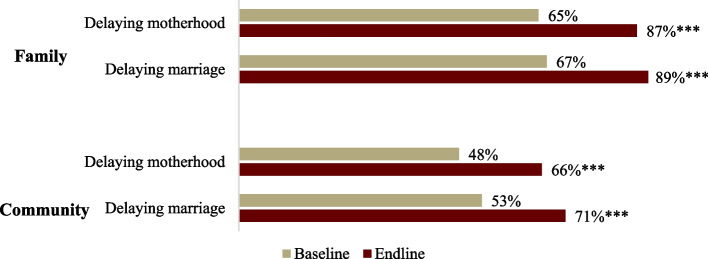
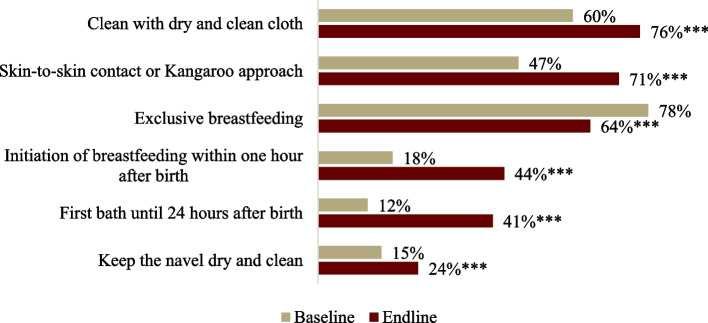
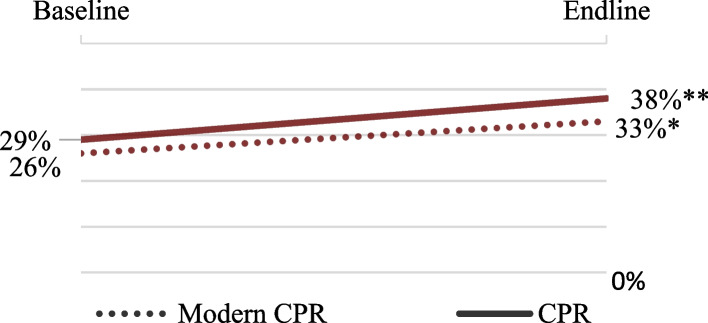
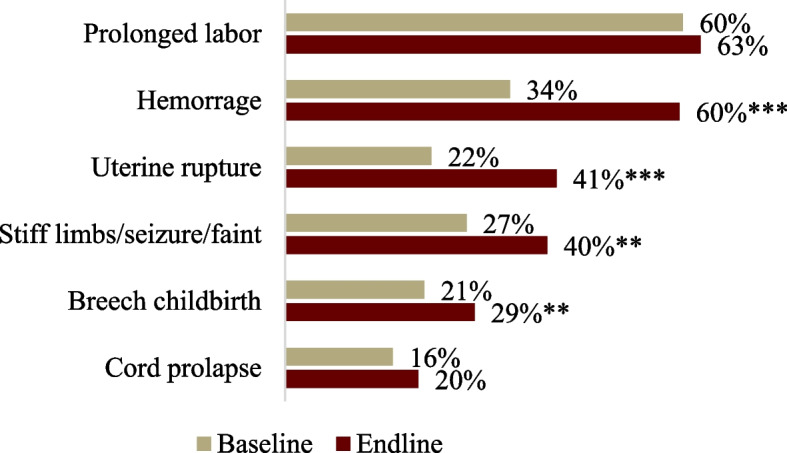
The percentage of AGYW currently using a modern contraceptive method increased significantly, and more AGYW believed that their family was supportive of delaying marriage and motherhood at the endline. Young women's knowledge of danger signs during labor increased, and there was a significant improvement in essential newborn care practices immediately after birth. AGYW reported shifts towards more gender equitable attitudes and behaviors, including related to decision-making about reproductive and maternal health.
Positive shifts in reproductive, maternal, and newborn health and gender knowledge, attitudes, and behavior were observed among AGYW, their male partners, and families. The results can inform the design of future interventions to effectively reach this critical population.
Not applicable.
尼泊尔的少女和年轻女性(AGYW)在生殖和产妇健康方面的结果明显较差。为此,救助儿童会、尼泊尔政府和当地合作伙伴设计并实施了尼泊尔青年健康转型计划,这是一项多层次的综合干预措施。该干预措施旨在提高 AGYW 的生殖、产妇和新生儿健康知识、态度和行为,并解决尼泊尔 Karnali 省四个地区的性别态度和规范问题。
15-24 岁的已婚和未婚 AGYW 参加了小组、基于课程的干预;丈夫和家庭接受家访,使用短视频促进讨论;通过对话式活动让社区参与;通过质量评估、培训和监督使卫生系统对青少年更具响应能力。一个外部组织对 786 名 AGYW 干预参与者进行了基线和 565 名相同 AGYW 的基线和终线的定量调查。对每个指标进行了汇总线性回归,以评估基线和终线之间差异的统计学意义。与 AGYW、丈夫、家庭、社区领导和方案实施者进行了焦点小组讨论和关键人物访谈。数据分析使用 STATA 14 版本和 NVivo 进行。
目前使用现代避孕方法的 AGYW 百分比显著增加,更多的 AGYW 认为他们的家庭支持推迟婚姻和生育。年轻女性对分娩期间危险信号的认识有所提高,新生儿出生后立即进行基本护理的做法有了显著改善。AGYW 报告说,在生殖和产妇健康以及性别知识、态度和行为方面,性别平等的态度和行为发生了转变。
AGYW、其男性伴侣和家庭的生殖、产妇和新生儿健康以及性别知识、态度和行为发生了积极转变。结果可以为未来的干预措施提供信息,以有效地覆盖这一关键人群。