A.I. Virtanen Institute for Molecular Sciences, University of Eastern Finland, Kuopio, Finland.
Department of Plastic Surgery, Helsinki University Hospital and University of Helsinki, Helsinki, Finland.
Elife. 2023 May 18;12:e82543. doi: 10.7554/eLife.82543.
Sporadic venous malformation (VM) and angiomatosis of soft tissue (AST) are benign, congenital vascular anomalies affecting venous vasculature. Depending on the size and location of the lesion, symptoms vary from motility disturbances to pain and disfigurement. Due to the high recurrence of the lesions, more effective therapies are needed.
As targeting stromal cells has been an emerging concept in anti-angiogenic therapies, here, by using VM/AST patient samples, RNA-sequencing, cell culture techniques, and a xenograft mouse model, we investigated the crosstalk of endothelial cells (EC) and fibroblasts and its effect on vascular lesion growth.
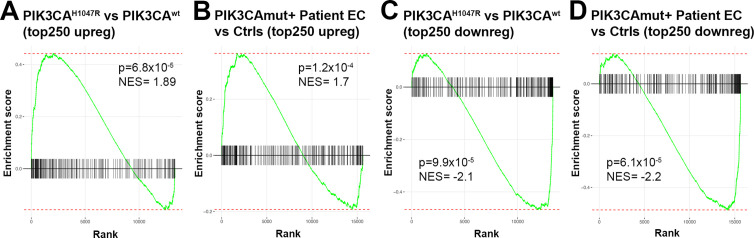
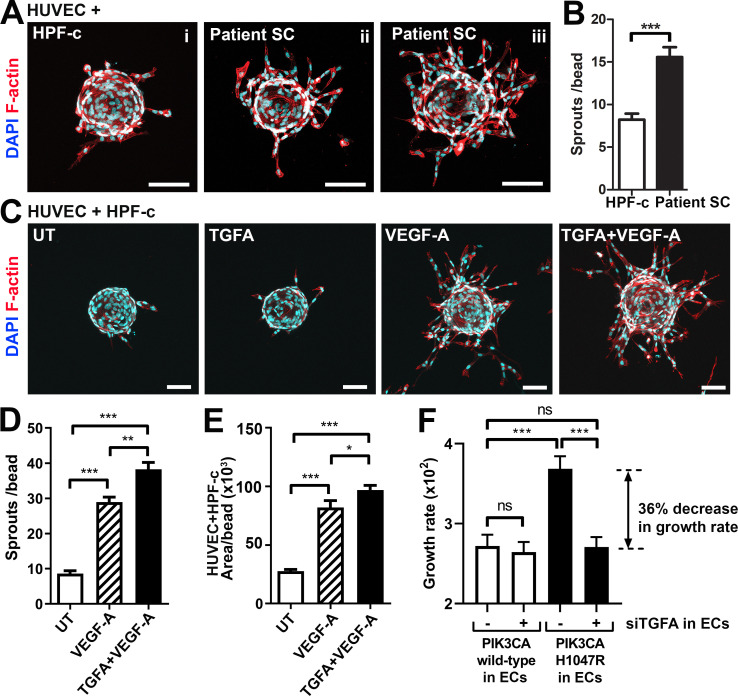
We report, for the first time, the expression and secretion of transforming growth factor A (TGFA) in ECs or intervascular stromal cells in AST and VM lesions. TGFA induced secretion of vascular endothelial growth factor (VEGF-A) in paracrine fashion, and regulated EC proliferation. Oncogenic variant in p.H1047R, a common somatic mutation found in these lesions, increased TGFA expression, enrichment of hallmark hypoxia, and in a mouse xenograft model, lesion size, and vascularization. Treatment with afatinib, a pan-ErbB tyrosine-kinase inhibitor, decreased vascularization and lesion size in a mouse xenograft model with ECs expressing oncogenic p.H1047R variant and fibroblasts.
Based on the data, we suggest that targeting of both intervascular stromal cells and ECs is a potential treatment strategy for vascular lesions having a fibrous component.
Academy of Finland, Ella and Georg Ehnrooth foundation, the ERC grants, Sigrid Jusélius Foundation, Finnish Foundation for Cardiovascular Research, Jane and Aatos Erkko Foundation, GeneCellNano Flagship program, and Department of Musculoskeletal and Plastic Surgery, Helsinki University Hospital.
散发性静脉畸形(VM)和软组织血管瘤病(AST)是良性的先天性血管异常,影响静脉血管系统。根据病变的大小和位置,症状从运动障碍到疼痛和畸形不等。由于病变的高复发率,需要更有效的治疗方法。
由于靶向基质细胞已成为抗血管生成治疗的一个新兴概念,在这里,我们使用 VM/AST 患者样本、RNA 测序、细胞培养技术和异种移植小鼠模型,研究了内皮细胞(EC)和成纤维细胞之间的串扰及其对血管病变生长的影响。
我们首次报道了转化生长因子 A(TGFA)在 AST 和 VM 病变中的 EC 或血管间基质细胞中的表达和分泌。TGFA 以旁分泌的方式诱导血管内皮生长因子(VEGF-A)的分泌,并调节 EC 的增殖。在这些病变中发现的常见体细胞突变 p.H1047R 的致癌变体增加了 TGFA 的表达、标志性缺氧的富集,并且在小鼠异种移植模型中增加了病变大小和血管化。泛-ErbB 酪氨酸激酶抑制剂 afatinib 的治疗降低了表达致癌 p.H1047R 变体的 EC 和成纤维细胞的小鼠异种移植模型中的血管化和病变大小。
基于这些数据,我们建议针对具有纤维成分的血管病变的血管间基质细胞和 EC 的靶向治疗策略是一种潜在的治疗策略。
芬兰科学院、Ella 和 Georg Ehnrooth 基金会、ERC 拨款、Sigrid Jusélius 基金会、芬兰心血管研究基金会、Jane 和 Aatos Erkko 基金会、GeneCellNano 旗舰计划以及赫尔辛基大学医院肌肉骨骼和整形外科。