Knowlton Lisa M, Zakrison Tanya, Kao Lillian S, McCrum Marta L, Agarwal Suresh, Bruns Brandon, Joseph Kathie-Ann, Berry Cherisse
Department of Surgery, Stanford University School of Medicine, Stanford, California, USA.
Department of Surgery, The University of Chicago Medicine and Biological Sciences, Chicago, Illinois, USA.
Trauma Surg Acute Care Open. 2023 May 11;8(1):e001098. doi: 10.1136/tsaco-2023-001098. eCollection 2023.
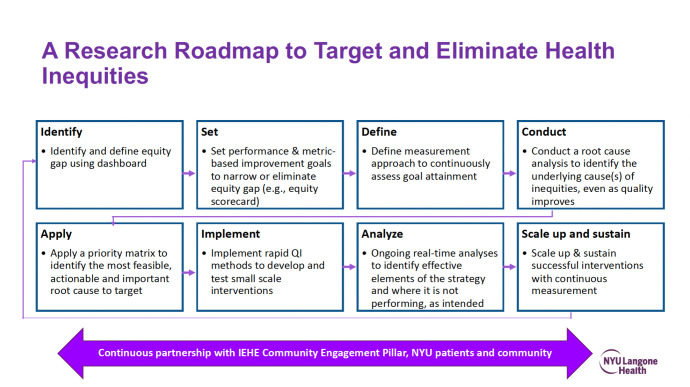
Health equity is defined as the sixth domain of healthcare quality. Understanding health disparities in acute care surgery (defined as trauma surgery, emergency general surgery and surgical critical care) is key to identifying targets that will improve outcomes and ensure delivery of high-quality care within healthcare organizations. Implementing a health equity framework within institutions such that local acute care surgeons can ensure equity is a component of quality is imperative. Recognizing this need, the AAST (American Association for the Surgery of Trauma) Diversity, Equity and Inclusion Committee convened an expert panel entitled 'Quality Care is Equitable Care' at the 81st annual meeting in September 2022 (Chicago, Illinois). Recommendations for introducing health equity metrics within health systems include: (1) capturing patient outcome data including patient experience data by race, ethnicity, language, sexual orientation, and gender identity; (2) ensuring cultural competency (eg, availability of language services; identifying sources of bias or inequities); (3) prioritizing health literacy; and (4) measuring disease-specific disparities such that targeted interventions are developed and implemented. A stepwise approach is outlined to include health equity as an organizational quality indicator.
健康公平被定义为医疗质量的第六个领域。了解急性护理手术(定义为创伤手术、急诊普通外科手术和外科重症监护)中的健康差异是确定能够改善治疗结果并确保在医疗机构内提供高质量护理的目标的关键。在各机构内实施健康公平框架,使当地急性护理外科医生能够确保公平是质量的一个组成部分,这一点至关重要。认识到这一需求,美国创伤外科学会(AAST)多元化、公平与包容委员会在2022年9月于伊利诺伊州芝加哥举行的第81届年会上召集了一个名为“优质护理即公平护理”的专家小组。在卫生系统中引入健康公平指标的建议包括:(1)按种族、民族、语言、性取向和性别认同收集患者结局数据,包括患者体验数据;(2)确保文化能力(例如,提供语言服务;识别偏见或不公平的来源);(3)优先考虑健康素养;(4)衡量特定疾病的差异,以便制定和实施有针对性的干预措施。文中概述了一种逐步将健康公平纳入组织质量指标的方法。