Izumi Yukitoshi, O'Dell Kazuko A, Zorumski Charles F
Washington University School of Medicine.
Res Sq. 2023 May 9:rs.3.rs-2883114. doi: 10.21203/rs.3.rs-2883114/v1.
Glyphosate, a herbicide marketed under the trade name Roundup, is now widely used, in part because genetically modified organism plants that are resistant to this agent have been developed. Environmental or dietary exposure to glyphosate is omnipresent and there are concerns this exposure could impair cognitive function in addition to carcinogenicity.
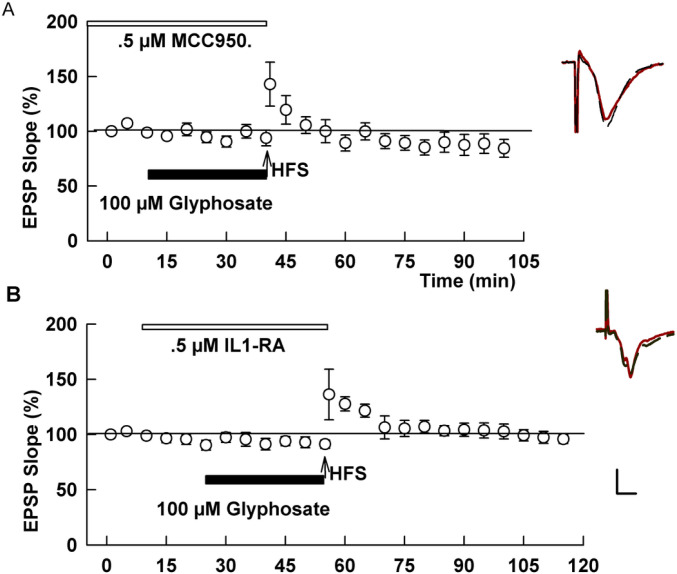
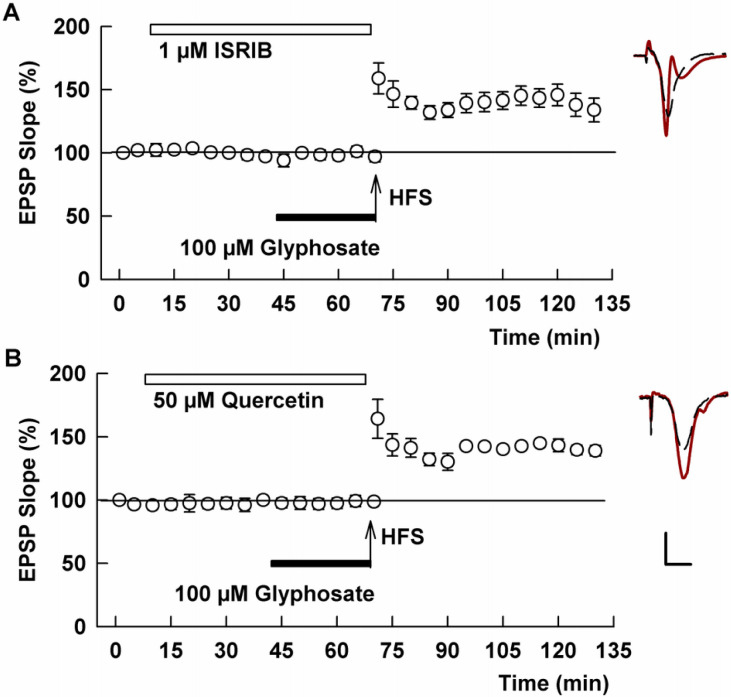
Using hippocampal slices from juvenile male rats, we investigated whether glyphosate alters synaptic transmission and induction of long-term potentiation (LTP), a cellular model of learning and memory. Our hypothesis is that glyphosate alters neuronal function and impairs LTP induction via activation of pro-inflammatory processes, because increases in pro-inflammatory cytokines and neuroinflammation have been reported following glyphosate exposure. LTP was induced by delivery of 100 Hz x 1 sec high frequency stimulation (HFS) of the Schaffer collateral pathway and excitatory synaptic potentials (EPSPs) were monitored 60 min after HFS.
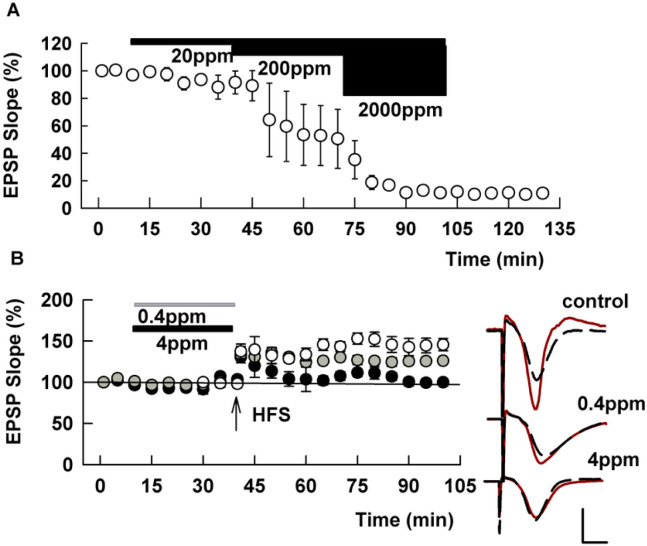
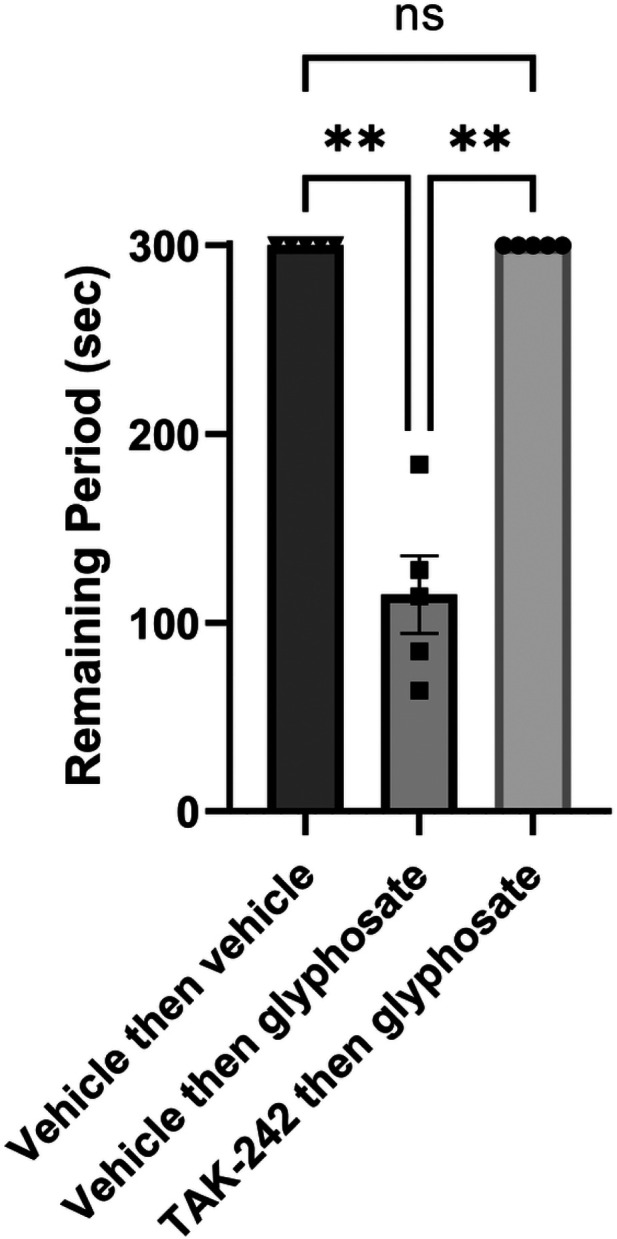
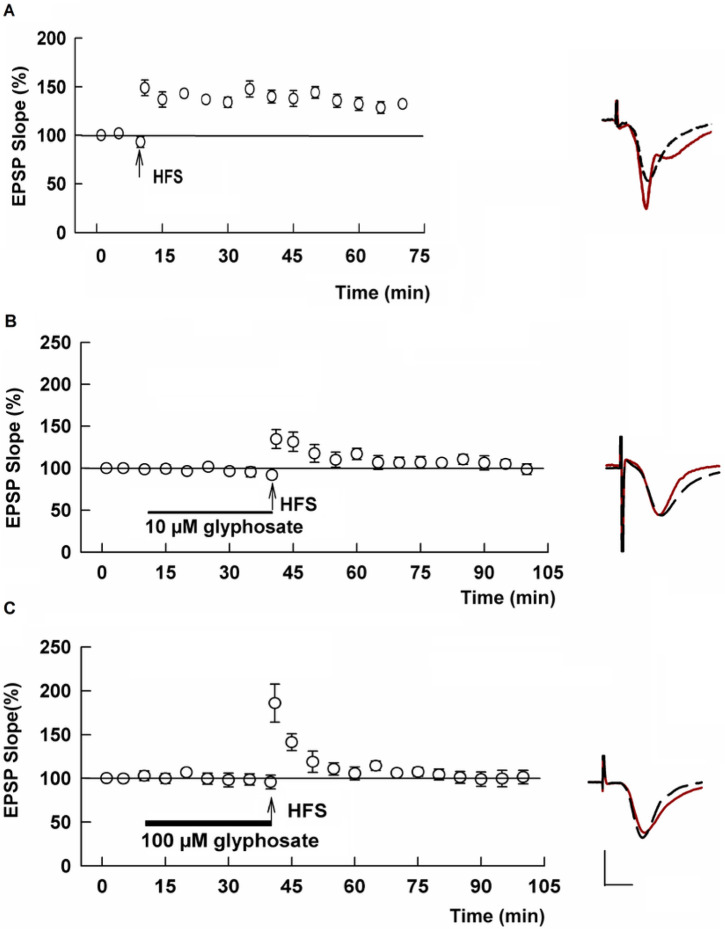
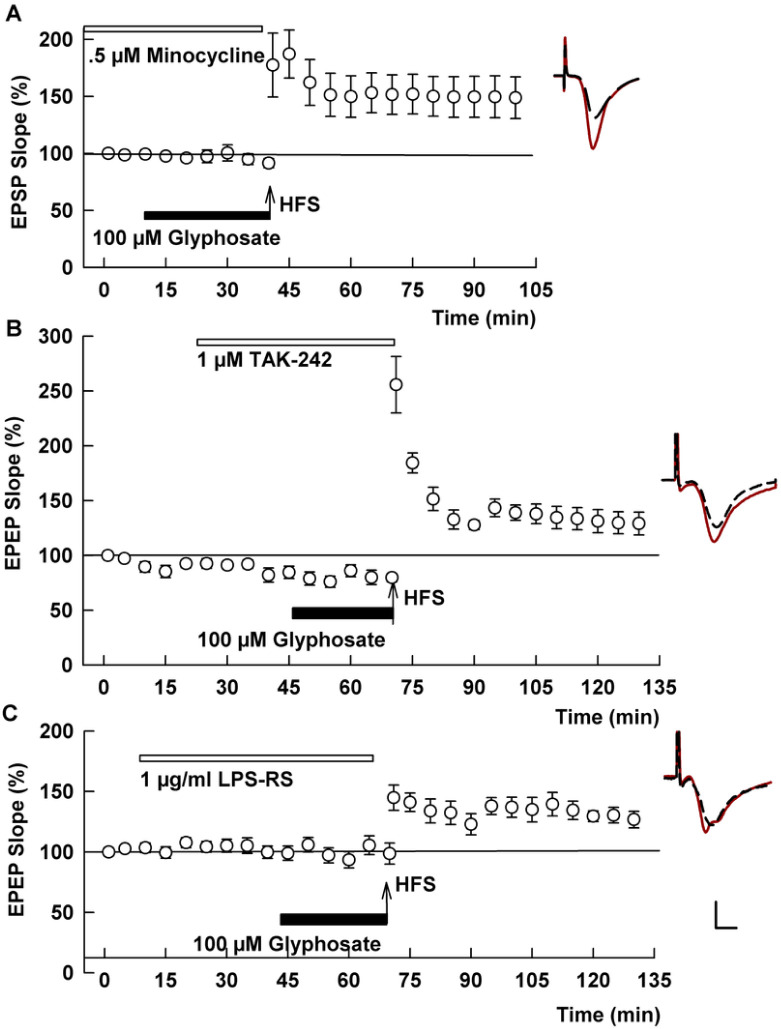
We first tested effects of Roundup on basal synaptic function and LTP induction. Roundup depressed EPSPs in a dose-dependent manner. Basal synaptic transmission was completely suppressed by 2000 ppm. At concentrations ≤ 20 ppm Roundup did not affect basal transmission, but 4 ppm Roundup administered 30 min before HFS inhibited LTP induction. We also observed that acute administration of 10-100 μM glyphosate inhibits LTP induction. Minocycline, an inhibitor of microglial activation, and TAK-242, an inhibitor of toll-like receptor 4 (TLR4), both overcame the inhibitory effects of 100M glyphosate. Similarly, lipopolysaccharide from Rhodobacter sphaeroides (LPS-RS) overcame the inhibitory effects. In addition, ISRIB (integrated stress response inhibitor) and quercetin, an inhibitor of endoplasmic reticulum stress, allowed LTP induction in the presence of glyphosate. We also observed that glyphosate injection (16.9 mg/kg i.p.) impaired one-trial inhibitory avoidance learning. This learning deficit was overcome by TAK-242.
While Roundup inhibits LTP induction, these observations indicate that glyphosate alone, the major ingredient of Roundup, can impair cognitive function through pro-inflammatory signaling in microglia. Manipulation of pro-inflammatory signaling could be a useful strategy to prevent cognitive impairment after exposure to a glyphosate-based herbicide (GBH).
草甘膦是一种以“农达”为商品名销售的除草剂,目前被广泛使用,部分原因是已经培育出了对这种药剂具有抗性的转基因植物。环境或饮食中接触草甘膦的情况无处不在,人们担心这种接触除了具有致癌性外,还可能损害认知功能。
我们使用幼年雄性大鼠的海马切片,研究草甘膦是否会改变突触传递以及长时程增强(LTP)的诱导,LTP是学习和记忆的一种细胞模型。我们的假设是,草甘膦通过激活促炎过程改变神经元功能并损害LTP诱导,因为据报道草甘膦暴露后促炎细胞因子和神经炎症会增加。通过对海马体传入通路进行100赫兹×1秒的高频刺激(HFS)来诱导LTP,并在HFS后60分钟监测兴奋性突触后电位(EPSP)。
我们首先测试了农达对基础突触功能和LTP诱导的影响。农达以剂量依赖的方式抑制EPSP。2000 ppm时基础突触传递被完全抑制。在浓度≤20 ppm时,农达不影响基础传递,但在HFS前30分钟给予4 ppm农达会抑制LTP诱导。我们还观察到急性给予10 - 100 μM草甘膦会抑制LTP诱导。米诺环素(一种小胶质细胞激活抑制剂)和TAK - 242(一种Toll样受体4(TLR4)抑制剂)都克服了100 μM草甘膦的抑制作用。同样,球形红杆菌脂多糖(LPS - RS)也克服了抑制作用。此外,ISRIB(综合应激反应抑制剂)和槲皮素(一种内质网应激抑制剂)在有草甘膦存在的情况下允许LTP诱导。我们还观察到腹腔注射草甘膦(16.9毫克/千克)会损害一次性抑制性回避学习。这种学习缺陷被TAK - 242克服。
虽然农达抑制LTP诱导,但这些观察结果表明,草甘膦本身(农达的主要成分)可通过小胶质细胞中的促炎信号传导损害认知功能。操纵促炎信号传导可能是预防接触草甘膦基除草剂(GBH)后认知障碍的一种有用策略。