Turkmani Sabera, Nove Andrea, Bazirete Oliva, Hughes Kirsty, Pairman Sally, Callander Emily, Scarf Vanessa, Forrester Mandy, Mandke Shree, Homer Caroline S E
Burnet Institute, Melbourne, Victoria, Australia.
University of Technology Sydney, Sydney, Australia.
PLOS Glob Public Health. 2023 May 23;3(5):e0001936. doi: 10.1371/journal.pgph.0001936. eCollection 2023.
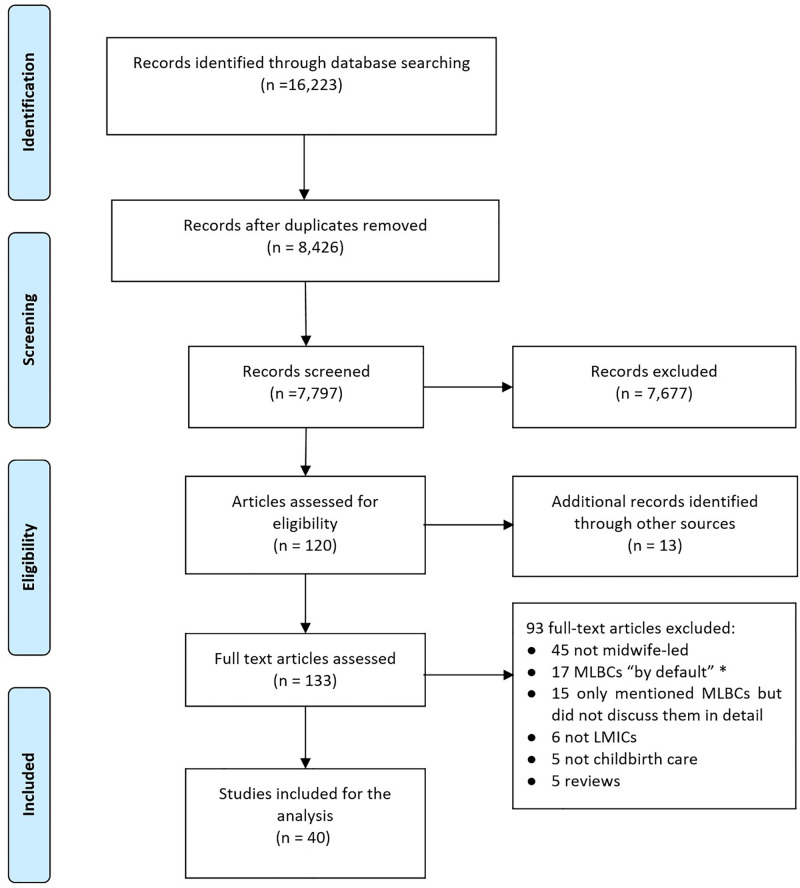
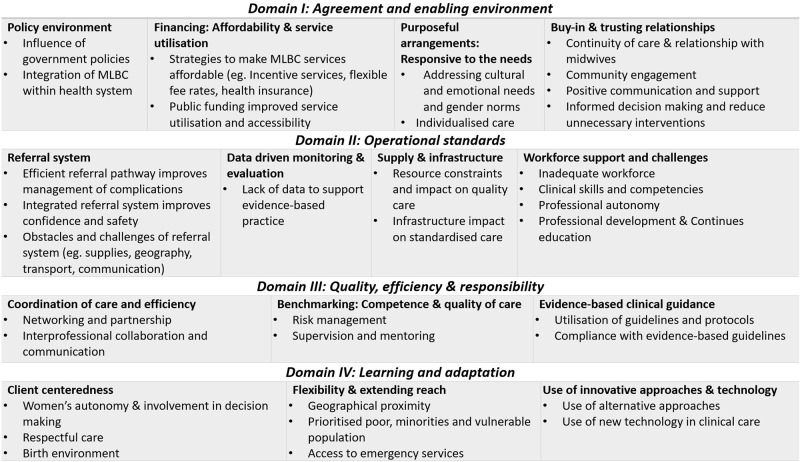
The evidence for the benefits of midwifery has grown over the past two decades and midwife-led birthing centres have been established in many countries. Midwife-led care can only make a sustained and large-scale contribution to improved maternal and newborn health outcomes if it is an integral part of the health care system but there are challenges to the establishment and operation of midwife-led birthing centres. A network of care (NOC) is a way of understanding the connections within a catchment area or region to ensure that service provision is effective and efficient. This review aims to evaluate whether a NOC framework-in light of the literature about midwife-led birthing centres-can be used to map the challenges, barriers and enablers with a focus on low-to-middle income countries. We searched nine academic databases and located 40 relevant studies published between January 2012 and February 2022. Information about the enablers and challenges to midwife-led birthing centres was mapped and analysed against a NOC framework. The analysis was based on the four domains of the NOC: 1) agreement and enabling environment, 2) operational standards, 3) quality, efficiency, and responsibility, 4) learning and adaptation, which together are thought to reflect the characteristics of an effective NOC.Of the 40 studies, half (n = 20) were from Brazil and South Africa. The others covered an additional 10 countries. The analysis showed that midwife-led birthing centres can provide high-quality care when the following NOC elements are in place: a positive policy environment, purposeful arrangements which ensure services are responsive to users' needs, an effective referral system to enable collaboration across different levels of health service and a competent workforce committed to a midwifery philosophy of care. Challenges to an effective NOC include lack of supportive policies, leadership, inter-facility and interprofessional collaboration and insufficient financing. The NOC framework can be a useful approach to identify the key areas of collaboration required for effective consultation and referral, to address the specific local needs of women and their families and identify areas for improvement in health services. The NOC framework could be used in the design and implementation of new midwife-led birthing centres.
在过去二十年里,助产益处的证据不断增加,许多国家都设立了由助产士主导的分娩中心。只有当助产士主导的护理成为医疗保健系统的一个组成部分时,它才能对改善孕产妇和新生儿健康结果做出持续且大规模的贡献,但由助产士主导的分娩中心的建立和运营面临挑战。护理网络(NOC)是一种理解集水区或区域内各种联系的方式,以确保服务提供既有效又高效。本综述旨在根据关于助产士主导的分娩中心的文献,评估NOC框架是否可用于梳理挑战、障碍和促进因素,重点关注低收入和中等收入国家。我们检索了九个学术数据库,找到了2012年1月至2022年2月期间发表的40项相关研究。根据NOC框架,梳理并分析了关于助产士主导的分娩中心的促进因素和挑战的信息。该分析基于NOC的四个领域:1)共识与促进环境,2)操作标准,3)质量、效率和责任,4)学习与适应,人们认为这四个领域共同反映了一个有效NOC的特征。在这40项研究中,一半(n = 20)来自巴西和南非。其他研究覆盖了另外10个国家。分析表明,当具备以下NOC要素时,助产士主导的分娩中心可以提供高质量的护理:积极的政策环境、确保服务响应用户需求的有针对性的安排、有效的转诊系统以促进不同层级医疗服务之间的协作,以及致力于助产护理理念的称职员工队伍。有效NOC面临的挑战包括缺乏支持性政策、领导力、机构间和专业间协作以及资金不足。NOC框架可以作为一种有用的方法,来确定有效咨询和转诊所需的关键协作领域,满足妇女及其家庭的特定当地需求,并确定卫生服务中需要改进的领域。NOC框架可用于新的助产士主导的分娩中心的设计和实施。