Turku Bioscience Centre, University of Turku and Åbo Akademi University, FI-20520, Turku, Finland; InFLAMES Research Flagship Center, University of Turku, Turku, Finland.
Turku Bioscience Centre, University of Turku and Åbo Akademi University, FI-20520, Turku, Finland; InFLAMES Research Flagship Center, University of Turku, Turku, Finland; Turku Doctoral Programme of Molecular Medicine, University of Turku, Turku, Finland.
EBioMedicine. 2023 Jun;92:104625. doi: 10.1016/j.ebiom.2023.104625. Epub 2023 May 22.
Type 1 diabetes is a complex heterogenous autoimmune disease without therapeutic interventions available to prevent or reverse the disease. This study aimed to identify transcriptional changes associated with the disease progression in patients with recent-onset type 1 diabetes.
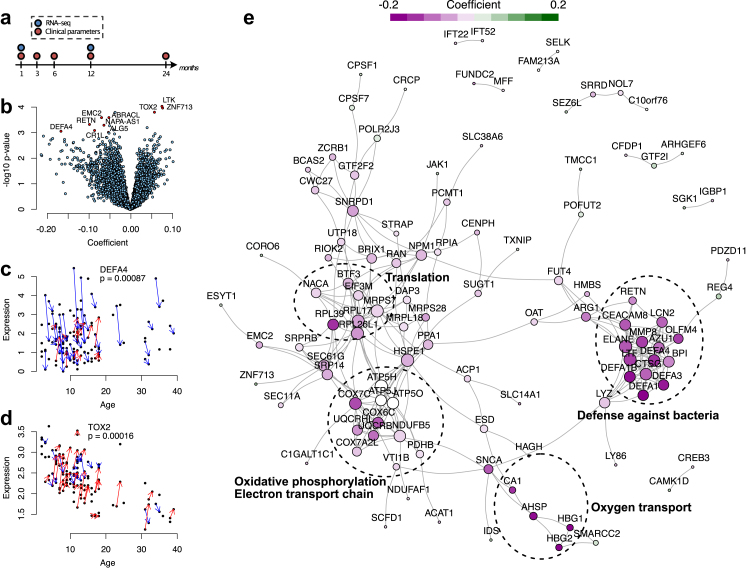
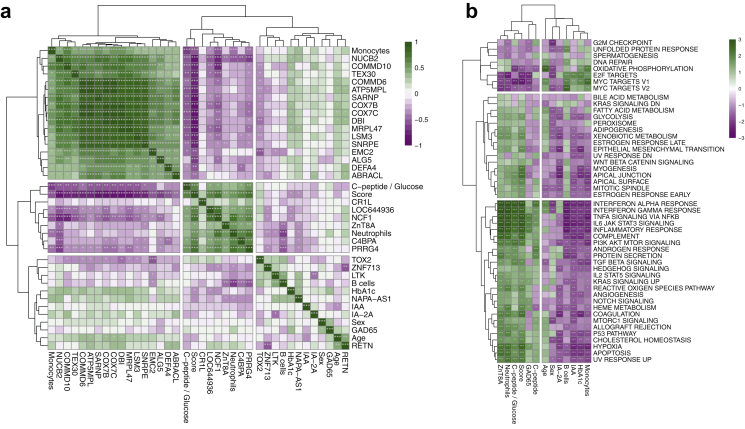
Whole-blood samples were collected as part of the INNODIA study at baseline and 12 months after diagnosis of type 1 diabetes. We used linear mixed-effects modelling on RNA-seq data to identify genes associated with age, sex, or disease progression. Cell-type proportions were estimated from the RNA-seq data using computational deconvolution. Associations to clinical variables were estimated using Pearson's or point-biserial correlation for continuous and dichotomous variables, respectively, using only complete pairs of observations.
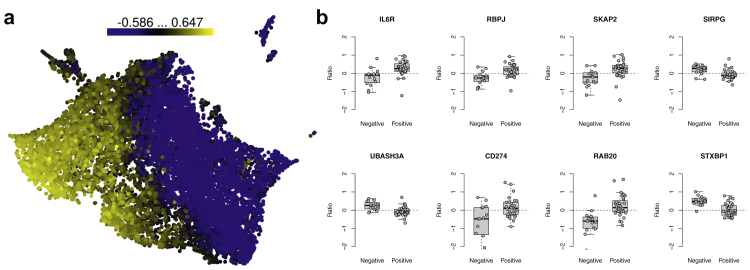
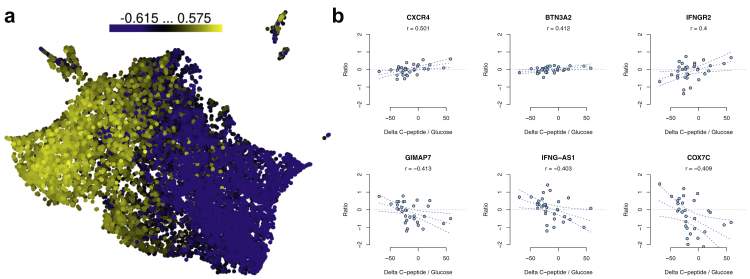
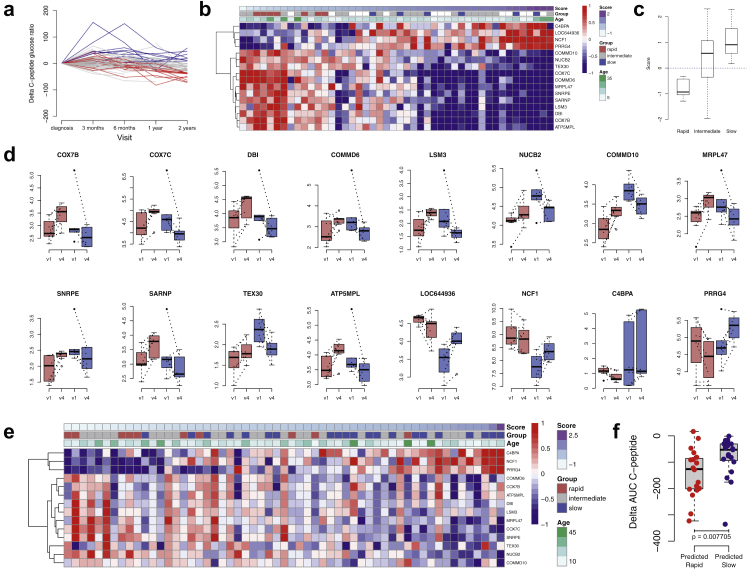
We found that genes and pathways related to innate immunity were downregulated during the first year after diagnosis. Significant associations of the gene expression changes were found with ZnT8A autoantibody positivity. Rate of change in the expression of 16 genes between baseline and 12 months was found to predict the decline in C-peptide at 24 months. Interestingly and consistent with earlier reports, increased B cell levels and decreased neutrophil levels were associated with the rapid progression.
There is considerable individual variation in the rate of progression from appearance of type 1 diabetes-specific autoantibodies to clinical disease. Patient stratification and prediction of disease progression can help in developing more personalised therapeutic strategies for different disease endotypes.
A full list of funding bodies can be found under Acknowledgments.
1 型糖尿病是一种复杂的异质性自身免疫性疾病,目前尚无治疗干预措施可用于预防或逆转该疾病。本研究旨在鉴定与近期诊断为 1 型糖尿病患者疾病进展相关的转录变化。
在 1 型糖尿病诊断后 12 个月和基线时,作为 INNODIA 研究的一部分收集全血样本。我们使用线性混合效应模型对 RNA-seq 数据进行分析,以鉴定与年龄、性别或疾病进展相关的基因。使用计算反卷积从 RNA-seq 数据中估计细胞类型比例。使用 Pearson 或点二项式相关分析分别对连续和二分类变量进行关联分析,仅使用完整的配对观察值。
我们发现,与固有免疫相关的基因和途径在诊断后第一年呈下调趋势。基因表达变化与 ZnT8A 自身抗体阳性存在显著关联。在基线和 12 个月之间,16 个基因的表达变化率与 24 个月时 C 肽下降相关。有趣的是,与早期报告一致,B 细胞水平升高和中性粒细胞水平降低与快速进展相关。
从出现 1 型糖尿病特异性自身抗体到临床疾病的进展速度存在相当大的个体差异。患者分层和疾病进展预测有助于为不同的疾病表型开发更个性化的治疗策略。
可在致谢中找到完整的资助机构列表。