School of Basic Medicine, Gannan Medical University, Ganzhou 341000, China.
Department of Pharmacy, Zhongshan Hospital, Fudan University, Shanghai 200032, China.
Acta Biochim Biophys Sin (Shanghai). 2023 May 24;55(5):842-852. doi: 10.3724/abbs.2023049.
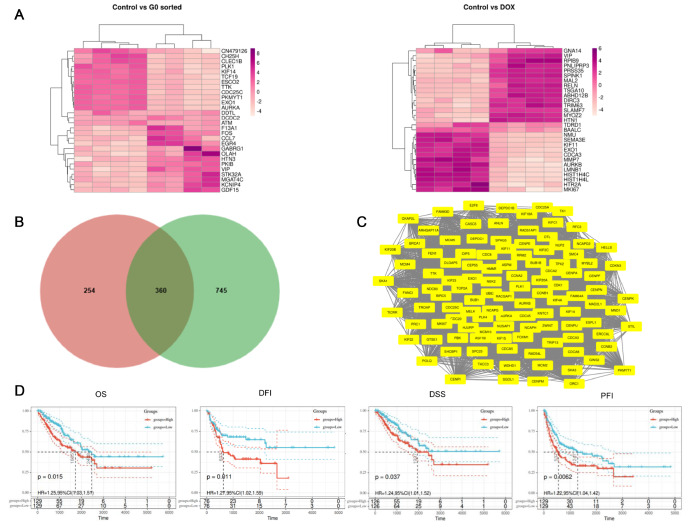
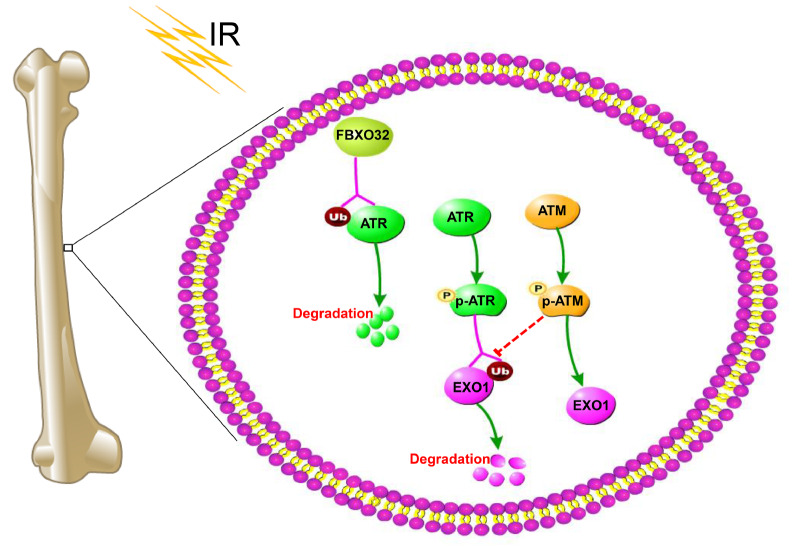
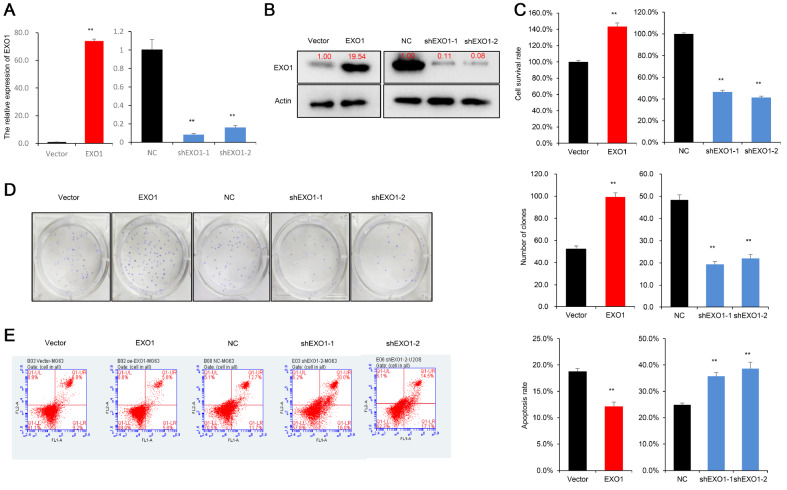
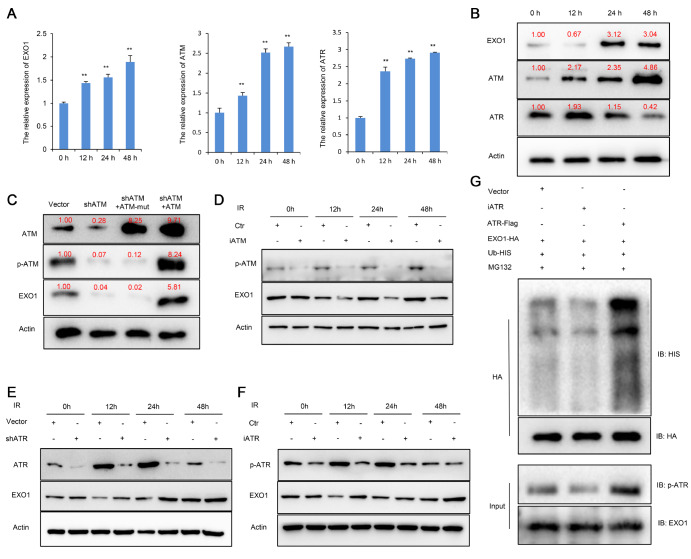
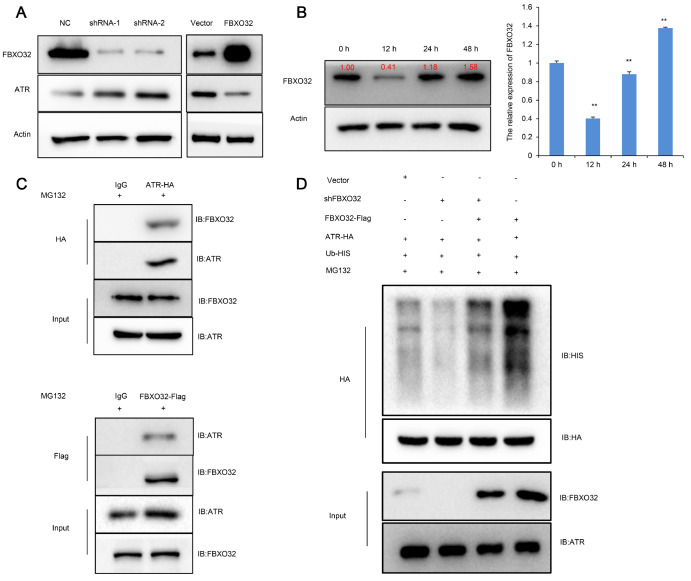
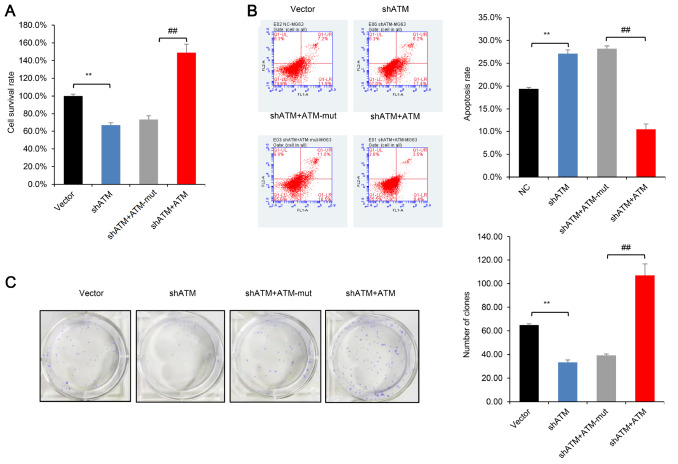
Osteosarcoma (OS) is the most common primary bone cancer in children and adolescents. In clinical treatments, the insensitivity of OS to conventional radiotherapy regimens significantly contributes to poor patient prognosis and survival. EXO1 is responsible for DNA repair pathways and telomere maintenance. Meanwhile, ATM and ATR are considered switches because they can regulate the expression of EXO1. However, their expression and interaction in OS cells under irradiation (IR) remain unclear. This study aims to investigate the roles of FBXO32, ATM, ATR and EXO1 in OS radiotherapy insensitivity and poor patient prognosis and explore potential pathogenic mechanisms. Bioinformatics is employed to analyse differential gene expression and correlations with prognosis in OS. Cell counting kit 8 assay, clone formation assay, and flow cytometry are used to evaluate cell survival and apopotosis under IR. Co-IP assay is used to detect protein‒protein interactions. Bioinformatics analysis reveals that EXO1 is closely related to survival, apoptosis and poor prognosis in OS. Silencing of suppresses cell proliferation and increases the sensitivity of OS cells. Molecular biological experiments show that ATM and ATR act as switches to regulate EXO1 expression under IR. Higher expression of EXO1, which is closely correlated with IR insensitivity and poorer prognosis, might be used as a prognostic indicator for OS. Phosphorylated ATM enhances the expression of EXO1, and phosphorylated ATR induces the degradation of EXO1. More importantly, FBXO32 degrades ATR via ubiquitination in a time-dependent manner. Our data may provide a reference for future research in the mechanisms, clinical diagnosis, and treatment of OS.
骨肉瘤(OS)是儿童和青少年中最常见的原发性骨癌。在临床治疗中,OS 对常规放疗方案的不敏感显著导致患者预后不良和生存率降低。EXO1 负责 DNA 修复途径和端粒维持。同时,ATM 和 ATR 被认为是开关,因为它们可以调节 EXO1 的表达。然而,它们在受到照射(IR)的 OS 细胞中的表达和相互作用尚不清楚。本研究旨在探讨 FBXO32、ATM、ATR 和 EXO1 在 OS 放疗不敏感和患者预后不良中的作用,并探讨潜在的发病机制。生物信息学用于分析 OS 中差异基因表达与预后的相关性。细胞计数试剂盒 8 检测、克隆形成检测和流式细胞术用于评估 IR 下细胞存活和凋亡。免疫共沉淀检测用于检测蛋白-蛋白相互作用。生物信息学分析表明,EXO1 与 OS 中的生存、凋亡和预后不良密切相关。沉默可抑制 OS 细胞的增殖并提高其对 IR 的敏感性。分子生物学实验表明,ATM 和 ATR 在 IR 下作为开关调节 EXO1 的表达。EXO1 表达较高,与 IR 不敏感和预后较差密切相关,可作为 OS 的预后指标。磷酸化 ATM 增强 EXO1 的表达,磷酸化 ATR 诱导 EXO1 的降解。更重要的是,FBXO32 通过泛素化以时间依赖性方式降解 ATR。我们的数据可为 OS 的机制、临床诊断和治疗的未来研究提供参考。