Gijs Pieter-Jan, Daccord Cécile, Bernasconi Eric, Brutsche Martin, Clarenbach Christian F, Hostettler Katrin, Guler Sabina A, Mercier Louis, Ubags Niki, Funke-Chambour Manuela, von Garnier Christophe
Division of Pulmonology, Department of Medicine, CHUV, Lausanne University Hospital, University of Lausanne, Lausanne, Switzerland.
Joint first authors.
ERJ Open Res. 2023 May 22;9(3). doi: 10.1183/23120541.00720-2022. eCollection 2023 May.
High bacterial burden in the lung microbiota predicts progression of idiopathic pulmonary fibrosis (IPF). Azithromycin (AZT) is a macrolide antibiotic known to alter the lung microbiota in several chronic pulmonary diseases, and observational studies have shown a positive effect of AZT on mortality and hospitalisation rate in IPF. However, the effect of AZT on the lung microbiota in IPF remains unknown.
We sought to determine the impact of a 3-month course of AZT on the lung microbiota in IPF. We assessed sputum and oropharyngeal swab specimens from 24 adults with IPF included in a randomised controlled crossover trial of oral AZT 500 mg 3 times per week. 16S rRNA gene amplicon sequencing and quantitative PCR (qPCR) were performed to assess bacterial communities. Antibiotic resistance genes (ARGs) were assessed using real-time qPCR.
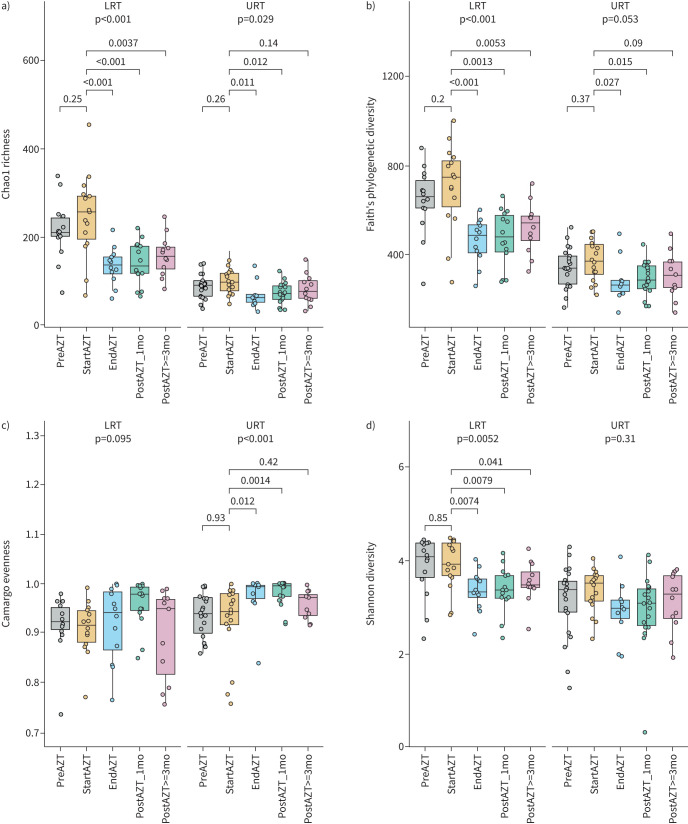
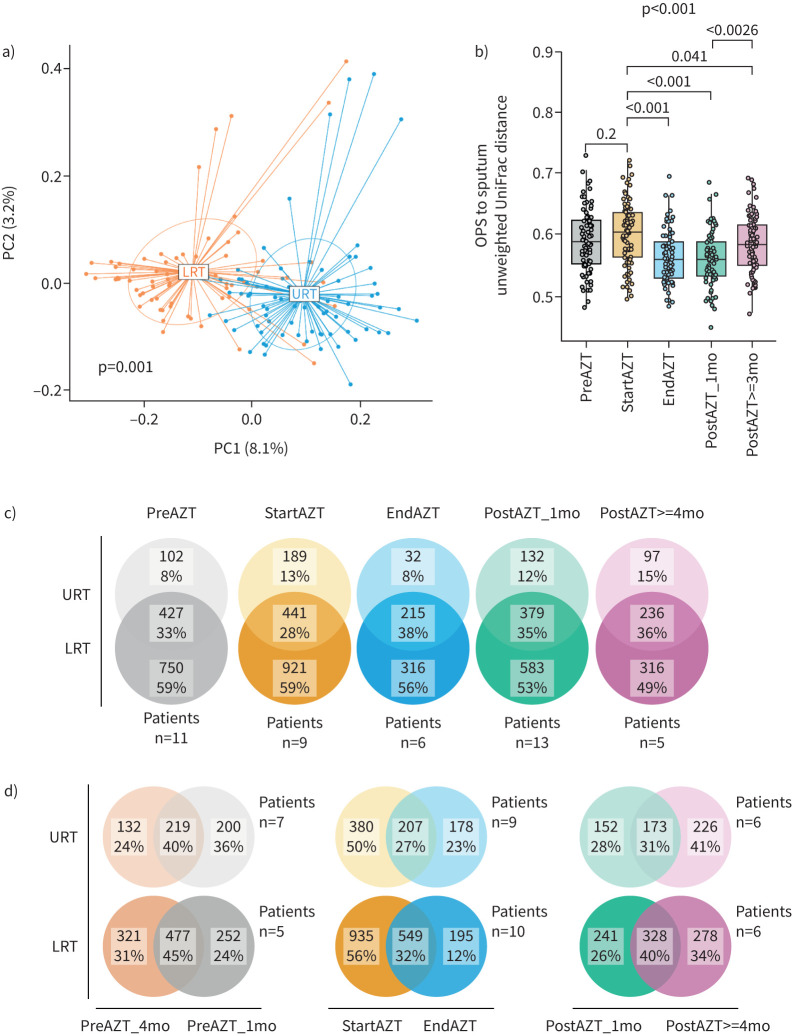
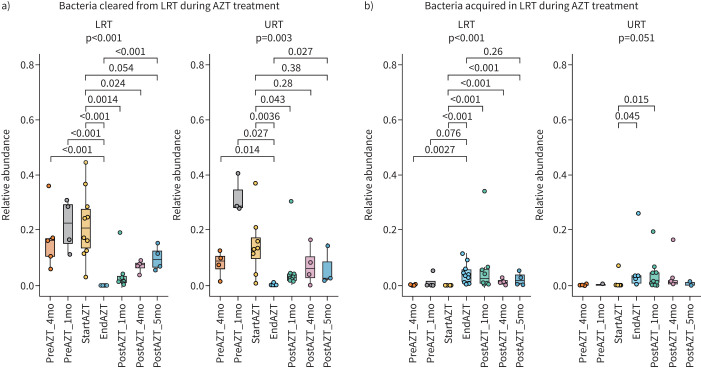
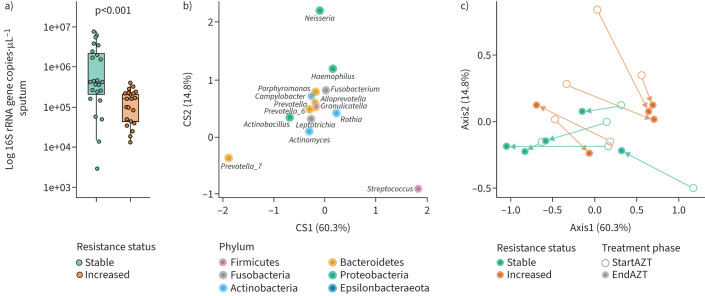
AZT significantly decreased community diversity with a stronger and more persistent effect in the lower airways (sputum). AZT treatment altered the temporal kinetics of the upper (oropharyngeal swab) and lower airway microbiota, increasing community similarity between the two sites for 1 month after macrolide cessation. Patients with an increase in ARG carriage had lower bacterial density and enrichment of the genus . In contrast, patients with more stable ARG carriage had higher bacterial density and enrichment in .
AZT caused sustained changes in the diversity and composition of the upper and lower airway microbiota in IPF, with effects on the temporal and spatial dynamics between the two sites.
肺部微生物群中高细菌负荷预示着特发性肺纤维化(IPF)的进展。阿奇霉素(AZT)是一种大环内酯类抗生素,已知可改变多种慢性肺部疾病中的肺部微生物群,观察性研究表明AZT对IPF患者的死亡率和住院率有积极影响。然而,AZT对IPF患者肺部微生物群的影响尚不清楚。
我们试图确定为期3个月的AZT疗程对IPF患者肺部微生物群的影响。我们评估了24名IPF成年患者的痰液和口咽拭子标本,这些患者纳入了一项口服AZT 500mg、每周3次的随机对照交叉试验。采用16S rRNA基因扩增子测序和定量PCR(qPCR)评估细菌群落。使用实时qPCR评估抗生素抗性基因(ARG)。
AZT显著降低了群落多样性,在下呼吸道(痰液)中的作用更强且更持久。AZT治疗改变了上呼吸道(口咽拭子)和下呼吸道微生物群的时间动力学,在停用大环内酯类药物后1个月内增加了两个部位之间的群落相似性。ARG携带增加的患者细菌密度较低,且属富集。相反,ARG携带更稳定的患者细菌密度较高,且在属中富集。
AZT导致IPF患者上、下呼吸道微生物群的多样性和组成发生持续变化,对两个部位之间的时间和空间动态产生影响。