Division of Chemical Biology and Medicinal Chemistry, Eshelman School of Pharmacy, University of North Carolina, Chapel Hill, NC 27599, USA.
Matrix and Morphogenesis Section, National Institute of Dental and Craniofacial Research, NIH, DHHS, Bethesda, MD 20892, USA.
Sci Adv. 2023 May 26;9(21):eadf6232. doi: 10.1126/sciadv.adf6232.
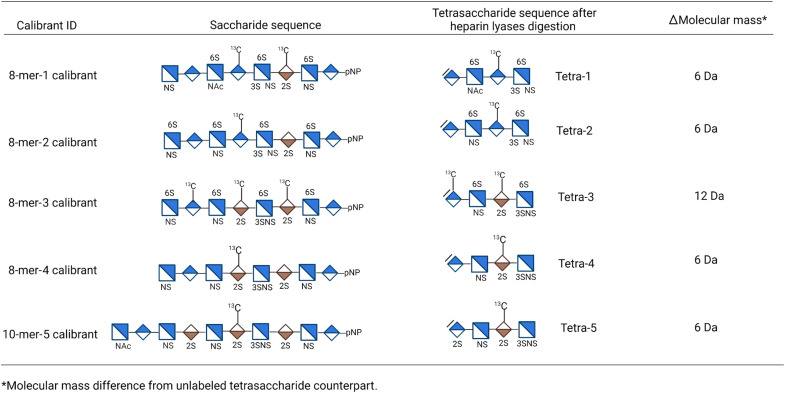
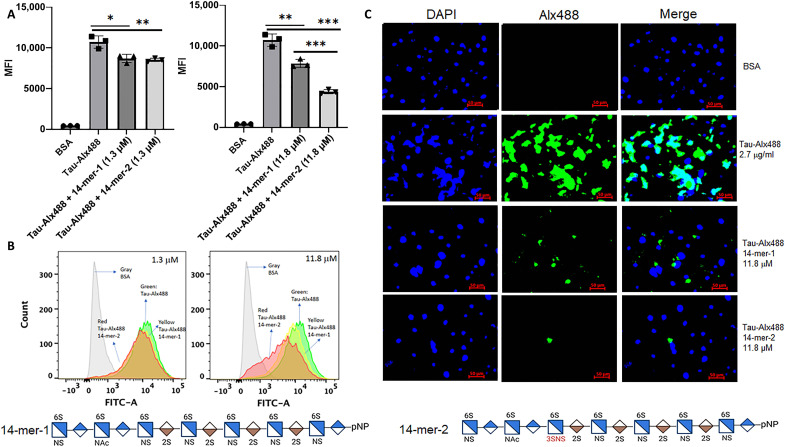
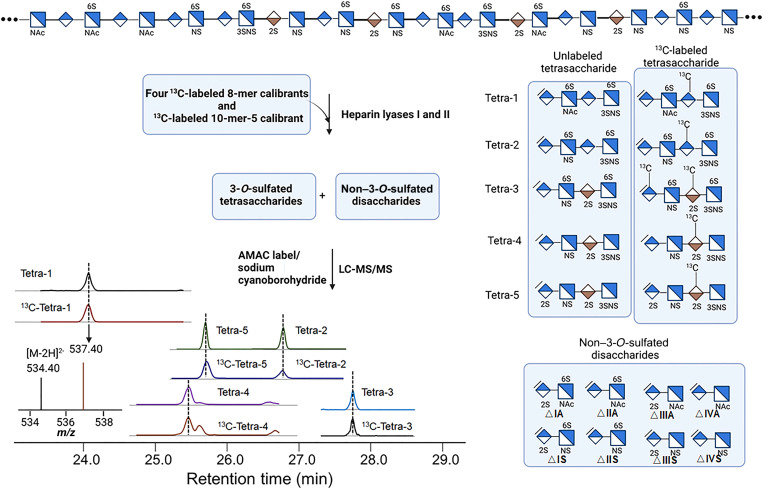
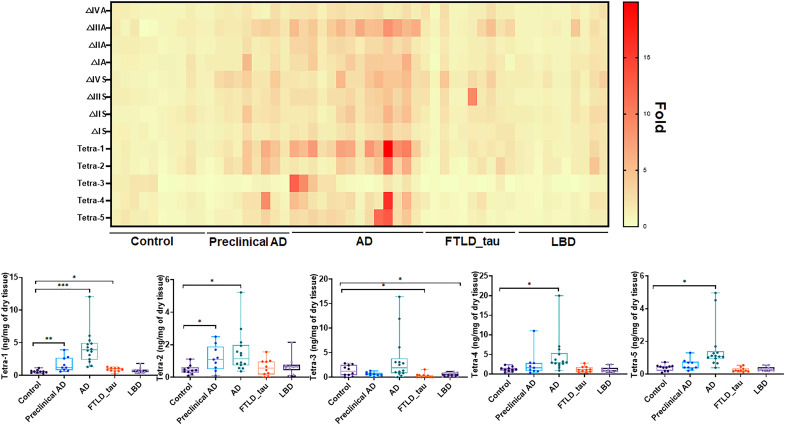
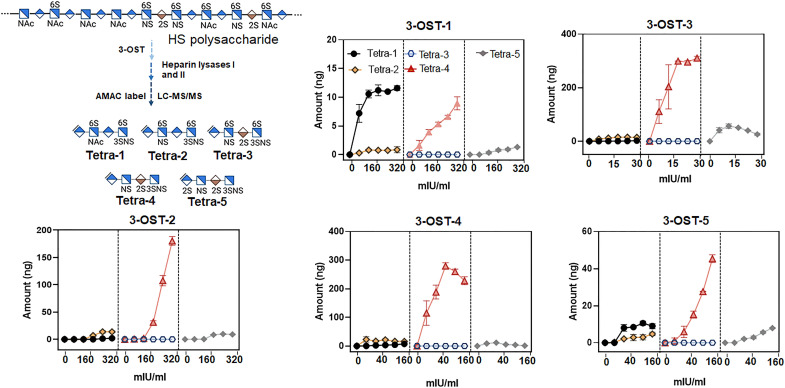
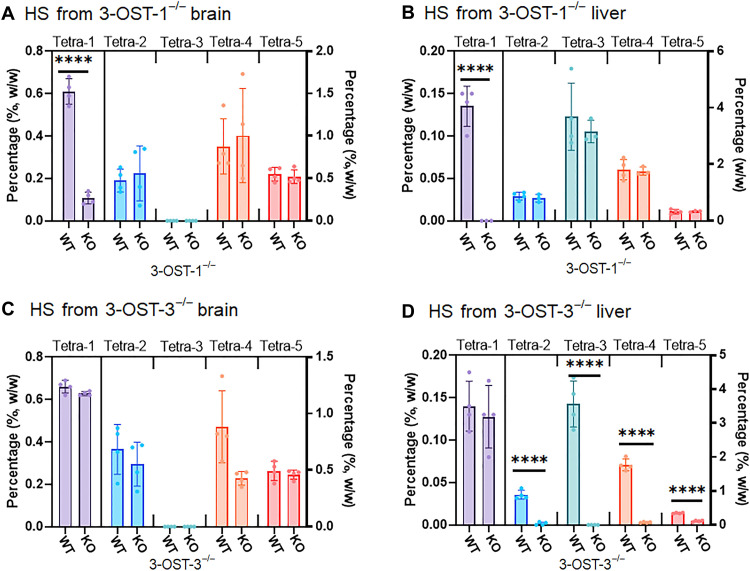
is a genetic risk gene associated with Alzheimer's disease (AD) and overexpressed in patients, but how it contributes to the disease progression is unknown. We report the analysis of brain heparan sulfate (HS) from AD and other tauopathies using a LC-MS/MS method. A specific 3--sulfated HS displayed sevenfold increase in the AD group ( = 14, < 0.0005). Analysis of the HS modified by recombinant sulfotransferases and HS from genetic knockout mice revealed that the specific 3--sulfated HS is made by 3--sulfotransferase isoform 1 (3-OST-1), which is encoded by the gene. A synthetic tetradecasaccharide (14-mer) carrying the specific 3--sulfated domain displayed stronger inhibition for tau internalization than a 14-mer without the domain, suggesting that the 3--sulfated HS is used in tau cellular uptake. Our findings suggest that the overexpression of gene may enhance the spread of tau pathology, uncovering a previously unidentified therapeutic target for AD.
是一种与阿尔茨海默病(AD)相关的遗传风险基因,在患者中过度表达,但它如何促进疾病进展尚不清楚。我们报告了使用 LC-MS/MS 方法对 AD 和其他 tauopathy 脑肝素硫酸酯(HS)的分析。特定的 3--硫酸化 HS 在 AD 组中增加了七倍(= 14,< 0.0005)。对重组硫酸转移酶修饰的 HS 和遗传敲除小鼠的 HS 的分析表明,特定的 3--硫酸化 HS 是由 3--硫酸转移酶同工酶 1(3-OST-1)产生的,该酶由 基因编码。携带特定 3--硫酸化结构域的十四糖(14 -mer)比没有该结构域的 14-mer 对 tau 内化的抑制作用更强,这表明 3--硫酸化 HS 用于 tau 细胞摄取。我们的发现表明,基因的过度表达可能会增强 tau 病理的传播,揭示了 AD 以前未被识别的治疗靶点。