Unidade de Cuidados Intensivos Polivalente 7 (UCIP7), Hospital de Curry Cabral, Centro Hospitalar Universitário Lisboa Central, Lisbon, Portugal.
Serviço de Medicina, Hospital Garcia de Orta, Almada, Portugal.
Sci Rep. 2023 May 26;13(1):8550. doi: 10.1038/s41598-023-34367-6.
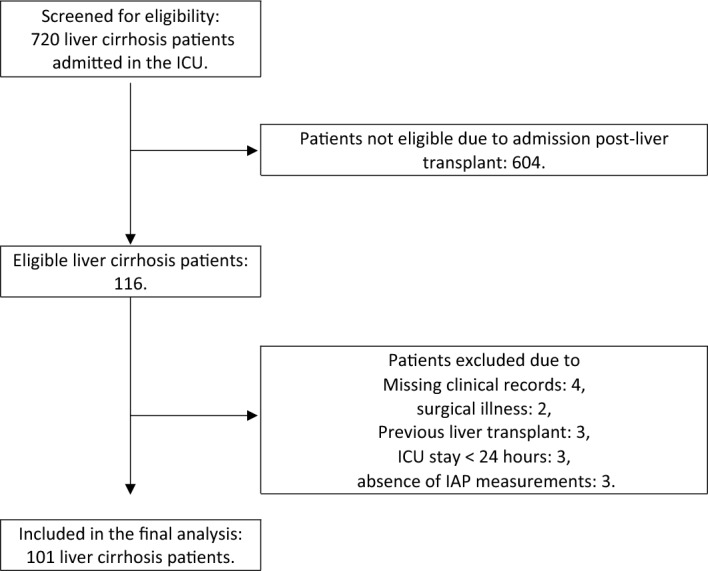
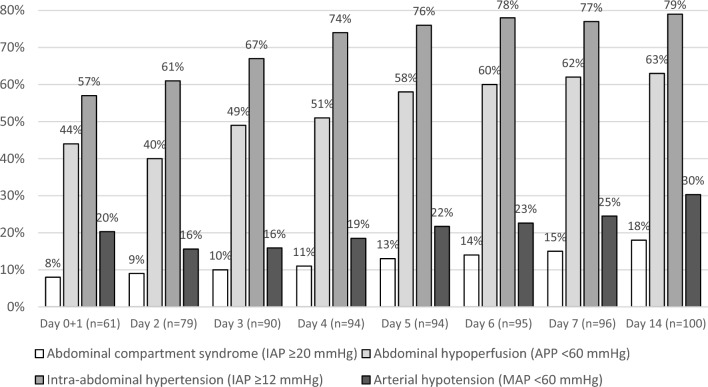
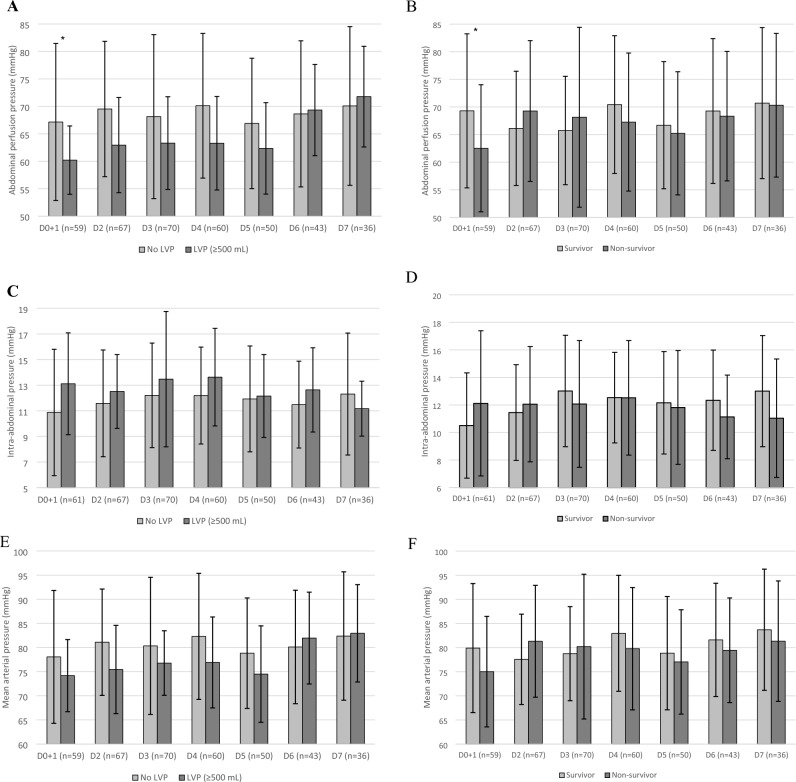
In critical patients, abdominal perfusion pressure (APP) has been shown to correlate with outcome. However, data from cirrhotic patients is scarce. We aimed to characterize APP in critically ill cirrhotic patients, analyze the prevalence and risk factors of abdominal hypoperfusion (AhP) and outcomes. A prospective cohort study in a general ICU specialized in liver disease at a tertiary hospital center recruited consecutive cirrhotic patients between October 2016 and December 2021. The study included 101 patients, with a mean age of 57.2 (± 10.4) years and a female gender proportion of 23.5%. The most frequent etiology of cirrhosis was alcohol (51.0%), and the precipitant event was infection (37.3%). ACLF grade (1-3) distribution was 8.9%, 26.7% and 52.5%, respectively. A total of 1274 measurements presented a mean APP of 63 (± 15) mmHg. Baseline AhP prevalence was 47%, independently associated with paracentesis (aOR 4.81, CI 95% 1.46-15.8, p = 0.01) and ACLF grade (aOR 2.41, CI 95% 1.20-4.85, p = 0.01). Similarly, AhP during the first week (64%) had baseline ACLF grade (aOR 2.09, CI 95% 1.29-3.39, p = 0.003) as a risk factor. Independent risk factors for 28-day mortality were bilirubin (aOR 1.10, CI 95% 1.04-1.16, p < 0.001) and SAPS II score (aOR 1.07, CI 95% 1.03-1.11, p = 0.001). There was a high prevalence of AhP in critical cirrhotic patients. Abdominal hypoperfusion was independently associated with higher ACLF grade and baseline paracentesis. Risk factors for 28-day mortality included clinical severity and total bilirubin. The prevention and treatment of AhP in the high-risk cirrhotic patient is prudential.
在危重症患者中,腹主动脉灌注压(APP)与预后相关。然而,关于肝硬化患者的数据却很少。本研究旨在描述危重症肝硬化患者的 APP 特征,分析腹部低灌注(AhP)的发生率、危险因素及预后。这是一项前瞻性队列研究,在一家三级医院的肝病重症监护病房(ICU)招募了 2016 年 10 月至 2021 年 12 月连续收治的肝硬化患者。共纳入 101 例患者,平均年龄为 57.2(±10.4)岁,女性占 23.5%。肝硬化最常见的病因是酒精(51.0%),诱发因素是感染(37.3%)。ACLF 分级(1-3 级)分别为 8.9%、26.7%和 52.5%。共 1274 次测量的 APP 平均值为 63(±15)mmHg。基线时 AhP 的发生率为 47%,与放腹水(比值比 [OR] 4.81,95%可信区间 [CI] 1.46-15.8,p=0.01)和 ACLF 分级(OR 2.41,95%CI 1.20-4.85,p=0.01)独立相关。同样,第 1 周时的 AhP(64%)也有基线 ACLF 分级(OR 2.09,95%CI 1.29-3.39,p=0.003)作为危险因素。28 天死亡率的独立危险因素包括胆红素(OR 1.10,95%CI 1.04-1.16,p<0.001)和 SAPS II 评分(OR 1.07,95%CI 1.03-1.11,p=0.001)。危重症肝硬化患者 AhP 发生率较高。腹部低灌注与较高的 ACLF 分级和基线放腹水独立相关。28 天死亡率的危险因素包括临床严重程度和总胆红素。对高危肝硬化患者进行 AhP 的预防和治疗是谨慎的。