Neurovascular Research Unit, Department of Radiology, Massachusetts General Hospital, Harvard Medical School, Charlestown, MA, 02129, USA.
Department of Dental Anesthesiology, Osaka University Graduate School of Dentistry, Suita, Osaka, 5650871, Japan.
J Headache Pain. 2023 May 26;24(1):62. doi: 10.1186/s10194-023-01598-x.
Cortical spreading depression (CSD), a transient neuronal and glial depolarization that propagates slowly across the cerebral cortex, is the putative electrophysiological event underlying migraine aura and a headache trigger. Migraine is three times more prevalent in women than men, linked to circulating female hormones. High estrogen levels or estrogen withdrawal may be a migraine trigger for many women. We, therefore, aimed to examine whether sex, gonadectomy, and female hormone supplementation and withdrawal affect the susceptibility to CSD.
To determine CSD susceptibility, we recorded the frequency of CSDs triggered during 2-h topical KCl application in intact or gonadectomized female and male rats, without or with estradiol or progesterone supplementation via daily intraperitoneal injections. Estrogen or progesterone treatment followed by withdrawal was studied in a separate cohort. To take the first step towards identifying potential mechanisms, we studied glutamate and GABA receptor binding using autoradiography.
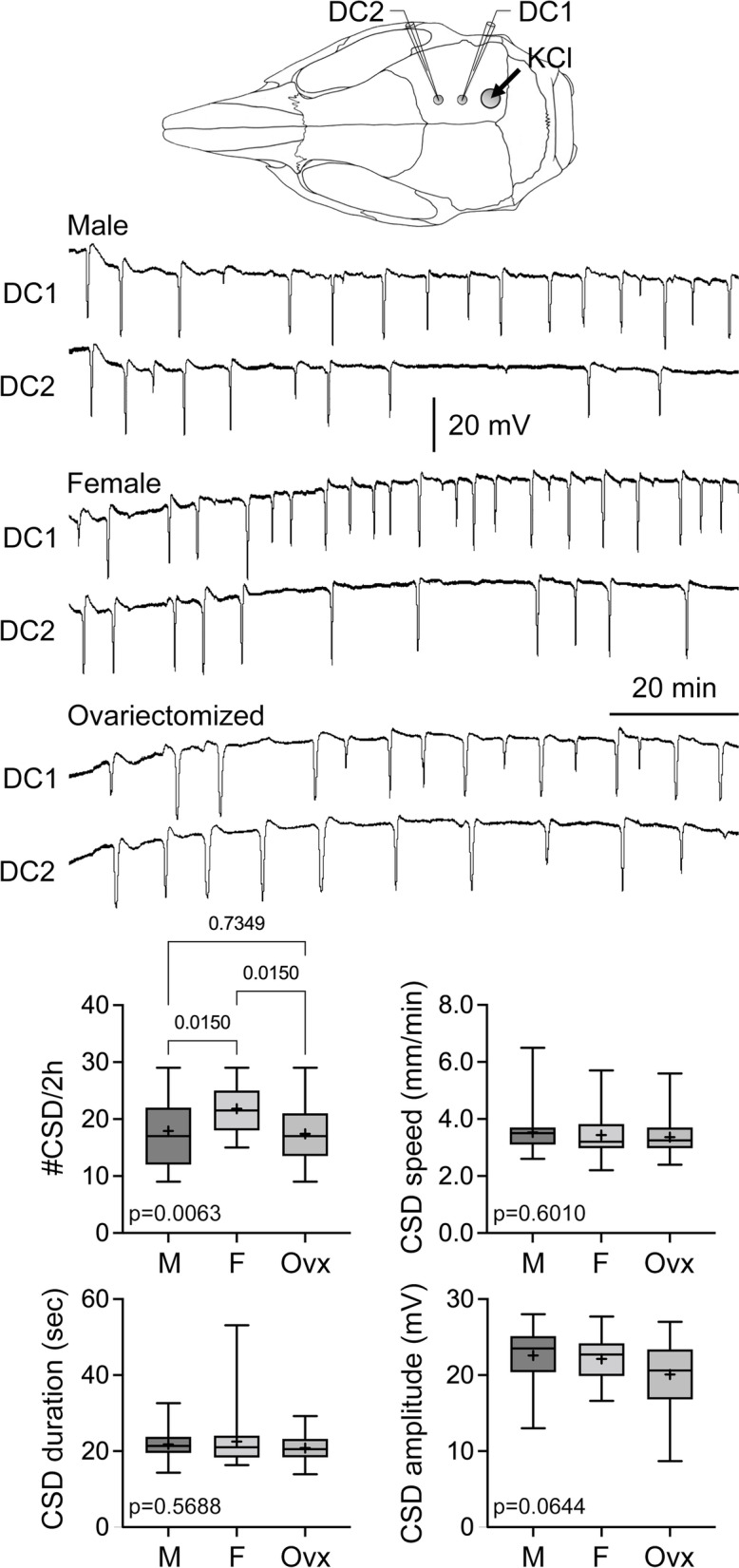
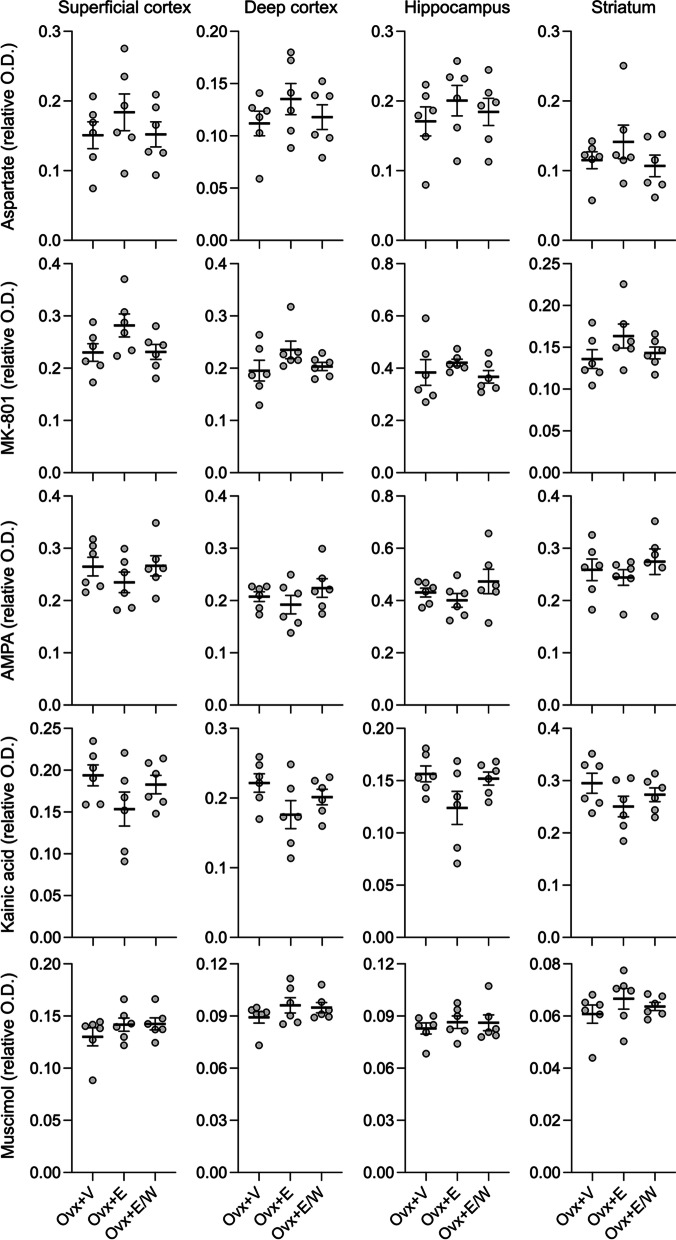
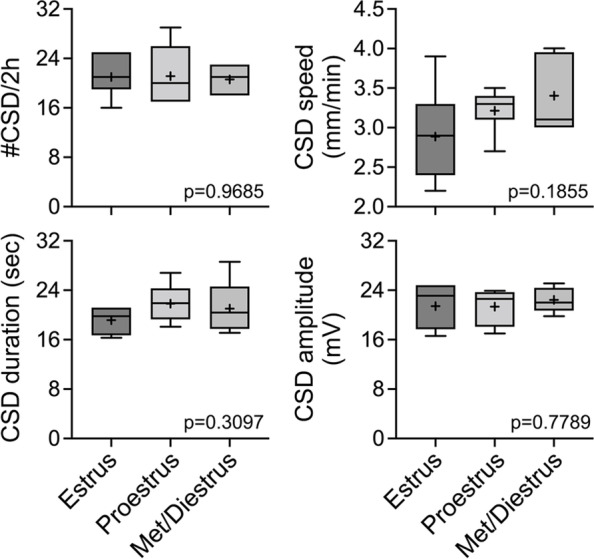
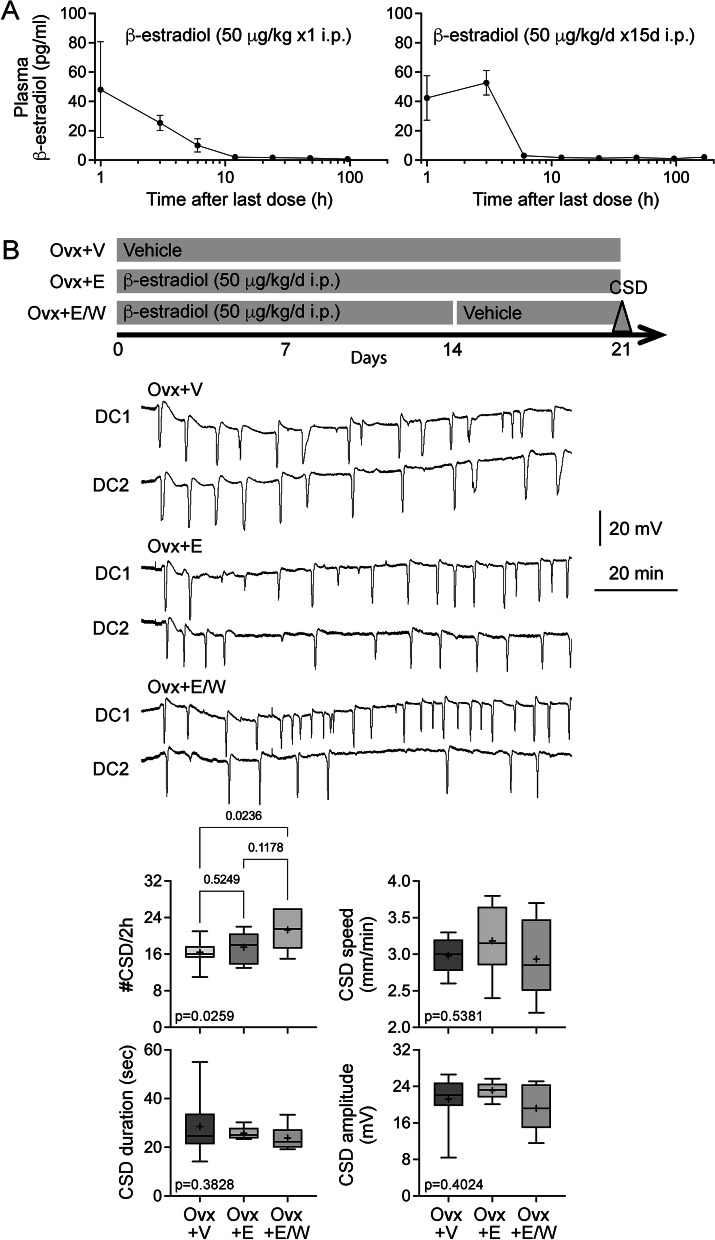
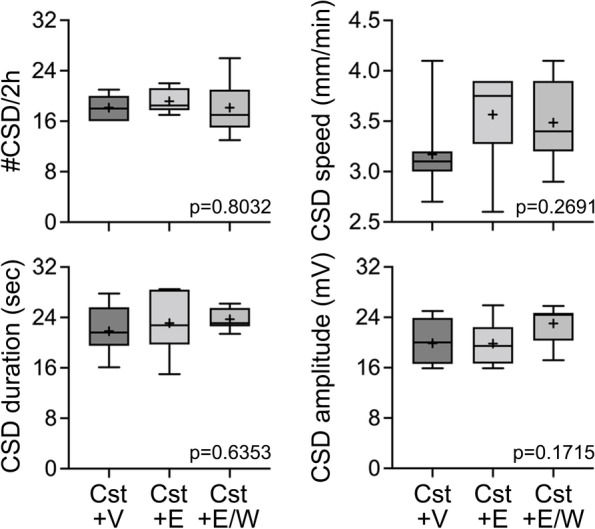
The CSD frequency in intact female rats was higher than intact male and ovariectomized rats. We did not detect a change in CSD frequency during different stages of the estrous cycle in intact females. Daily estrogen injections for three weeks did not change CSD frequency. However, one-week estrogen withdrawal after two weeks of treatment significantly increased CSD frequency compared with the vehicle group in gonadectomized females. The same protocol of estrogen treatment and withdrawal was ineffective in gonadectomized males. In contrast to estrogen, daily progesterone injections for three weeks elevated CSD susceptibility, and one-week withdrawal after two weeks of treatment partially normalized this effect. Autoradiography did not reveal significant changes in glutamate or GABA receptor binding density after estrogen treatment and withdrawal.
These data suggest that females are more susceptible to CSD, and sexual dimorphism is abrogated by gonadectomy. Moreover, estrogen withdrawal after prolonged daily treatment enhances CSD susceptibility. These findings may have implications for estrogen-withdrawal migraine, although the latter tends to be without aura.
皮质扩散性抑制(CSD)是一种短暂的神经元和神经胶质去极化,它在大脑皮层缓慢传播,被认为是偏头痛先兆和头痛触发的潜在电生理事件。偏头痛在女性中的发病率是男性的三倍,与循环中的女性激素有关。对于许多女性来说,高雌激素水平或雌激素撤退可能是偏头痛的触发因素。因此,我们旨在研究性别、性腺切除术以及女性激素补充和撤退是否会影响 CSD 的易感性。
为了确定 CSD 的易感性,我们记录了在完整或性腺切除的雌性和雄性大鼠中,通过每日腹腔注射雌二醇或孕酮补充剂,在 2 小时局部 KCl 应用过程中触发 CSD 的频率。在另一个队列中研究了雌激素或孕酮治疗后的撤退。为了朝着确定潜在机制迈出第一步,我们使用放射自显影术研究了谷氨酸和 GABA 受体结合。
完整雌性大鼠的 CSD 频率高于完整雄性和卵巢切除大鼠。我们没有发现完整雌性大鼠在发情周期的不同阶段 CSD 频率发生变化。三周的每日雌激素注射并没有改变 CSD 的频率。然而,在治疗两周后的一周内雌激素撤退显著增加了去势雌性大鼠的 CSD 频率,与对照组相比。在去势雄性大鼠中,相同的雌激素治疗和撤退方案无效。与雌激素相反,三周的每日孕酮注射提高了 CSD 的易感性,两周治疗后的一周撤退部分纠正了这种作用。雌激素治疗和撤退后,谷氨酸或 GABA 受体结合密度的放射自显影术没有显示出显著变化。
这些数据表明,女性更容易发生 CSD,而性二态性在性腺切除后消失。此外,长期每日治疗后的雌激素撤退增强了 CSD 的易感性。这些发现可能对雌激素撤退性偏头痛有意义,尽管后者往往没有先兆。