
新型噻唑基烯酮喹唑啉酮作为潜在的抗耐甲氧西林金黄色葡萄球菌(MRSA)药物和青霉素结合蛋白 2a(PBP2a)的变构调节剂。
Novel Thiazolylketenyl Quinazolinones as Potential Anti-MRSA Agents and Allosteric Modulator for PBP2a.
机构信息
Institute of Bioorganic & Medicinal Chemistry, Key Laboratory of Applied Chemistry of Chongqing Municipality, School of Chemistry and Chemical Engineering, Southwest University, Chongqing 400715, China.
College of Pharmacy, National & Local Joint Engineering Research Center of Targeted and Innovative Therapeutics, Chongqing Key Laboratory of Kinase Modulators as Innovative Medicine, Chongqing University of Arts and Sciences, Chongqing 402160, China.
出版信息
Molecules. 2023 May 22;28(10):4240. doi: 10.3390/molecules28104240.
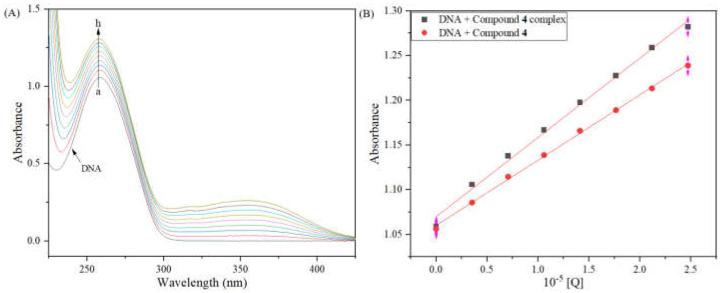
Bacterial infections caused by methicillin-resistant have seriously threatened public health. There is an urgent need to propose an existing regimen to overcome multidrug resistance of MRSA. A unique class of novel anti-MRSA thiazolylketenyl quinazolinones (TQs) and their analogs were developed. Some synthesized compounds showed good bacteriostatic potency. Especially TQ was found to exhibit excellent inhibition against MRSA with a low MIC of 0.5 μg/mL, which was 8-fold more effective than norfloxacin. The combination of TQ with cefdinir showed stronger antibacterial potency. Further investigation revealed that TQ with low hemolytic toxicity and low drug resistance, was not only able to inhibit biofilm formation but also could reduce MRSA metabolic activity and showed good drug-likeness. Mechanistic explorations revealed that TQ could cause leakage of proteins by disrupting membrane integrity and block DNA replication by intercalated DNA. Furthermore, the synergistic antibacterial effect with cefdinir might be attributed to TQ with the ability to induce PBP2a allosteric regulation of MRSA and further trigger the opening of the active site to promote the binding of cefdinir to the active site, thus inhibiting the expression of PBP2a, thereby overcoming MRSA resistance and significantly enhancing the anti-MRSA activity of cefdinir. A new strategy provided by these findings was that TQ , possessing both excellent anti-MRSA activity and allosteric effect of PBP2a, merited further development as a novel class of antibacterial agents to overcome increasingly severe MRSA infections.
耐甲氧西林金黄色葡萄球菌引起的细菌感染严重威胁着公众健康。迫切需要提出一种现有的方案来克服耐甲氧西林金黄色葡萄球菌的多药耐药性。开发了一类独特的新型抗耐甲氧西林金黄色葡萄球菌噻唑基酮基喹唑啉酮(TQs)及其类似物。一些合成的化合物表现出良好的抑菌活性。特别是 TQ 被发现对耐甲氧西林金黄色葡萄球菌具有极好的抑制作用,MIC 低至 0.5μg/mL,比诺氟沙星有效 8 倍。TQ 与头孢地尼联合使用显示出更强的抗菌活性。进一步的研究表明,TQ 具有低溶血毒性和低耐药性,不仅能够抑制生物膜的形成,还能够降低耐甲氧西林金黄色葡萄球菌的代谢活性,并具有良好的类药性。机制研究表明,TQ 通过破坏膜完整性导致蛋白质泄漏,并通过插入 DNA 阻断 DNA 复制。此外,与头孢地尼的协同抗菌作用可能归因于 TQ 能够诱导耐甲氧西林金黄色葡萄球菌 PBP2a 的变构调节,并进一步触发活性部位的开放,促进头孢地尼与活性部位的结合,从而抑制 PBP2a 的表达,从而克服耐甲氧西林金黄色葡萄球菌的耐药性,并显著增强头孢地尼的抗耐甲氧西林金黄色葡萄球菌活性。这些发现提供了一种新的策略,即 TQ 具有出色的抗耐甲氧西林金黄色葡萄球菌活性和 PBP2a 的变构作用,值得进一步开发为一种新型的抗菌剂,以克服日益严重的耐甲氧西林金黄色葡萄球菌感染。




 Zotero 插件