Reusswig Friedrich, Yilmaz Münteha, Brechtenkamp Marius, Krueger Irena, Metz Lisa Maria, Klöcker Nikolaj, Lammert Eckhard, Elvers Margitta
Department of Vascular- and Endovascular Surgery, University Hospital Düsseldorf, Heinrich-Heine University, Düsseldorf, Germany.
Institute of Neural and Sensory Physiology, Medical Faculty and University Hospital Düsseldorf, Heinrich-Heine University, Düsseldorf, Germany.
Front Cardiovasc Med. 2023 May 12;10:1171831. doi: 10.3389/fcvm.2023.1171831. eCollection 2023.
Platelet activation and thrombus formation is crucial for hemostasis, but also trigger arterial thrombosis. Calcium mobilization plays an important role in platelet activation, because many cellular processes depend on the level of intracellular Ca (Ca), such as integrin activation, degranulation, cytoskeletal reorganization. Different modulators of Ca signaling have been implied, such as STIM1, Orai1, CyPA, SGK1, etc. Also, the N-methyl-D-aspartate receptor (NMDAR) was identified to contribute to Ca signaling in platelets. However, the role of the NMDAR in thrombus formation is not well defined.
and analysis of platelet-specific NMDAR knock-out mice.
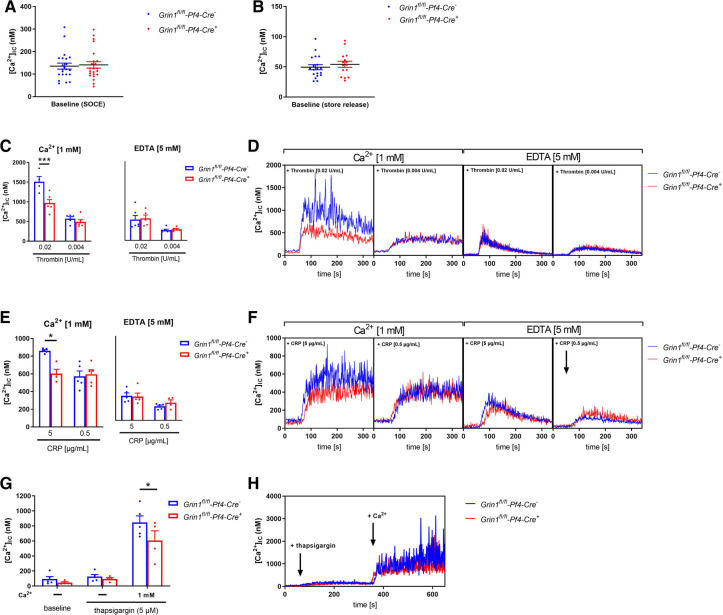
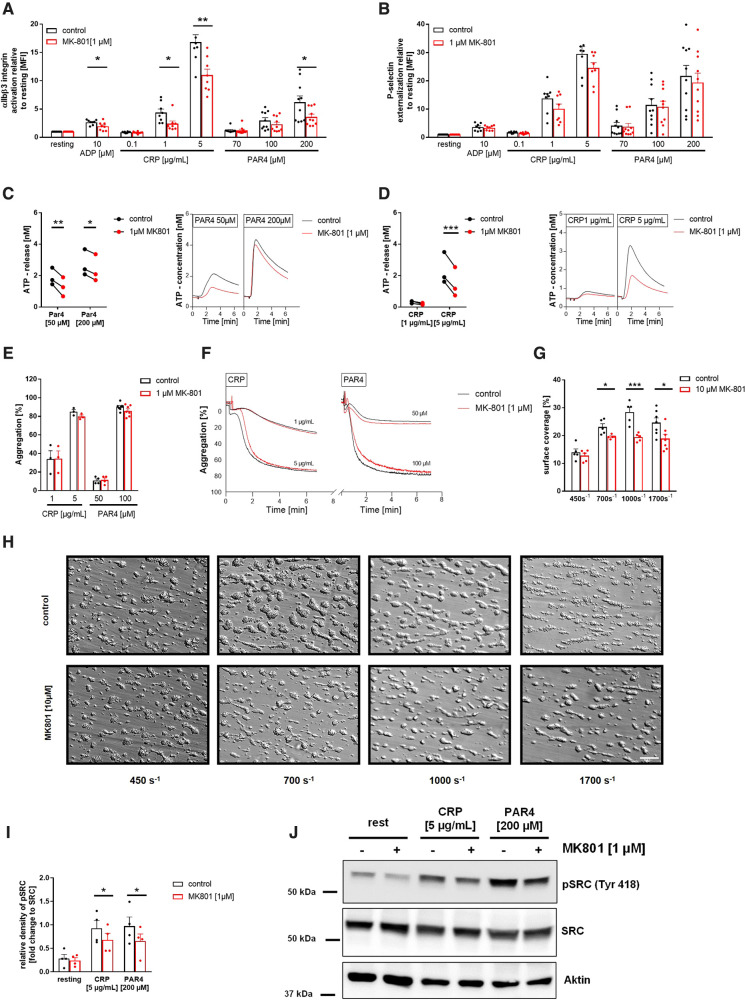
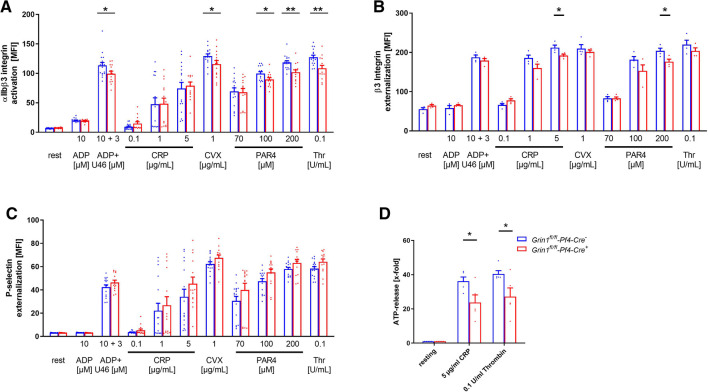
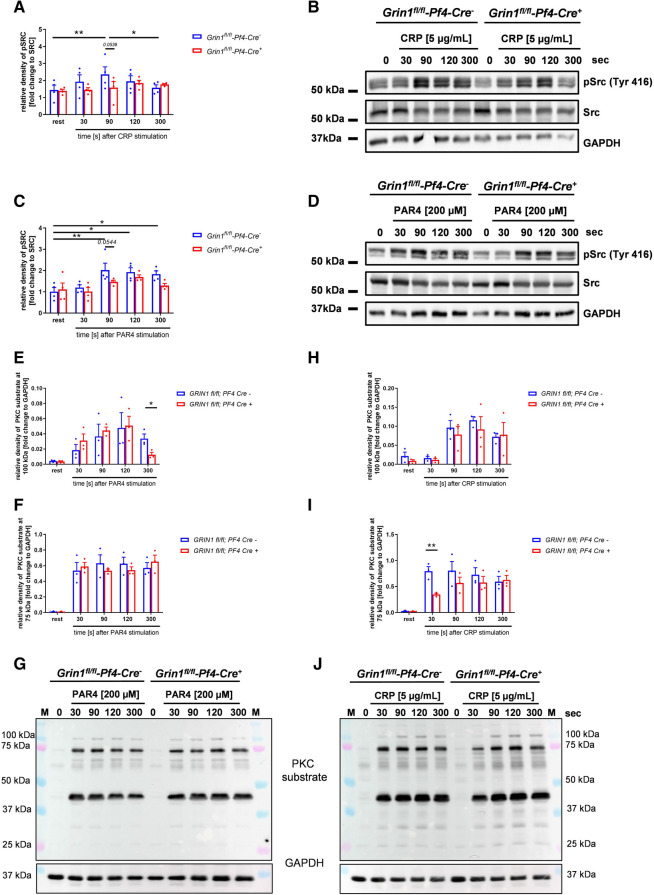
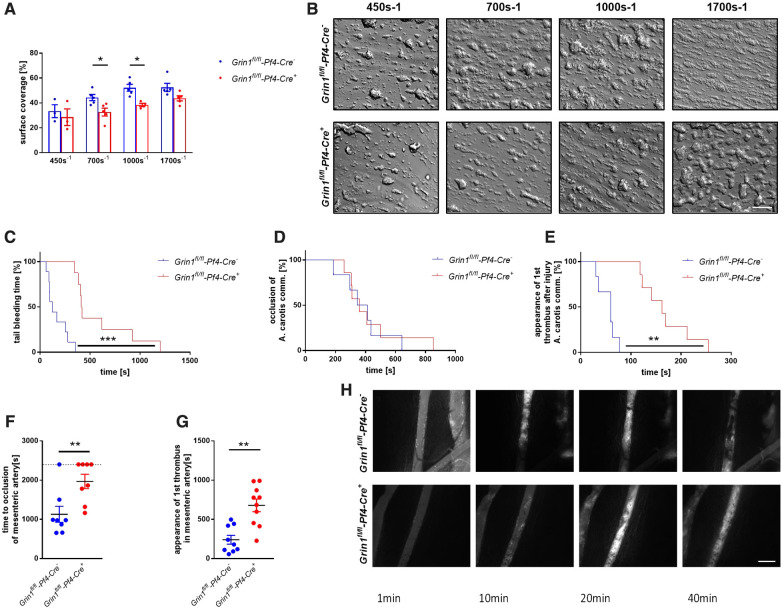
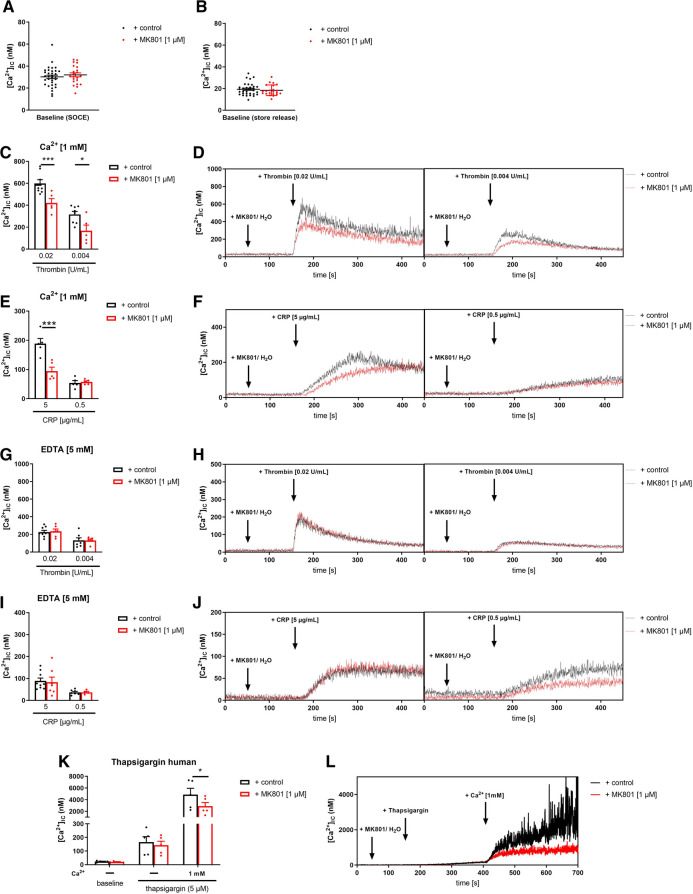
In this study, we analyzed mice with a platelet-specific knock-out of the essential GluN1 subunit of the NMDAR. We found reduced store-operated Ca entry (SOCE), but unaltered store release in GluN1-deficient platelets. Defective SOCE resulted in reduced Src and PKC substrate phosphorylation following stimulation of glycoprotein (GP)VI or the thrombin receptor PAR4 followed by decreased integrin activation but unaltered degranulation. Consequently, thrombus formation on collagen under flow conditions was reduced , and mice were protected against arterial thrombosis. Results from human platelets treated with the NMDAR antagonist MK-801 revealed a crucial role of the NMDAR in integrin activation and Ca homeostasis in human platelets as well.
NMDAR signaling is important for SOCE in platelets and contributes to platelet activation and arterial thrombosis. Thus, the NMDAR represents a novel target for anti-platelet therapy in cardiovascular disease (CVD).
血小板活化和血栓形成对于止血至关重要,但也会引发动脉血栓形成。钙动员在血小板活化中起重要作用,因为许多细胞过程取决于细胞内钙([Ca]i)水平,如整合素活化、脱颗粒、细胞骨架重组。已暗示了钙信号的不同调节因子,如基质相互作用分子1(STIM1)、钙释放激活钙通道蛋白1(Orai1)、亲环素A(CyPA)、血清/糖皮质激素调节激酶1(SGK1)等。此外,已确定N-甲基-D-天冬氨酸受体(NMDAR)有助于血小板中的钙信号传导。然而,NMDAR在血栓形成中的作用尚不清楚。
对血小板特异性NMDAR基因敲除小鼠进行分析。
在本研究中,我们分析了血小板特异性敲除NMDAR必需的GluN1亚基的小鼠。我们发现,在GluN1缺陷型血小板中,储存性钙内流(SOCE)减少,但储存释放未改变。SOCE缺陷导致糖蛋白(GP)VI或凝血酶受体蛋白酶激活受体4(PAR4)刺激后Src和蛋白激酶C(PKC)底物磷酸化减少,随后整合素活化降低,但脱颗粒未改变。因此,流动条件下胶原蛋白上的血栓形成减少,且该基因敲除小鼠对动脉血栓形成具有保护作用。用NMDAR拮抗剂MK-801处理人血小板的结果表明,NMDAR在人血小板的整合素活化和钙稳态中也起关键作用。
NMDAR信号传导对血小板中的SOCE很重要,并有助于血小板活化和动脉血栓形成。因此,NMDAR代表了心血管疾病(CVD)抗血小板治疗的新靶点。