Department of Biochemistry and Molecular Biology, Complutense University, Madrid, Spain.
Instituto de Investigación Hospital 12 de Octubre, Madrid, Spain.
Nat Commun. 2023 May 30;14(1):3130. doi: 10.1038/s41467-023-38750-9.
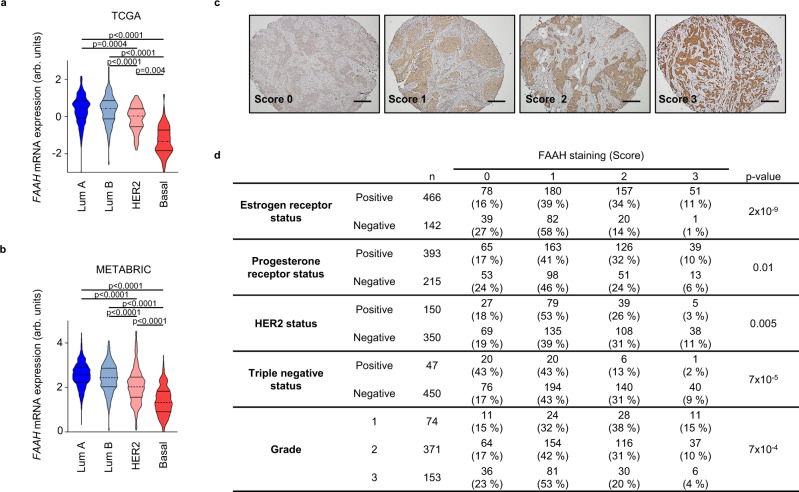
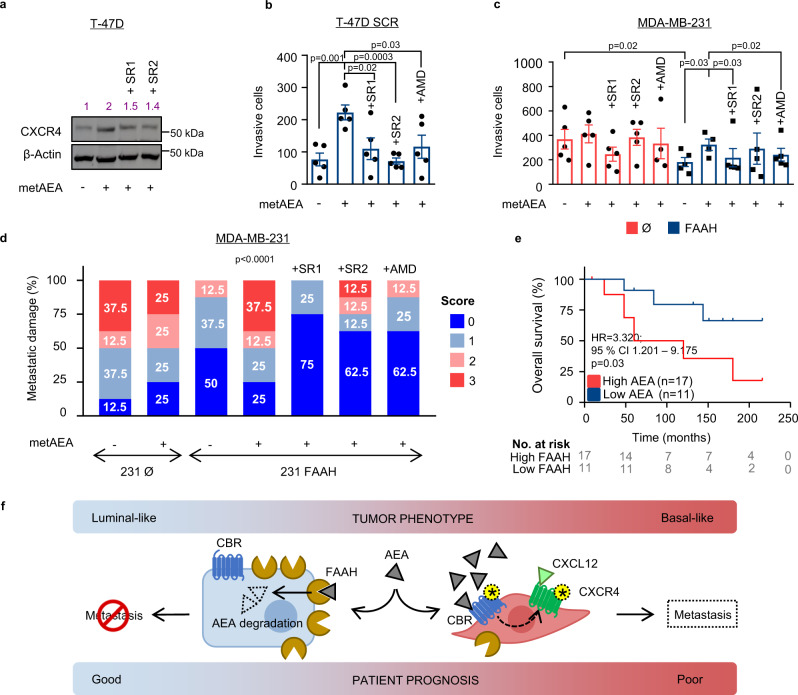
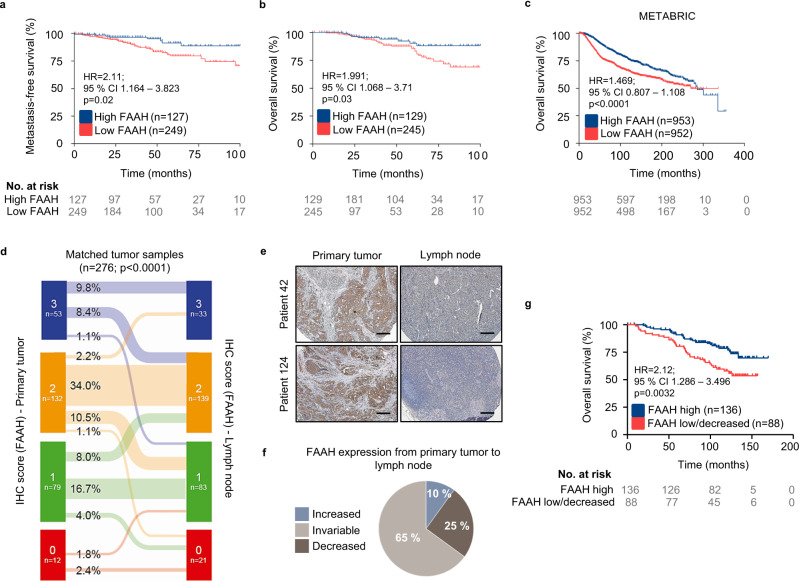
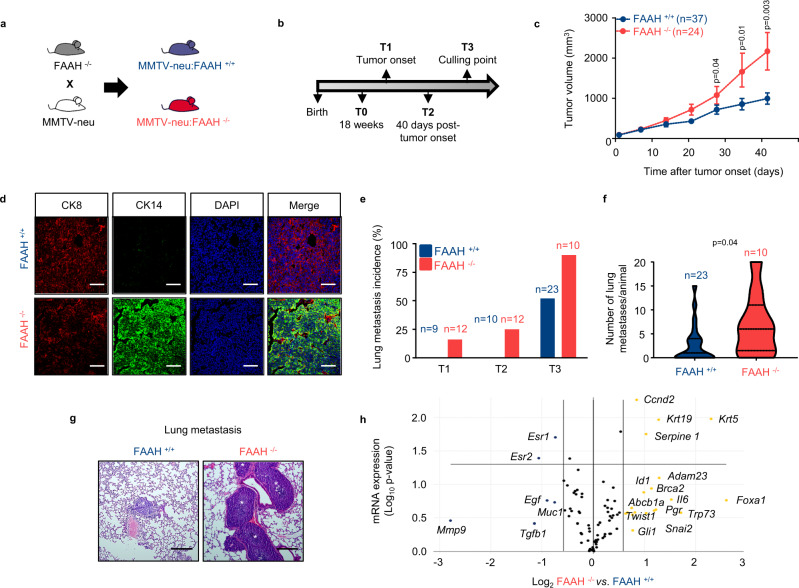
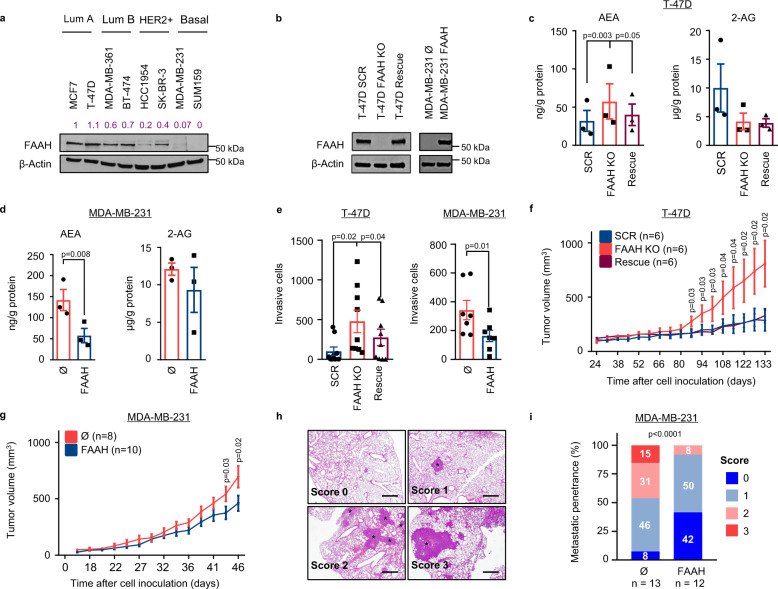
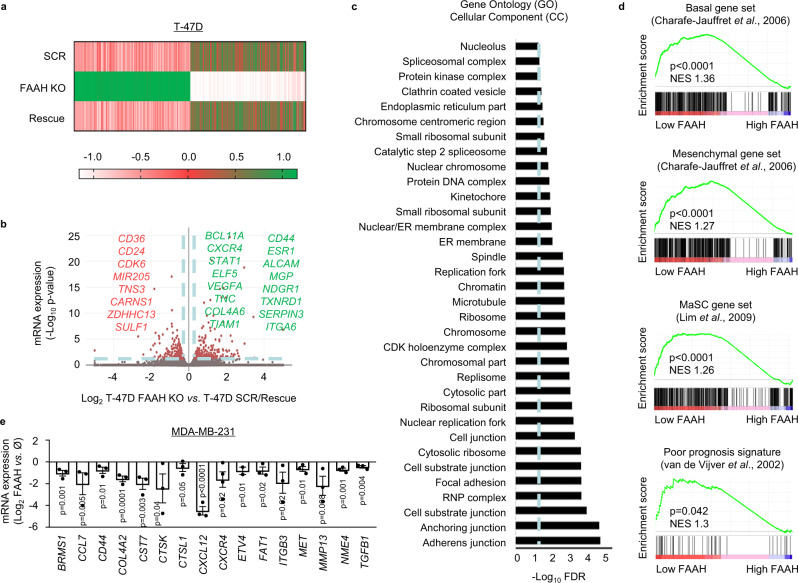
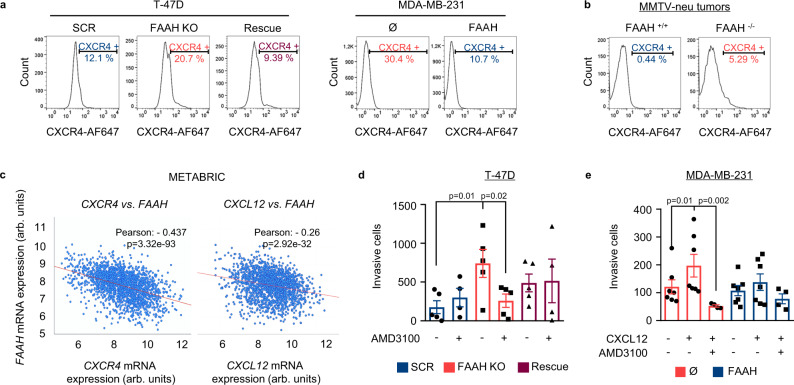
Clinical management of breast cancer (BC) metastasis remains an unmet need as it accounts for 90% of BC-associated mortality. Although the luminal subtype, which represents >70% of BC cases, is generally associated with a favorable outcome, it is susceptible to metastatic relapse as late as 15 years after treatment discontinuation. Seeking therapeutic approaches as well as screening tools to properly identify those patients with a higher risk of recurrence is therefore essential. Here, we report that the lipid-degrading enzyme fatty acid amide hydrolase (FAAH) is a predictor of long-term survival in patients with luminal BC, and that it blocks tumor progression and lung metastasis in cell and mouse models of BC. Together, our findings highlight the potential of FAAH as a biomarker with prognostic value in luminal BC and as a therapeutic target in metastatic disease.
乳腺癌(BC)转移的临床管理仍然是一个未满足的需求,因为它占 BC 相关死亡的 90%。尽管占 BC 病例>70%的腔型亚型通常与良好的预后相关,但它在治疗停止后长达 15 年仍易发生转移性复发。因此,寻求治疗方法和筛查工具以正确识别那些复发风险较高的患者至关重要。在这里,我们报告说,脂质降解酶脂肪酸酰胺水解酶(FAAH)是腔型 BC 患者长期生存的预测因子,并且它在 BC 的细胞和小鼠模型中阻断肿瘤进展和肺转移。总之,我们的研究结果突出了 FAAH 作为腔型 BC 具有预后价值的生物标志物和转移性疾病治疗靶点的潜力。