The Engineering Technology Research Center of Education Ministry of China, Guangdong Provincial Key Laboratory On Brain Function Repair and Regeneration, Department of Neurosurgery, The National Key Clinical Specialty, Zhujiang Hospital, Southern Medical University, 253# Gongye RD, Guangzhou, 510282, China.
Hygiene Detection Center, School of Public Health and Tropical Medicine, Southern Medical University, Guangzhou, 510515, China.
Sci Rep. 2023 May 31;13(1):8776. doi: 10.1038/s41598-023-36007-5.
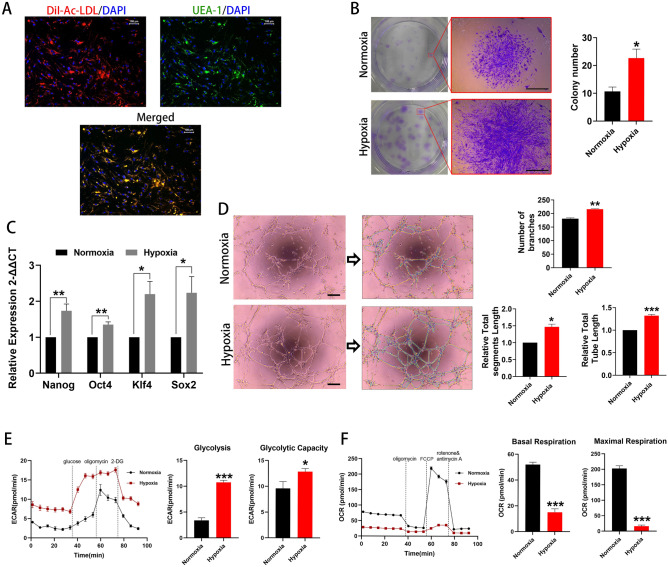
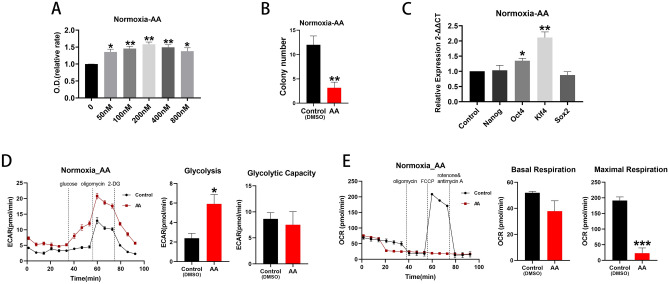
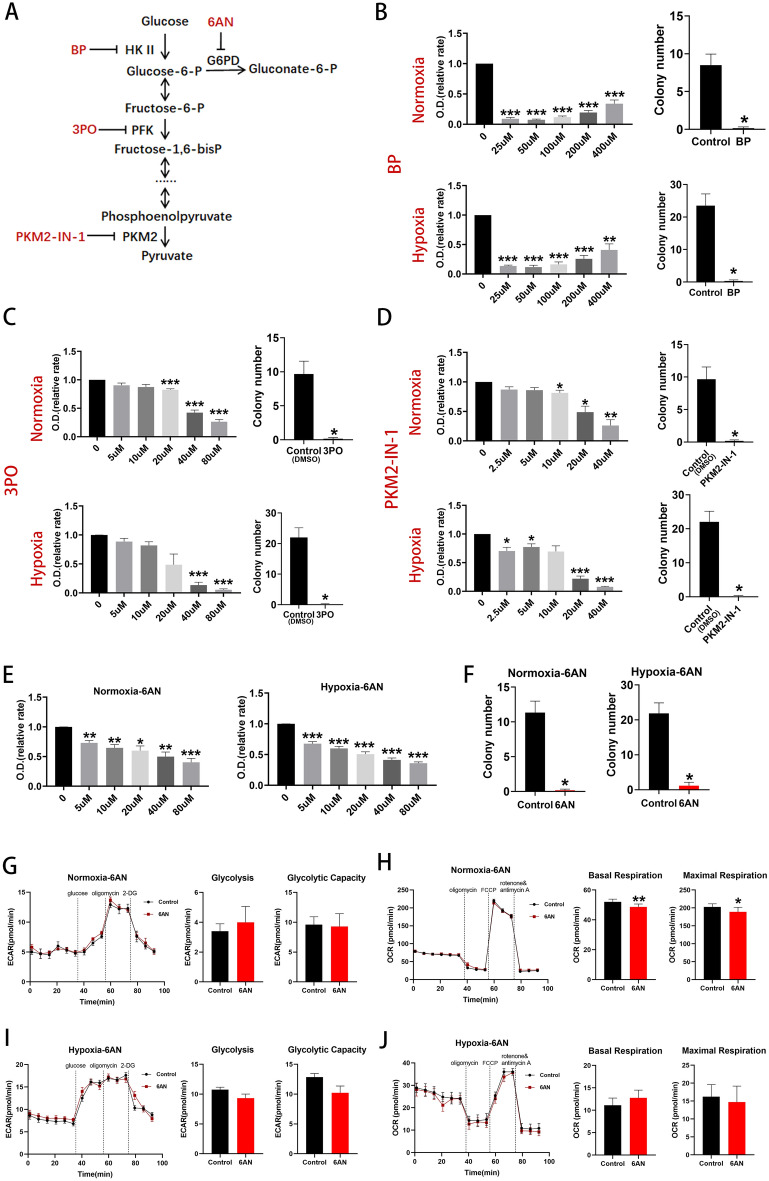
The benefits of hypoxia for maintaining the stemness of cultured human bone marrow-derived endothelial progenitor cells (BM EPCs) have previously been demonstrated but the mechanisms responsible remain unclear. Growing evidences suggest that cellular metabolism plays an important role in regulating stem cell fate and self-renewal. Here we aimed to detect the changes of glucose metabolism and to explore its role on maintaining the stemness of BM EPCs under hypoxia. We identified the metabolic status of BM EPCs by using extracellular flux analysis, LC-MS/MS, and C tracing HPLC-QE-MS, and found that hypoxia induced glucose metabolic reprogramming, which manifested as increased glycolysis and pentose phosphate pathway (PPP), decreased tricarboxylic acid (TCA) and mitochondrial respiration. We further pharmacologically altered the metabolic status of cells by employing various of inhibitors of key enzymes of glycolysis, PPP, TCA cycle and mitochondria electron transport chain (ETC). We found that inhibiting glycolysis or PPP impaired cell proliferation either under normoxia or hypoxia. On the contrary, inhibiting pyruvate oxidation, TCA or ETC promoted cell proliferation under normoxia mimicking hypoxic conditions. Moreover, promoting pyruvate oxidation reverses the maintenance effect of hypoxia on cell stemness. Taken together, our data suggest that hypoxia induced glucose metabolic reprogramming maintains the stemness of BM EPCs, and artificial manipulation of cell metabolism can be an effective way for regulating the stemness of BM EPCs, thereby improving the efficiency of cell expansion in vitro.
先前已经证实,低氧环境有益于维持培养的人骨髓源性内皮祖细胞(BM EPC)的干细胞特性,但具体的作用机制尚不清楚。越来越多的证据表明,细胞代谢在调节干细胞命运和自我更新方面起着重要作用。在此,我们旨在检测葡萄糖代谢的变化,并探索其在低氧环境下维持 BM EPC 干细胞特性中的作用。我们通过细胞外通量分析、LC-MS/MS 和 C 示踪 HPLC-QE-MS 来鉴定 BM EPC 的代谢状态,发现低氧诱导葡萄糖代谢重编程,表现为糖酵解和磷酸戊糖途径(PPP)增加,三羧酸循环(TCA)和线粒体呼吸减少。我们进一步通过使用糖酵解、PPP、TCA 循环和线粒体电子传递链(ETC)关键酶的各种抑制剂来改变细胞的代谢状态。我们发现,无论是在常氧还是低氧条件下,抑制糖酵解或 PPP 都会损害细胞增殖。相反,在常氧条件下模拟低氧环境时,抑制丙酮酸氧化、TCA 或 ETC 会促进细胞增殖。此外,促进丙酮酸氧化可逆转低氧对细胞干性的维持作用。综上所述,我们的数据表明,低氧诱导的葡萄糖代谢重编程维持了 BM EPC 的干细胞特性,而人工操纵细胞代谢可以成为调节 BM EPC 干细胞特性的有效方法,从而提高细胞在体外的扩增效率。