Yang Fuji, Wu Yanshuang, Chen Yifei, Xi Jianbo, Chu Ying, Jin Jianhua, Yan Yongmin
Department of Laboratory Medicine, Wujin Hospital Affiliated with Jiangsu University, Jiangsu University, Changzhou, China.
School of Medicine, Jiangsu University, Zhenjiang, China.
JHEP Rep. 2023 Mar 28;5(7):100746. doi: 10.1016/j.jhepr.2023.100746. eCollection 2023 Jul.
BACKGROUND & AIMS: Non-alcoholic fatty liver disease (NAFLD) affects nearly a quarter of the population with no approved pharmacological therapy. Liver steatosis is a primary characteristic of NAFLD. Recent studies suggest that human umbilical cord mesenchymal stem cell-derived exosomes (MSC-ex) may provide a promising strategy for treating liver injury; however, the role and underlying mechanisms of MSC-ex in steatosis are not fully understood.
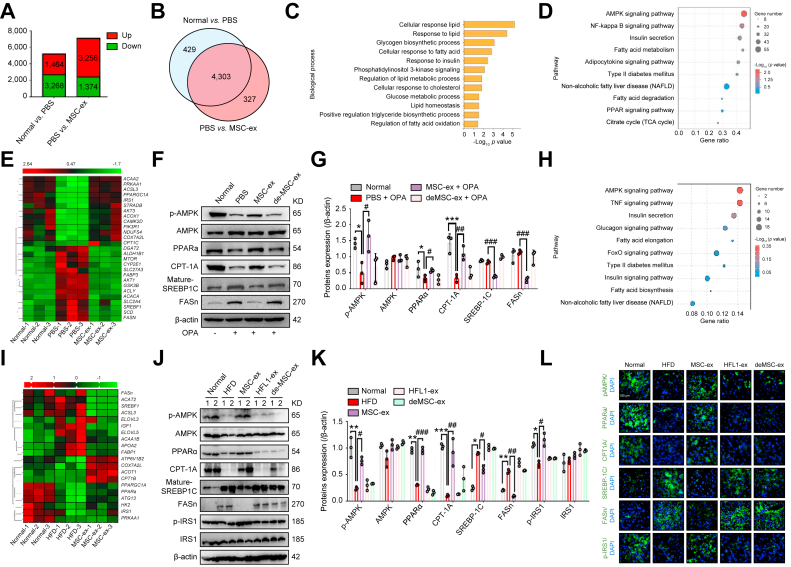
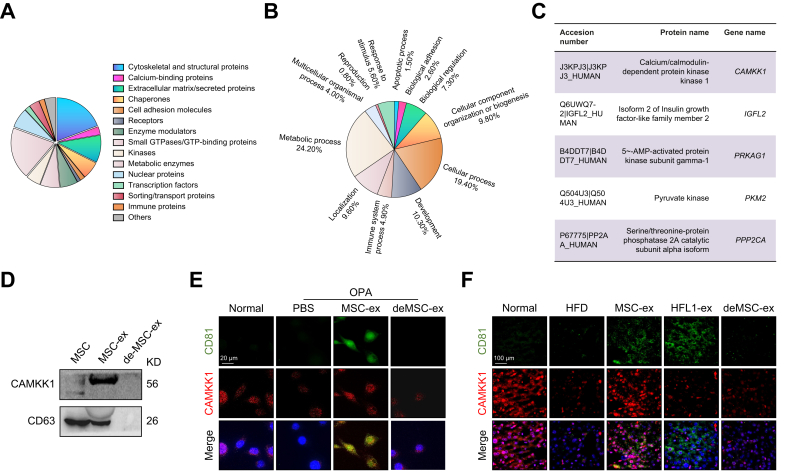
Oleic-palmitic acid-treated hepatic cells and high-fat diet (HFD)-induced NAFLD mice were established to observe the effect of MSC-ex. Using non-targeted lipidomics and transcriptome analyses, we analysed the gene pathways positively correlated with MSC-ex. Mass spectrometry and gene knockdown/overexpression analyses were performed to evaluate the effect of calcium/calmodulin-dependent protein kinase 1 (CAMKK1) transferred by MSC-ex on lipid homoeostasis regulation.
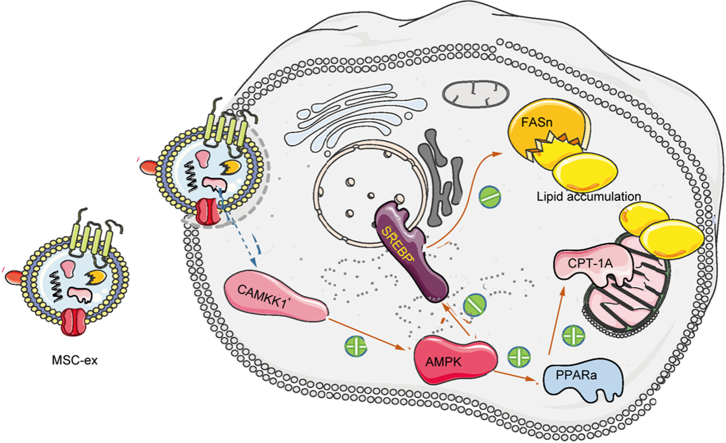
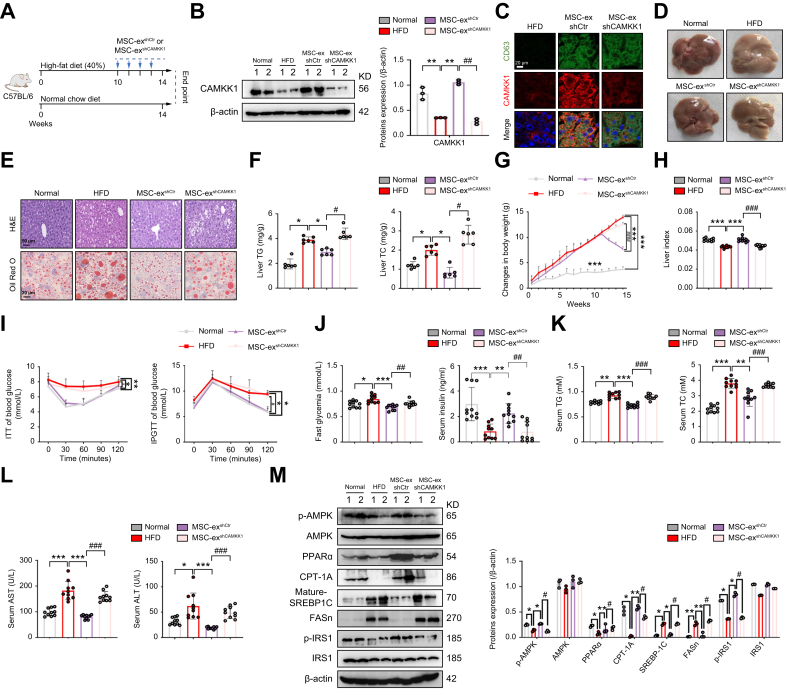
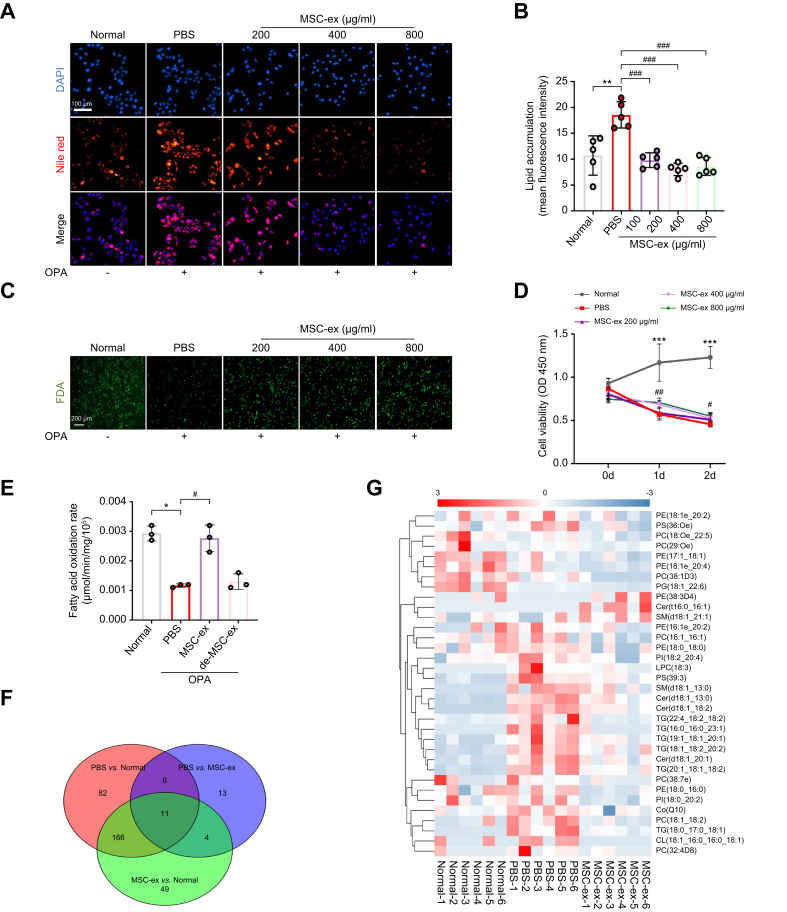
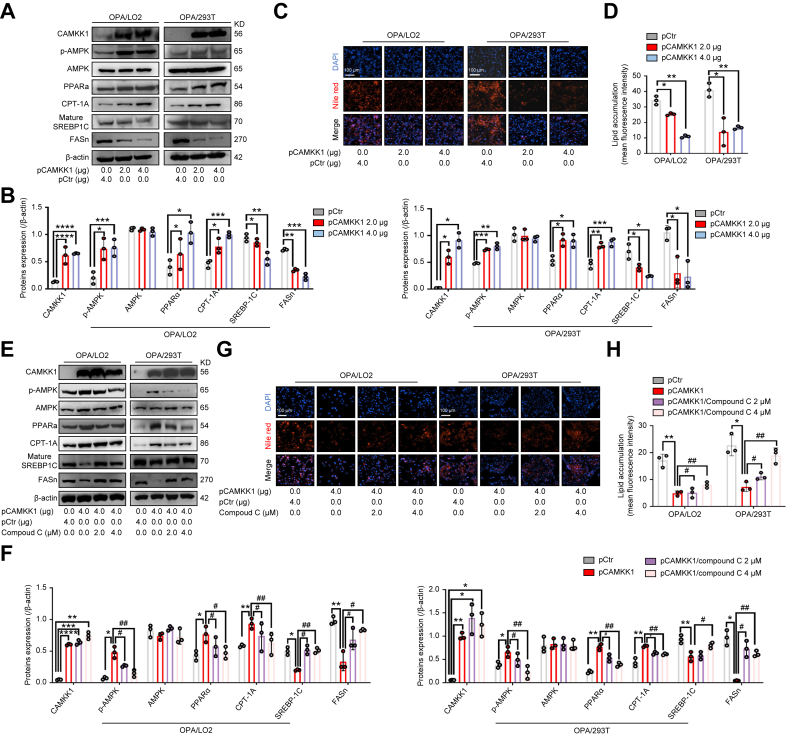
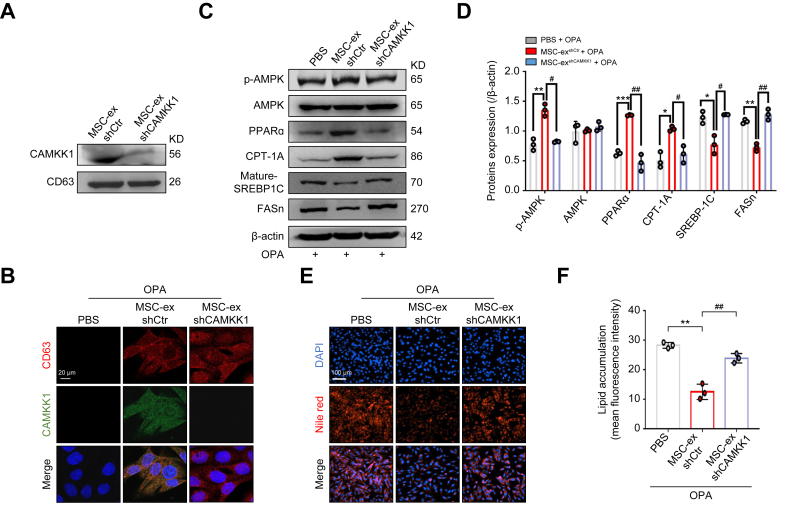
Here, we demonstrate that MSC-ex promote fatty acid oxidation and reduce lipogenesis in oleic-palmitic acid-treated hepatic cells and HFD-induced NAFLD mice. Non-targeted lipidomics and transcriptome analyses suggested that the effect of MSC-ex on lipid accumulation positively correlated with the phosphorylation of AMP-activated protein kinase. Furthermore, mass spectrometry and gene knockdown/overexpression analyses revealed that MSC-ex-transferred CAMKK1 is responsible for ameliorating lipid accumulation in an AMP-activated protein kinase-dependent manner, which subsequently inhibits SREBP-1C-mediated fatty acid synthesis and enhances peroxisome proliferator-activated receptor alpha (PPARα)-mediated fatty acid oxidation.
MSC-ex may prevent HFD-induced NAFLD via CAMKK1-mediated lipid homoeostasis regulation.
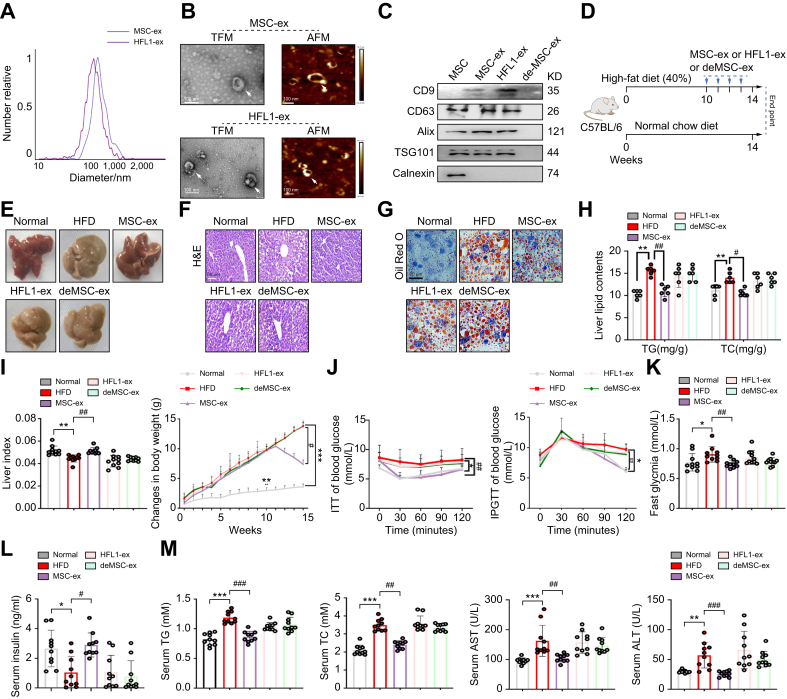
NAFLD includes many conditions, from simple steatosis to non-alcoholic steatohepatitis, which can lead to fibrosis, cirrhosis, and even hepatocellular carcinoma. So far, there is no approved drug for treating liver steatosis of NAFLD. Thus, better therapies are needed to regulate lipid metabolism and prevent the progression from liver steatosis to chronic liver disease. By using a combination of non-targeted lipidomic and transcriptome analyses, we revealed that human umbilical cord mesenchymal stem cell-derived exosomes (MSC-ex) effectively reduced lipid deposition and improved liver function from HFD-induced liver steatosis. Our study highlights the importance of exosomal CAMKK1 from MSC-ex in mediating lipid metabolism regulation via AMPK-mediated PPARα/CPT-1A and SREBP-1C/fatty acid synthase signalling in hepatocytes. These findings are significant in elucidating novel mechanisms related to MSC-ex-based therapies for preventing NAFLD.
非酒精性脂肪性肝病(NAFLD)影响着近四分之一的人群,目前尚无获批的药物治疗方法。肝脂肪变性是NAFLD的主要特征。最近的研究表明,人脐带间充质干细胞来源的外泌体(MSC-ex)可能为治疗肝损伤提供一种有前景的策略;然而,MSC-ex在脂肪变性中的作用及潜在机制尚未完全明确。
建立油酸-棕榈酸处理的肝细胞和高脂饮食(HFD)诱导的NAFLD小鼠模型,以观察MSC-ex的作用。通过非靶向脂质组学和转录组分析,我们分析了与MSC-ex呈正相关的基因通路。进行质谱分析以及基因敲低/过表达分析,以评估MSC-ex传递的钙/钙调蛋白依赖性蛋白激酶1(CAMKK1)对脂质稳态调节的影响。
在此,我们证明MSC-ex可促进油酸-棕榈酸处理的肝细胞和HFD诱导的NAFLD小鼠的脂肪酸氧化并减少脂肪生成。非靶向脂质组学和转录组分析表明,MSC-ex对脂质积累的影响与AMP激活的蛋白激酶的磷酸化呈正相关。此外,质谱分析以及基因敲低/过表达分析显示,MSC-ex传递的CAMKK1以AMP激活的蛋白激酶依赖性方式改善脂质积累,随后抑制SREBP-1C介导的脂肪酸合成并增强过氧化物酶体增殖物激活受体α(PPARα)介导的脂肪酸氧化。
MSC-ex可能通过CAMKK1介导的脂质稳态调节预防HFD诱导的NAFLD。
NAFLD包括多种情况,从单纯性脂肪变性到非酒精性脂肪性肝炎,可导致纤维化、肝硬化甚至肝细胞癌。到目前为止,尚无获批用于治疗NAFLD肝脂肪变性的药物。因此,需要更好的疗法来调节脂质代谢并防止从肝脂肪变性发展为慢性肝病。通过结合非靶向脂质组学和转录组分析,我们发现人脐带间充质干细胞来源的外泌体(MSC-ex)有效减少了脂质沉积并改善了HFD诱导的肝脂肪变性的肝功能。我们的研究强调了MSC-ex来源的外泌体CAMKK1在通过AMPK介导的PPARα/CPT-1A和SREBP-1C/脂肪酸合酶信号传导介导肝细胞脂质代谢调节中的重要性。这些发现对于阐明基于MSC-ex预防NAFLD的治疗方法的新机制具有重要意义。