School of Medicine and Surgery, University of Milano-Bicocca, Monza, Italy.
Neurological Intensive Care Unit, Fondazione Istituto di Ricovero e Cura a Carattere Scientifico San Gerardo dei Tintori, Monza, Italy.
Neurocrit Care. 2023 Aug;39(1):59-69. doi: 10.1007/s12028-023-01752-y. Epub 2023 Jun 6.
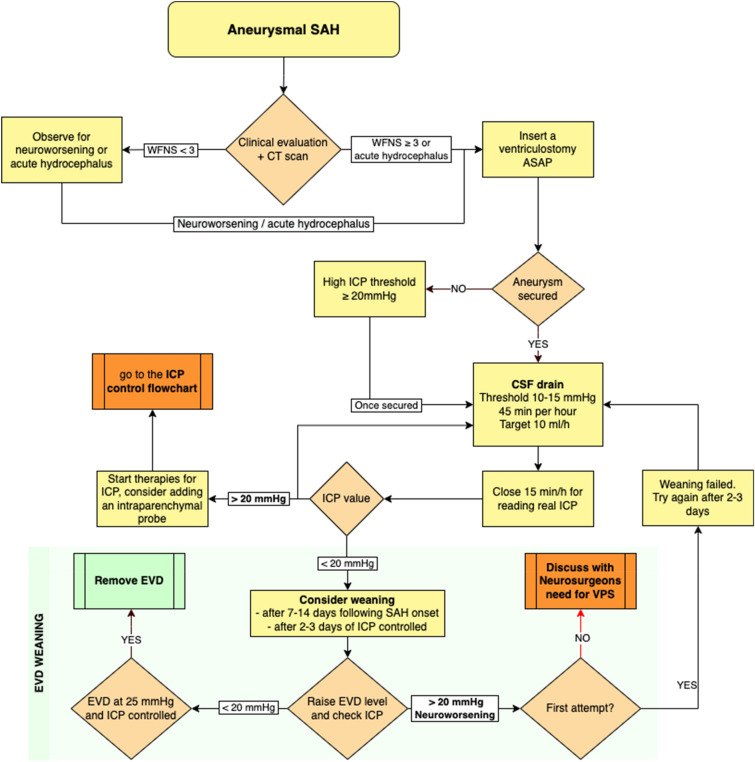
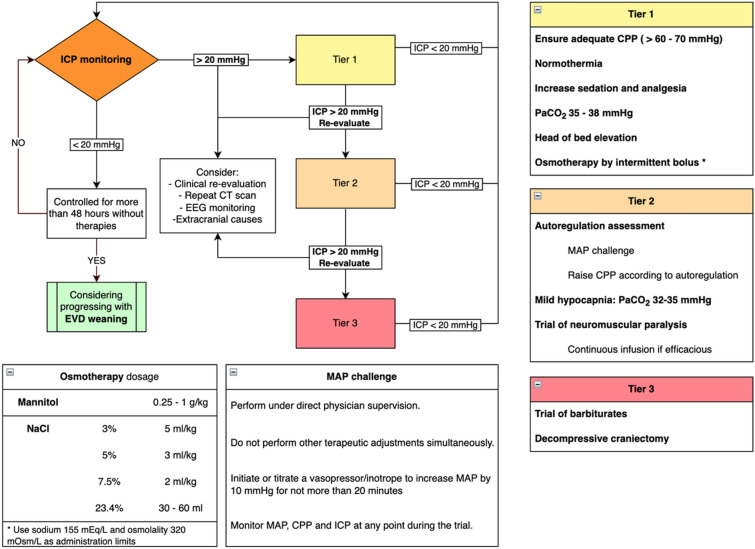
Aneurysmal subarachnoid hemorrhage is a medical condition that can lead to intracranial hypertension, negatively impacting patients' outcomes. This review article explores the underlying pathophysiology that causes increased intracranial pressure (ICP) during hospitalization. Hydrocephalus, brain swelling, and intracranial hematoma could produce an ICP rise. Although cerebrospinal fluid withdrawal via an external ventricular drain is commonly used, ICP monitoring is not always consistently practiced. Indications for ICP monitoring include neurological deterioration, hydrocephalus, brain swelling, intracranial masses, and the need for cerebrospinal fluid drainage. This review emphasizes the importance of ICP monitoring and presents findings from the Synapse-ICU study, which supports a correlation between ICP monitoring and treatment with better patient outcomes. The review also discusses various therapeutic strategies for managing increased ICP and identifies potential areas for future research.
颅内动脉瘤性蛛网膜下腔出血是一种可导致颅内压升高的医学病症,对患者的预后产生负面影响。本文综述探讨了住院期间导致颅内压升高的潜在病理生理学机制。脑积水、脑肿胀和颅内血肿均可导致颅内压升高。尽管通过外部脑室引流术排出脑脊液是常用的方法,但并非始终始终进行颅内压监测。颅内压监测的适应证包括神经功能恶化、脑积水、脑肿胀、颅内肿块和需要脑脊液引流。本文综述强调了颅内压监测的重要性,并展示了 Synapse-ICU 研究的结果,该研究支持颅内压监测与治疗之间存在相关性,可改善患者的预后。本文还讨论了管理颅内压升高的各种治疗策略,并确定了未来研究的潜在领域。