Portillo Lemus Luis O, Bozec Michel, Harang Marilyne, Coudreuse Julie, Haury Jacques, Stoeckel Solenn, Barloy Dominique
ESE, Ecology and Ecosystem Health Institut Agro INRAE Rennes France.
IGEPP INRAE Institut Agro Univ Rennes Le Rheu France.
Plant Environ Interact. 2021 Mar 29;2(2):74-86. doi: 10.1002/pei3.10042. eCollection 2021 Apr.
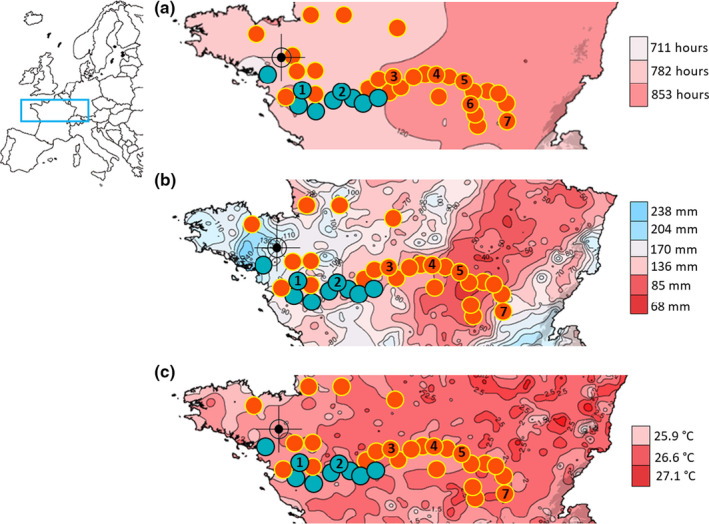
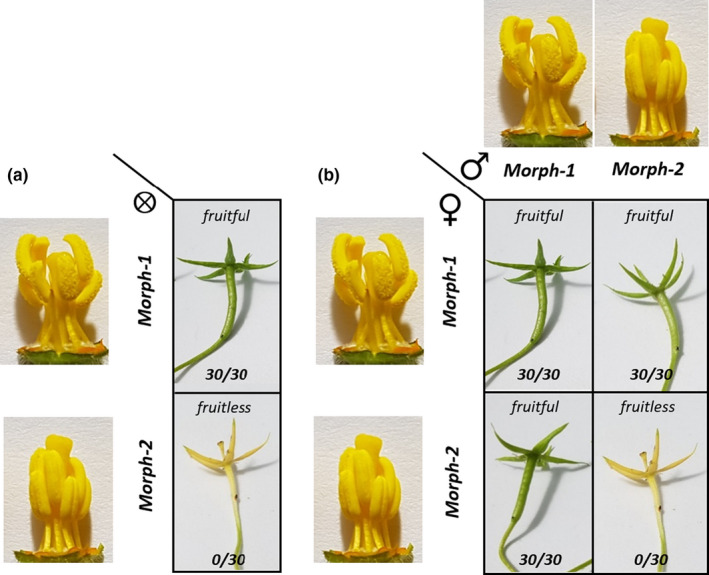
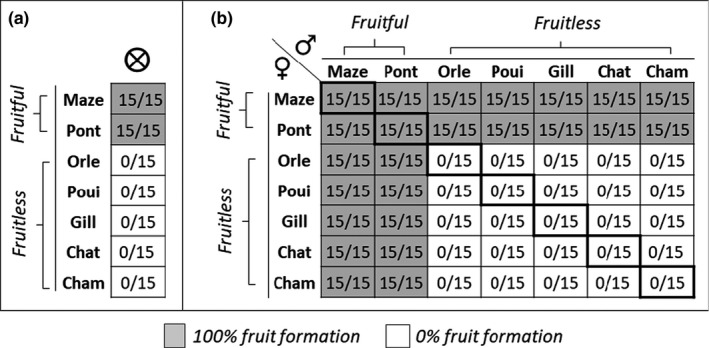
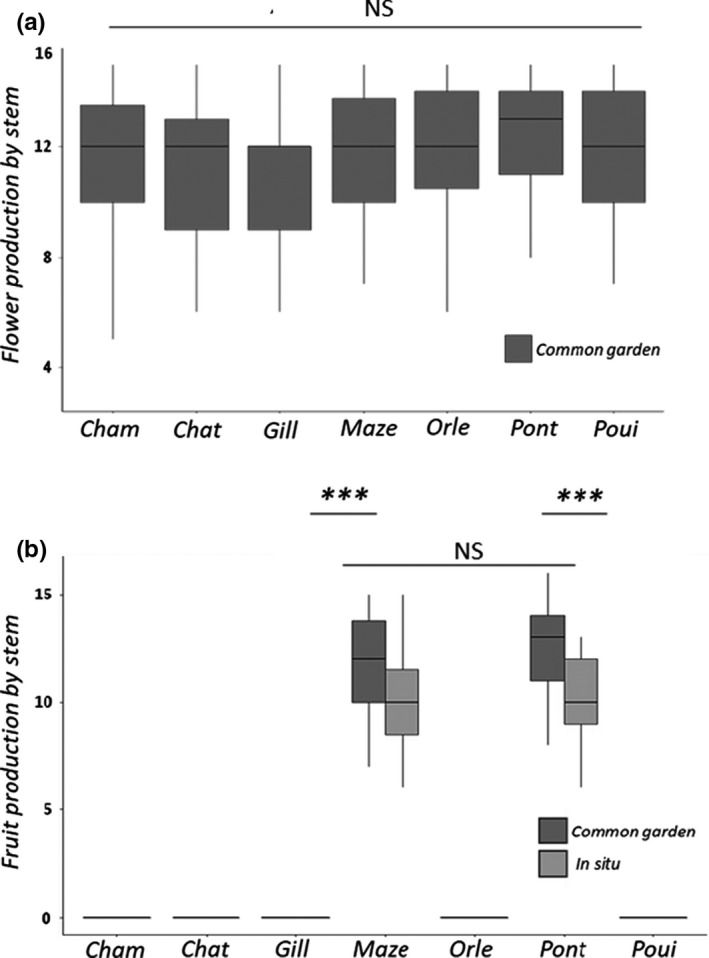
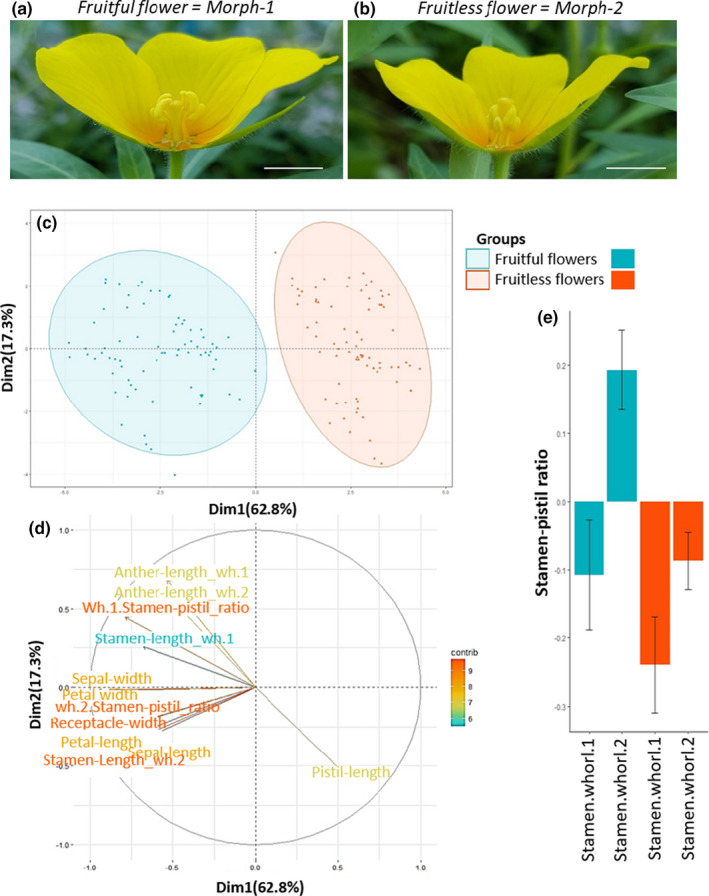
Fruit-set and seed-set depend on environmental conditions and reproductive systems. They are important components of sexual reproductive success in plants. They also control the ecological success and adaptation of invasive plants within their non-native ecosystems. We studied which factors bring about fruit-set and seed-set in invasive populations of the aquatic plant subsp. . We analyzed fruit set and seed set in 37 populations growing under variable climatic conditions in Western Europe. Sub-samples of seven fruitful and fruitless populations were grown in common controlled conditions. We carried out self- and cross-pollinations, and measured the floral morphometry. Environmental conditions did not affect fruit-set and seed-set in-situ and in common controlled environments. Hand-pollinations showed that individuals from fruitful populations exhibited fruit and seed production whatever the pollen donor, whereas individuals from fruitless populations only did so when pollen came from fruitful populations. Floral morphometry evidenced the existence of two floral morphs that fully overlapped with fruitfulness, and individual incompatibility. Our results rebutted the hypothesis that environmental variations control fruit set and seed set in these invasive populations. We instead showed that fruit set and seed set were controlled by a heteromorphic reproductive system involving a self-incompatible and inter-morph compatible morph (long-styled morph), and a self- and inter-morph compatible reverse morph (short-styled morph). We collected morphs and fruit set records of this species worldwide and found the same relationship: fruitless populations were all composed only of individuals with long-styled floral morph. Our study constitutes the first evidence of a heteromorphic self-incompatible system in Ludwigia genus and Onagraceae family.
坐果和结籽取决于环境条件和繁殖系统。它们是植物有性生殖成功的重要组成部分。它们还控制着入侵植物在其非原生生态系统中的生态成功和适应性。我们研究了哪些因素导致水生植物亚种的入侵种群坐果和结籽。我们分析了生长在西欧不同气候条件下的37个种群的坐果和结籽情况。从7个有果和无果种群中选取子样本在共同控制的条件下种植。我们进行了自花授粉和异花授粉,并测量了花的形态特征。环境条件在原位和共同控制的环境中均不影响坐果和结籽。人工授粉表明,来自有果种群的个体无论花粉供体如何都能产生果实和种子,而来自无果种群的个体只有在花粉来自有果种群时才会如此。花的形态特征证明存在两种与结果实能力完全重叠的花形态,以及个体不亲和性。我们的结果反驳了环境变化控制这些入侵种群坐果和结籽的假设。相反,我们表明坐果和结籽受一种异型生殖系统控制,该系统包括一个自交不亲和且形态间亲和的形态(长花柱形态)和一个自交及形态间亲和性相反的形态(短花柱形态)。我们收集了该物种在全球范围内的形态和坐果记录,发现了相同的关系:无果种群全部仅由具有长花柱花形态的个体组成。我们的研究构成了柳叶菜属和柳叶菜科中异型自交不亲和系统的首个证据。