Ng Chia Huan, Obrecht Denise, Wells Olivia, Zapotocky Michal, Sumerauer David, Coltin Hallie, Khuong-Quang Dong-Anh, Eisenstat David D, Kinross Kathryn M, White Christine L, Algar Elizabeth M, Luck Amanda, Witt Hendrik, Schüller Ulrich, Mynarek Martin, Pietsch Torsten, Gerber Nicolas U, Benesch Martin, Warmuth-Metz Monika, Kortmann Rolf, Bison Brigitte, Taylor Michael D, Rutkowski Stefan, Pfister Stefan M, Jones David Tw, Gottardo Nicholas G, von Hoff Katja, Pajtler Kristian W, Ramaswamy Vijay, Hansford Jordan R
Children's Cancer Centre, Royal Children's Hospital, Murdoch Children's Research Institute, University of Melbourne, Melbourne, Australia.
University Medical Center Hamburg-Eppendorf, Hamburg, Germany.
Neurooncol Adv. 2023 May 12;5(1):vdad057. doi: 10.1093/noajnl/vdad057. eCollection 2023 Jan-Dec.
(formerly known as fused supratentorial ependymoma (fus ST-EPN) has been recognized as a novel entity in the 2016 WHO classification of CNS tumors and further defined in the recent 2021 edition. fus ST-EPN was reported to portend poorer prognosis when compared to its counterpart, ST-EPN in some previously published series. The aim of this study was to determine the treatment outcome of molecularly confirmed and conventionally treated fus ST-EPN patients treated in multiple institutions.
We conducted a retrospective analysis of all pediatric patients with molecularly confirmed fus ST-EPN patients treated in multiple institutions in 5 different countries (Australia, Canada, Germany, Switzerland, and Czechia). Survival outcomes were analyzed and correlated with clinical characteristics and treatment approaches.
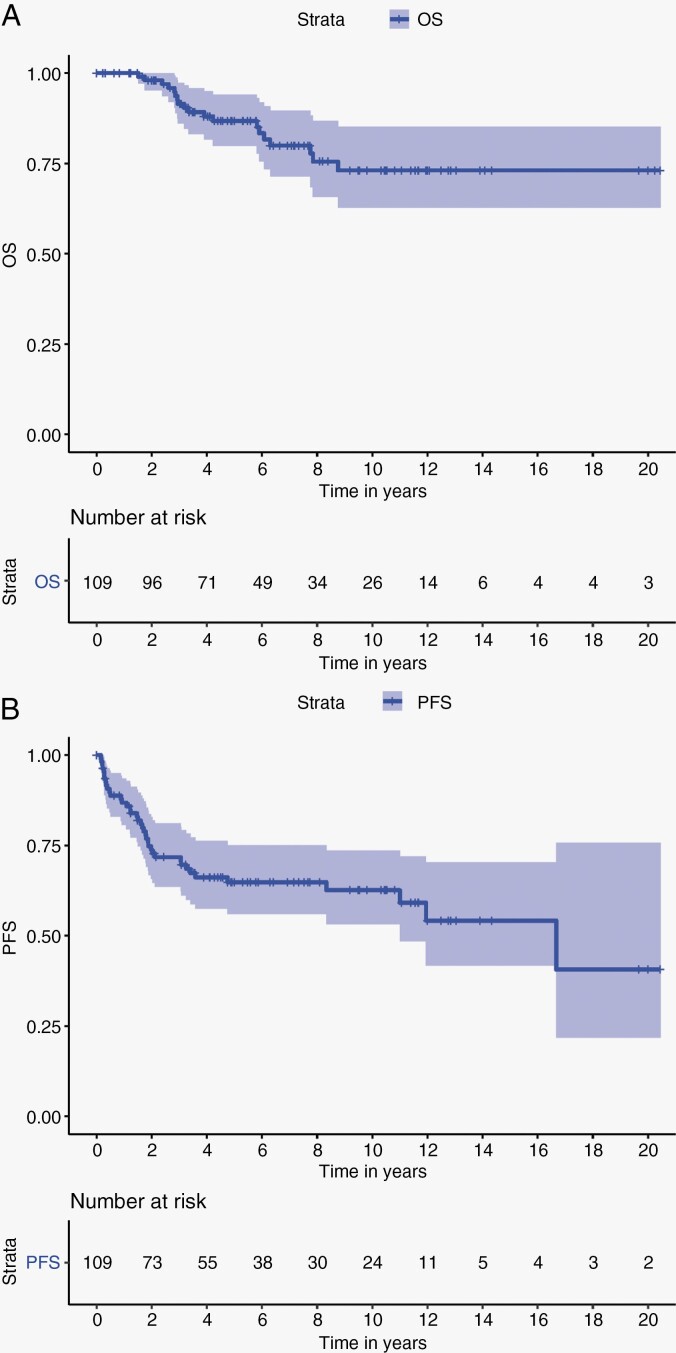
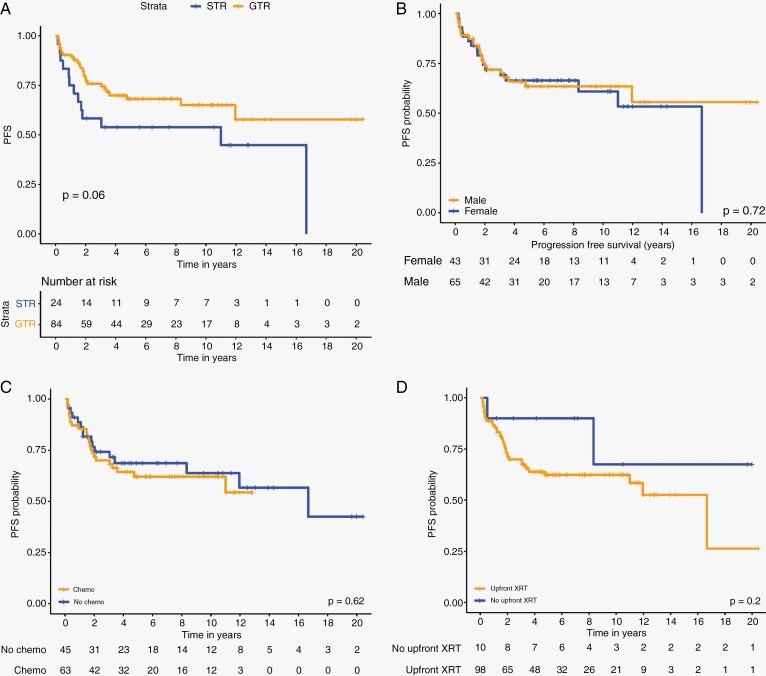
A total of 108 patients were collated from multiple institutions in 5 different countries across three continents. We found across the entire cohort that the 5- and 10-year PFS were 65% and 63%, respectively. The 5- and 10-year OS of this cohort of patients were 87% and 73%. The rates of gross total resection (GTR) were high with 84 out of 108 (77.8%) patients achieving GTR. The vast majority of patients also received post-operative radiotherapy, 98 out of 108 (90.7%). Chemotherapy did not appear to provide any survival benefit in our patient cohort.
This is the largest study to date of contemporaneously treated molecularly confirmed fus ST-EPN patients which identified markedly improved survival outcomes compared to previously published series. This study also re-emphasizes the importance of maximal surgical resection in achieving optimal outcomes in pediatric patients with supratentorial ependymoma.
(以前称为融合性幕上室管膜瘤(fus ST-EPN))在2016年世界卫生组织中枢神经系统肿瘤分类中被确认为一种新的实体,并在最近的2021年版中得到进一步定义。在一些先前发表的系列研究中,据报道fus ST-EPN与幕上室管膜瘤(ST-EPN)相比预后较差。本研究的目的是确定在多个机构接受治疗的分子确诊且接受传统治疗的fus ST-EPN患者的治疗结果。
我们对在5个不同国家(澳大利亚、加拿大、德国、瑞士和捷克)的多个机构接受分子确诊的fus ST-EPN的所有儿科患者进行了回顾性分析。分析生存结果并与临床特征和治疗方法相关联。
总共从三大洲5个不同国家的多个机构整理出108例患者。我们发现在整个队列中,5年和10年无进展生存率分别为65%和63%。该队列患者的5年和10年总生存率分别为87%和73%。大体全切率较高,108例患者中有84例(77.8%)实现了大体全切。绝大多数患者也接受了术后放疗,108例中有98例(90.7%)。在我们的患者队列中,化疗似乎没有提供任何生存益处。
这是迄今为止对同时接受治疗的分子确诊的fus ST-EPN患者进行的最大规模研究,与先前发表的系列研究相比,该研究确定了生存结果有显著改善。本研究还再次强调了最大限度手术切除对于实现幕上室管膜瘤儿科患者最佳治疗效果的重要性。