Gatta Gemma, Capocaccia Riccardo, Botta Laura
Evaluative Epidemiology Unit, Department of Epidemiology and Data Science, Fondazione IRCCS Istituto Nazionale dei tumori, Milan, Italy.
Editorial Board, Epidemiol Prev, Milan, Italy.
Front Oncol. 2023 May 24;13:1102236. doi: 10.3389/fonc.2023.1102236. eCollection 2023.
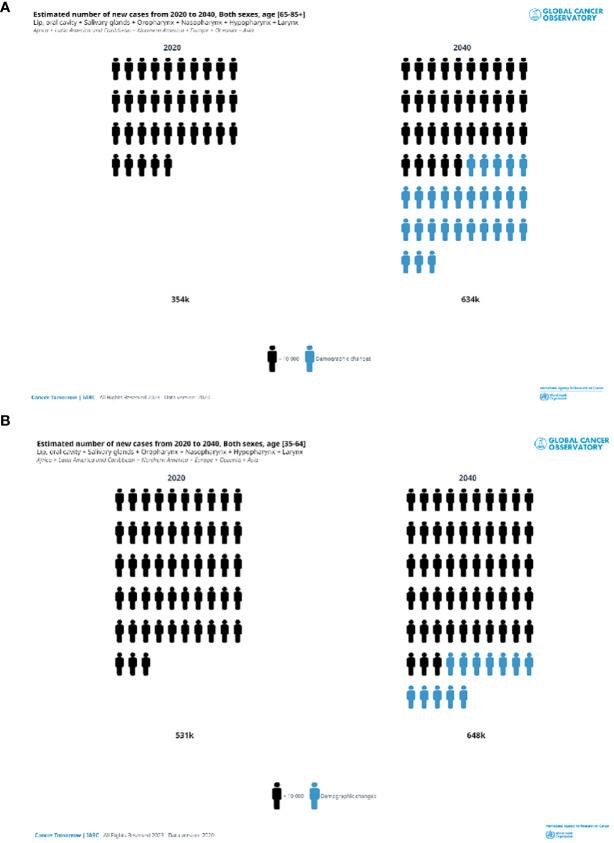
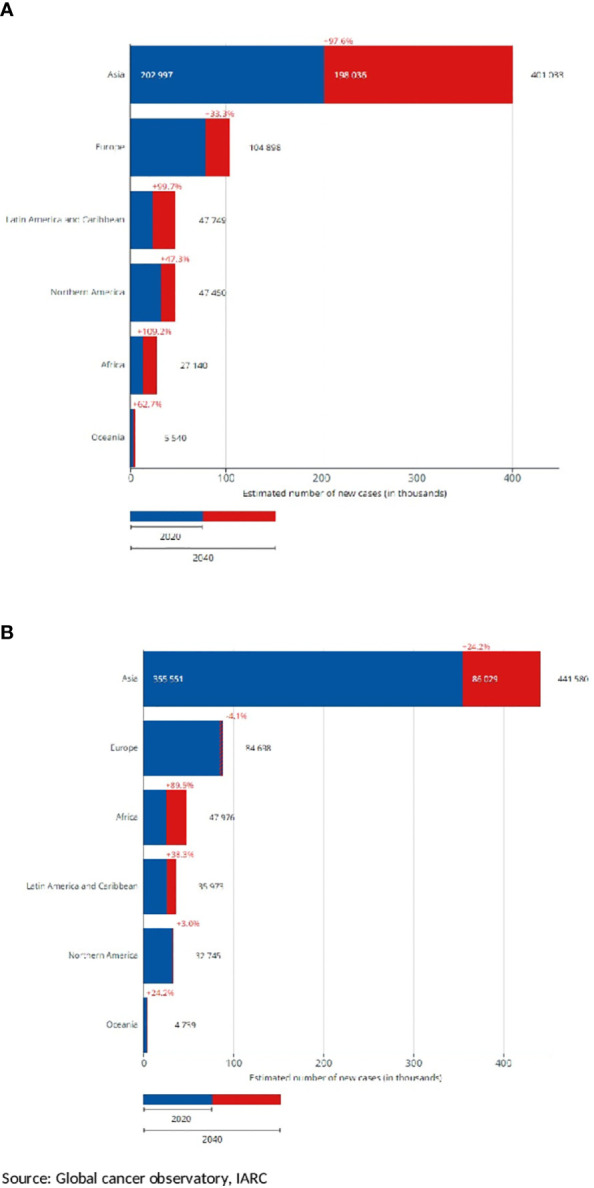
In Europe, as in other high-income (HI) countries, quite half of the newly diagnosed patients with head and neck (H and N) cancers are older than 65 years of age and their proportion within the prevalent cases is even higher. Moreover, the incidence rate (IR) for all H and N cancers sites increased with age and the survival rate is lower in older patients (≥65), compared with younger patients (<65). The number of older patients affected by H and N cancers will increase because of the increase in life expectancy. The aim of the article is to provide an epidemiological description of H and N cancers in the elderly population.
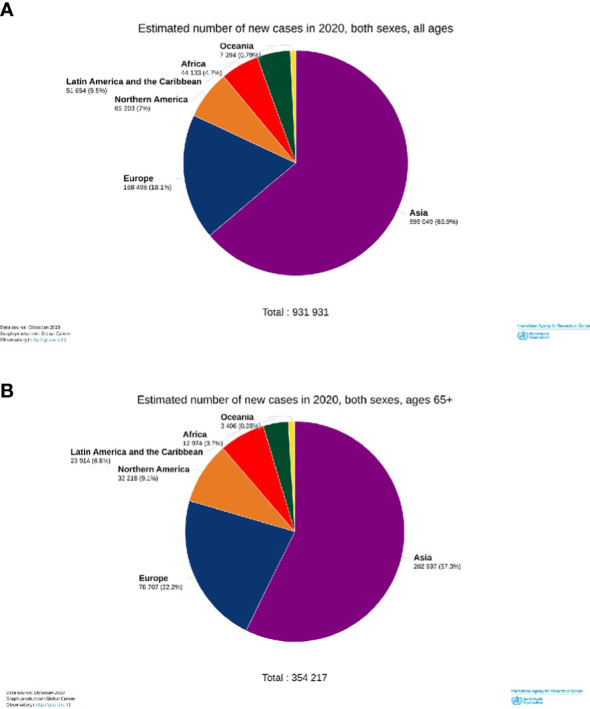
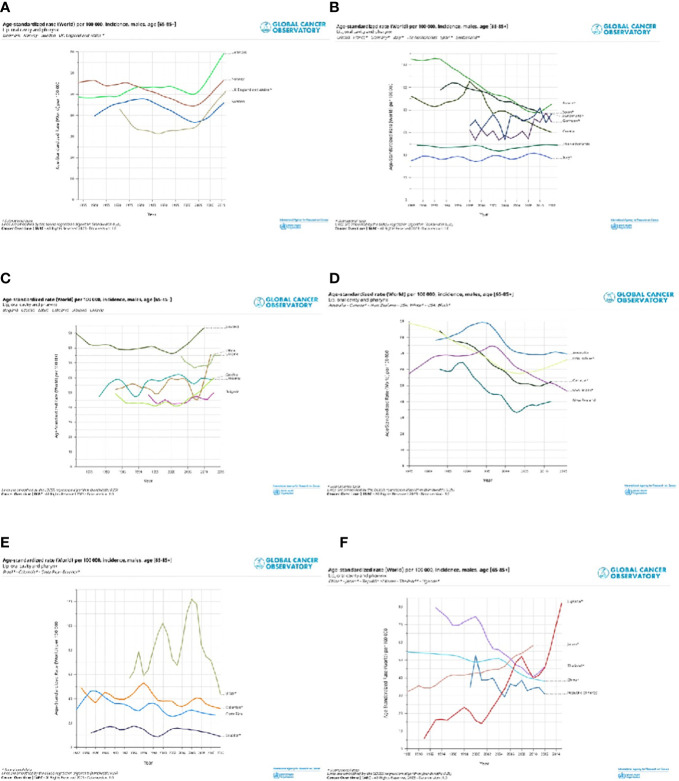
Incidence and prevalence data by time periods and continents were extracted from the Global Cancer Observatory. The survival information for Europe is obtained from the EUROCARE and RARECAREnet projects. In 2020, according to the results from these data, slightly more than 900,000 cases have been diagnosed with H and N cancers in the world, and approximately 40% were older than 65 years of age. This percentage was higher, reaching approximately 50% in the HI countries. The highest number of cases was in the Asiatic populations, while the highest crude IR was in Europe and Oceania. Among H and N cancers occurring in the elderly, laryngeal and oral cavity cancers were the most common, while nasal cavities and nasopharyngeal cancers were the rarest. This was true for all the countries, excluding some Asiatic populations, in which tumour of the nasopharynx was more common. The five-year survival rate in the European population was low in the elderly, compared with the younger for all H and N cancers, and it ranged from approximately 60% for both salivary-gland type and laryngeal to 22% for hypopharyngeal tumors. For the elderly, the conditional 5-year survival after surviving one year became more than 60% for many H and N epithelial tumors.
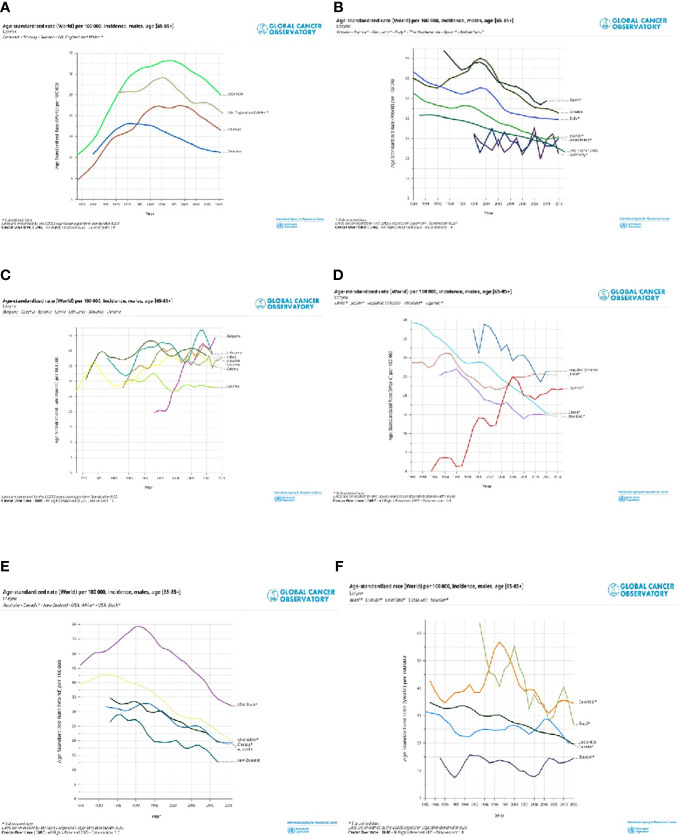
The high variability in the H and N cancer incidence around the world is due to the distribution of the major risk factors which for the elderly are mainly alcohol and smoking. The reasons for low survival in the elderly are most likely due to the complexity of treatment, the late arrival of patients at diagnosis, and the difficult access to specialized centers.
在欧洲,与其他高收入国家一样,新诊断的头颈癌患者中有相当一部分年龄超过65岁,且他们在现患病例中的比例更高。此外,所有头颈癌部位的发病率随年龄增长而上升,与年轻患者(<65岁)相比,老年患者(≥65岁)的生存率较低。由于预期寿命的增加,受头颈癌影响的老年患者数量将会增加。本文旨在对头颈癌在老年人群中的流行病学情况进行描述。
按时间段和各大洲提取全球癌症观测站的发病率和患病率数据。欧洲的生存信息来自EUROCARE和RARECAREnet项目。2020年,根据这些数据的结果,全球确诊的头颈癌病例略超过90万例,其中约40%的患者年龄超过65岁。在高收入国家,这一比例更高,约为50%。病例数最多的是亚洲人群,而粗发病率最高的是欧洲和大洋洲。在老年人群中发生的头颈癌中,喉癌和口腔癌最为常见,而鼻腔癌和鼻咽癌最为罕见。所有国家都是如此,但一些亚洲人群除外,在这些人群中鼻咽癌更为常见。欧洲人群中,所有头颈癌的老年患者五年生存率较低,从唾液腺型和喉癌的约60%到下咽肿瘤的22%不等。对于老年患者,许多头颈上皮性肿瘤在存活一年后的条件性五年生存率超过60%。
全球头颈癌发病率的高度差异是由于主要危险因素的分布,对老年人来说主要是酒精和吸烟。老年患者生存率低的原因很可能是治疗的复杂性、患者诊断延迟以及难以获得专科中心的治疗。