Zhu Mengke, Wei Chao, Wang Haijiang, Han Shangning, Cai Lindi, Li Xiaowen, Liao Xinhua, Che Xiangming, Li Xuqi, Fan Lin, Qiu Guanglin
Department of General Surgery, The First Affiliated Hospital of Xi'an Jiaotong University, Xi'an, Shaanxi, China.
Clinical Medicine Teaching and Research Section, Xi'an Health School, Xi'an, Shaanxi, China.
Front Oncol. 2023 May 24;13:1175151. doi: 10.3389/fonc.2023.1175151. eCollection 2023.
Silent mating type information regulator 2 homolog 1 (SIRT1) and autophagy have a two-way action (promoting cell death or survival) on the progression and treatment of gastric cancer (GC) under different conditions or environments. This study aimed to investigate the effects and underlying mechanism of SIRT1 on autophagy and the malignant biological behavior of GC cells under conditions of glucose deprivation (GD).
Human immortalized gastric mucosal cell GES-1 and GC cell lines SGC-7901, BGC-823, MKN-45 and MKN-28 were utilized. A sugar-free or low-sugar (glucose concentration, 2.5 mmol/L) DMEM medium was used to simulate GD. Additionally, CCK8, colony formation, scratches, transwell, siRNA interference, mRFP-GFP-LC3 adenovirus infection, flow cytometry and western blot assays were performed to investigate the role of SIRT1 in autophagy and malignant biological behaviors (proliferation, migration, invasion, apoptosis and cell cycle) of GC under GD and the underlying mechanism.
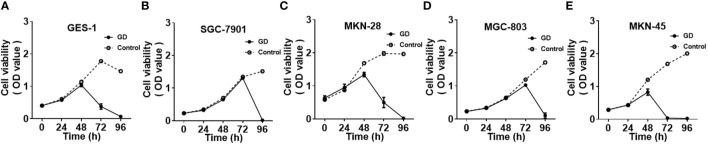
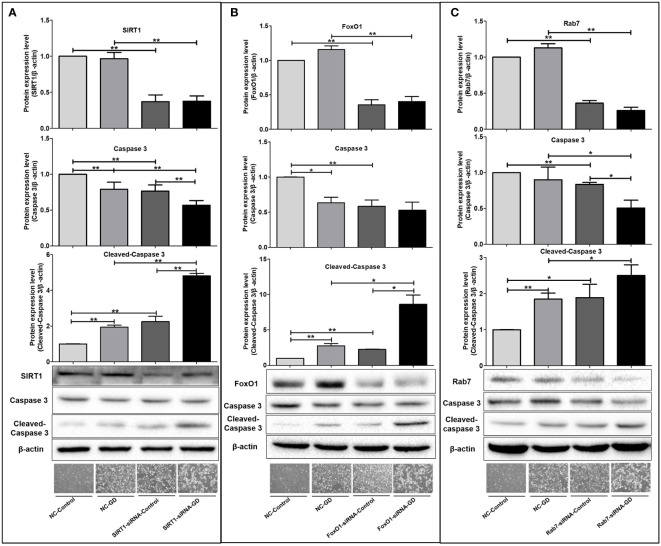
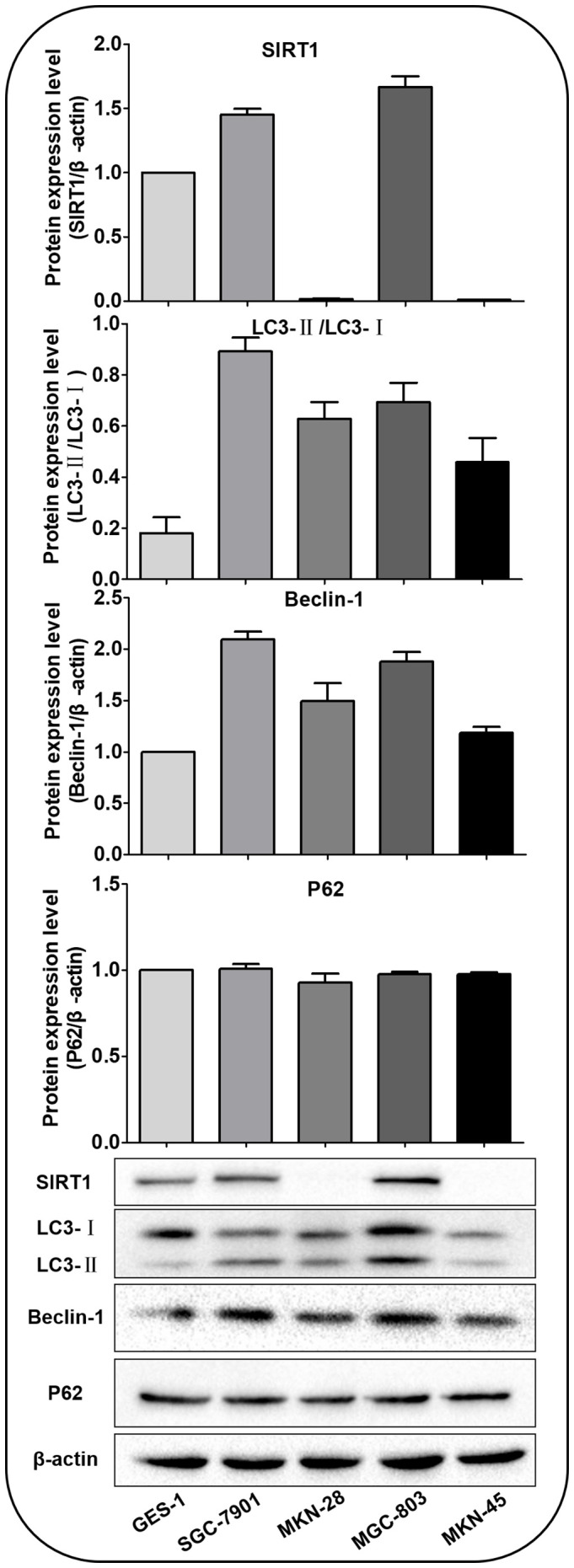
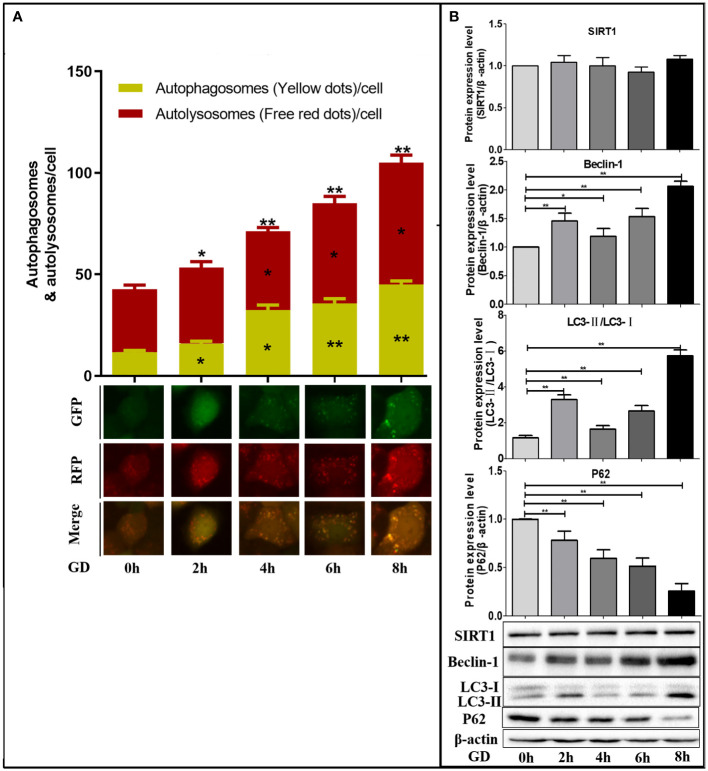
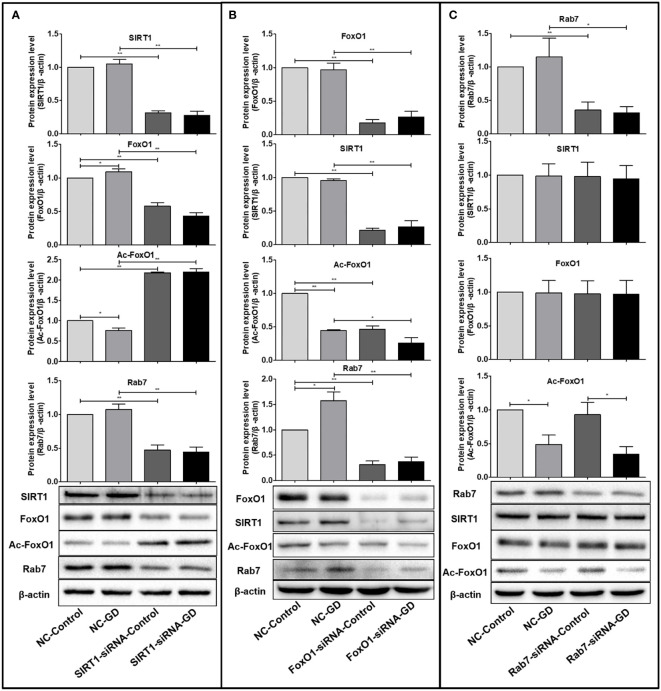
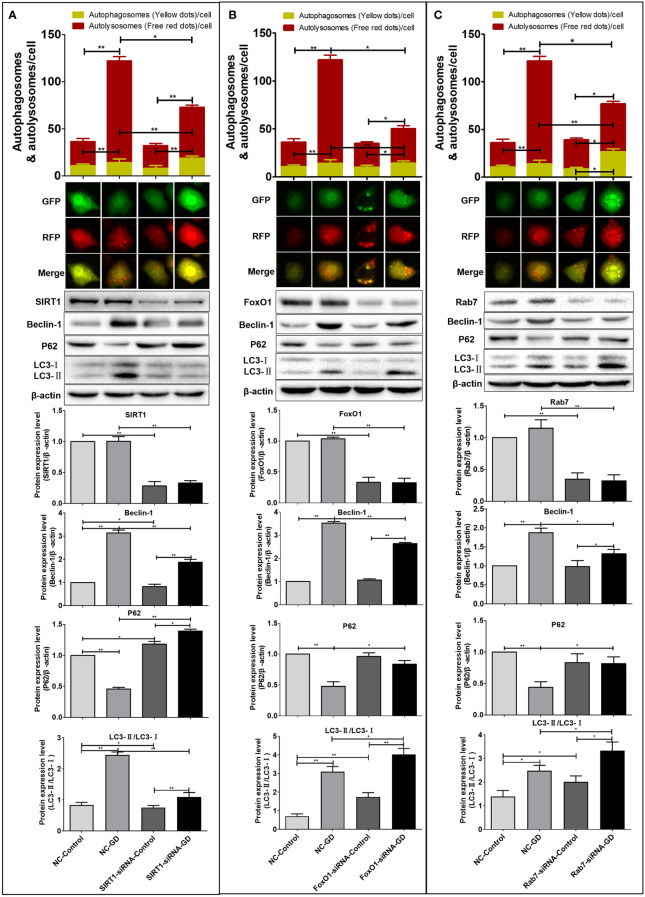
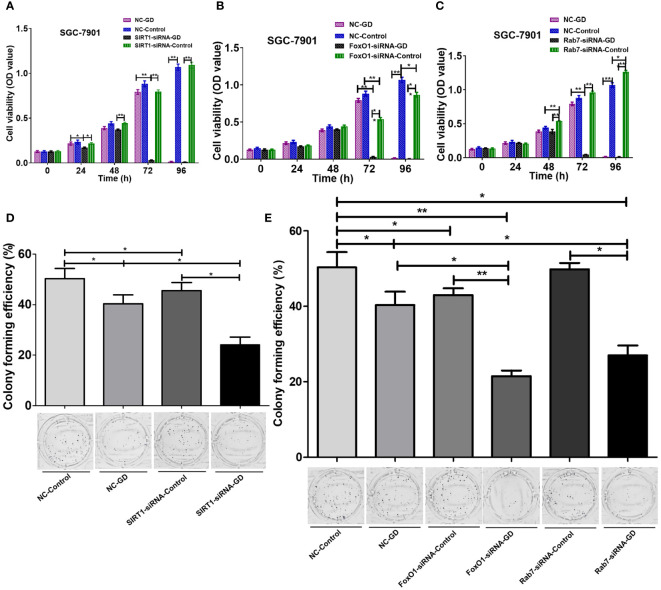
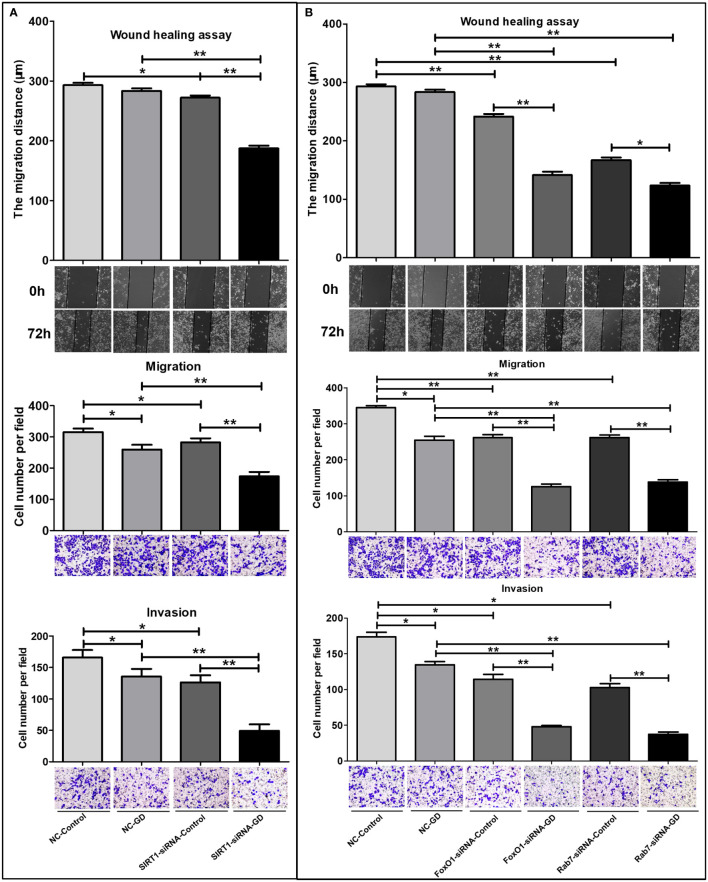
SGC-7901 cells had the longest tolerance time to GD culture conditions, which had the highest expression of SIRT1 protein and the level of basal autophagy. With the extension of GD time, the autophagy activity in SGC-7901 cells also increased. Under GD conditions, we found a close relationship between SIRT1, FoxO1 and Rab7 in SGC-7901 cells. SIRT1 regulated the activity of FoxO1 and upregulated the expression of Rab7 through deacetylation, which ultimately affected autophagy in GC cells. In addition, changing the expression of FoxO1 provided feedback on the expression of SIRT1 in the cell. Reducing SIRT1, FoxO1 or Rab7 expression significantly inhibited the autophagy levels of GC cells under GD conditions, decreased the tolerance of GC cells to GD, enhanced the inhibition of GD in GC cell proliferation, migration and invasion and increased apoptosis induced by GD.
The SIRT1-FoxO1-Rab7 pathway is crucial for the autophagy and malignant biological behaviors of GC cells under GD conditions, which could be a new target for the treatment of GC.
沉默信息调节因子2同源物1(SIRT1)与自噬在不同条件或环境下对胃癌(GC)的进展和治疗具有双向作用(促进细胞死亡或存活)。本研究旨在探讨葡萄糖剥夺(GD)条件下SIRT1对GC细胞自噬及恶性生物学行为的影响及其潜在机制。
使用人永生化胃黏膜细胞GES-1和GC细胞系SGC-7901、BGC-823、MKN-45和MKN-28。采用无糖或低糖(葡萄糖浓度为2.5 mmol/L)的DMEM培养基模拟GD。此外,进行CCK8、集落形成、划痕、Transwell、siRNA干扰、mRFP-GFP-LC3腺病毒感染、流式细胞术和蛋白质印迹分析,以研究SIRT1在GD条件下对GC细胞自噬及恶性生物学行为(增殖、迁移、侵袭、凋亡和细胞周期)的作用及其潜在机制。
SGC-7901细胞对GD培养条件的耐受时间最长,其SIRT1蛋白表达最高,基础自噬水平也最高。随着GD时间的延长,SGC-7901细胞中的自噬活性也增加。在GD条件下,我们发现SGC-7901细胞中SIRT1、FoxO1和Rab7之间存在密切关系。SIRT1通过去乙酰化调节FoxO1的活性并上调Rab7的表达,最终影响GC细胞中的自噬。此外,改变FoxO1的表达会对细胞中SIRT1的表达产生反馈。降低SIRT1、FoxO1或Rab7的表达可显著抑制GD条件下GC细胞的自噬水平,降低GC细胞对GD的耐受性,增强GD对GC细胞增殖、迁移和侵袭的抑制作用,并增加GD诱导的凋亡。
SIRT1-FoxO1-Rab7通路对GD条件下GC细胞的自噬及恶性生物学行为至关重要,可能成为GC治疗的新靶点。