Solomou Georgios, Finch Alina, Asghar Asim, Bardella Chiara
Institute of Cancer and Genomic Sciences, College of Medical and Dental Sciences, University of Birmingham, Birmingham, B15 2TT, UK.
Division of Academic Neurosurgery, Department of Clinical Neurosciences, University of Cambridge, Cambridge CB2 0QQ, UK.
Cancers (Basel). 2023 May 23;15(11):2883. doi: 10.3390/cancers15112883.
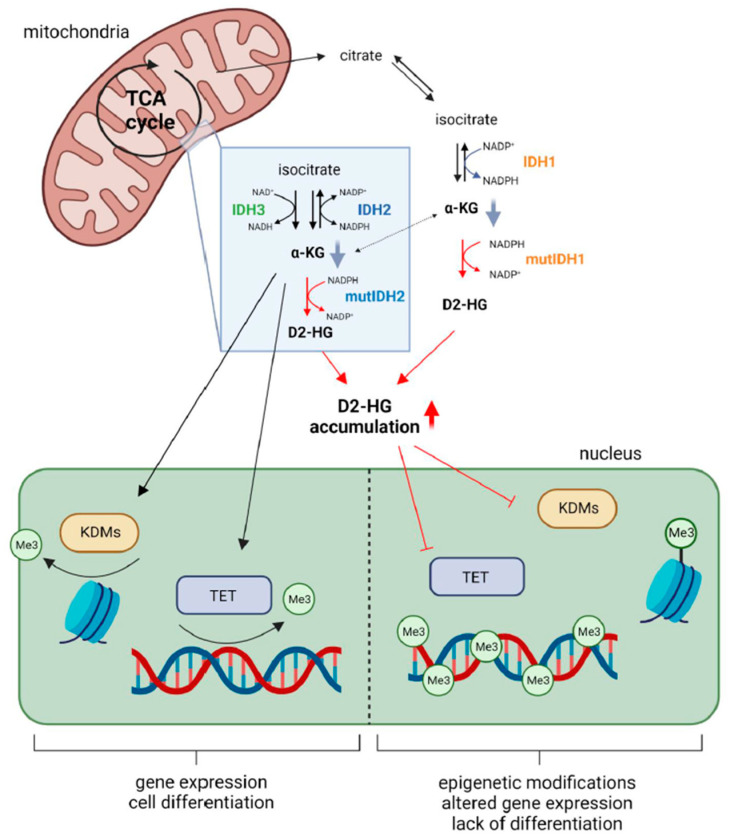
Altered metabolism is a common feature of many cancers and, in some cases, is a consequence of mutation in metabolic genes, such as the ones involved in the TCA cycle. Isocitrate dehydrogenase () is mutated in many gliomas and other cancers. Physiologically, IDH converts isocitrate to α-ketoglutarate (α-KG), but when mutated, IDH reduces α-KG to D2-hydroxyglutarate (D2-HG). D2-HG accumulates at elevated levels in IDH mutant tumours, and in the last decade, a massive effort has been made to develop small inhibitors targeting mutant IDH. In this review, we summarise the current knowledge about the cellular and molecular consequences of IDH mutations and the therapeutic approaches developed to target IDH mutant tumours, focusing on gliomas.
代谢改变是许多癌症的共同特征,在某些情况下,是代谢基因(如参与三羧酸循环的基因)突变的结果。异柠檬酸脱氢酶(IDH)在许多胶质瘤和其他癌症中发生突变。生理上,IDH将异柠檬酸转化为α-酮戊二酸(α-KG),但发生突变时,IDH会将α-KG还原为D-2-羟基戊二酸(D2-HG)。D2-HG在IDH突变肿瘤中积累至较高水平,在过去十年中,人们付出了巨大努力来开发靶向突变IDH的小分子抑制剂。在本综述中,我们总结了目前关于IDH突变的细胞和分子后果以及针对IDH突变肿瘤所开发的治疗方法的知识,重点关注胶质瘤。