Zhang Ruixing, Zhang Jiahao, Li Chao, Pan Qiming, Haq Saeed Ul, Mosa Walid F A, Fang Fang, Zhang Lugang, Li Baohua
State Key Laboratory of Crop Stress Biology for Arid Areas, College of Horticulture, Northwest A&F University, Yangling, Xianyang 712100, China.
Department of Horticulture, University of Agriculture Peshawar, Peshawar 25120, Pakistan.
Plants (Basel). 2023 May 26;12(11):2120. doi: 10.3390/plants12112120.
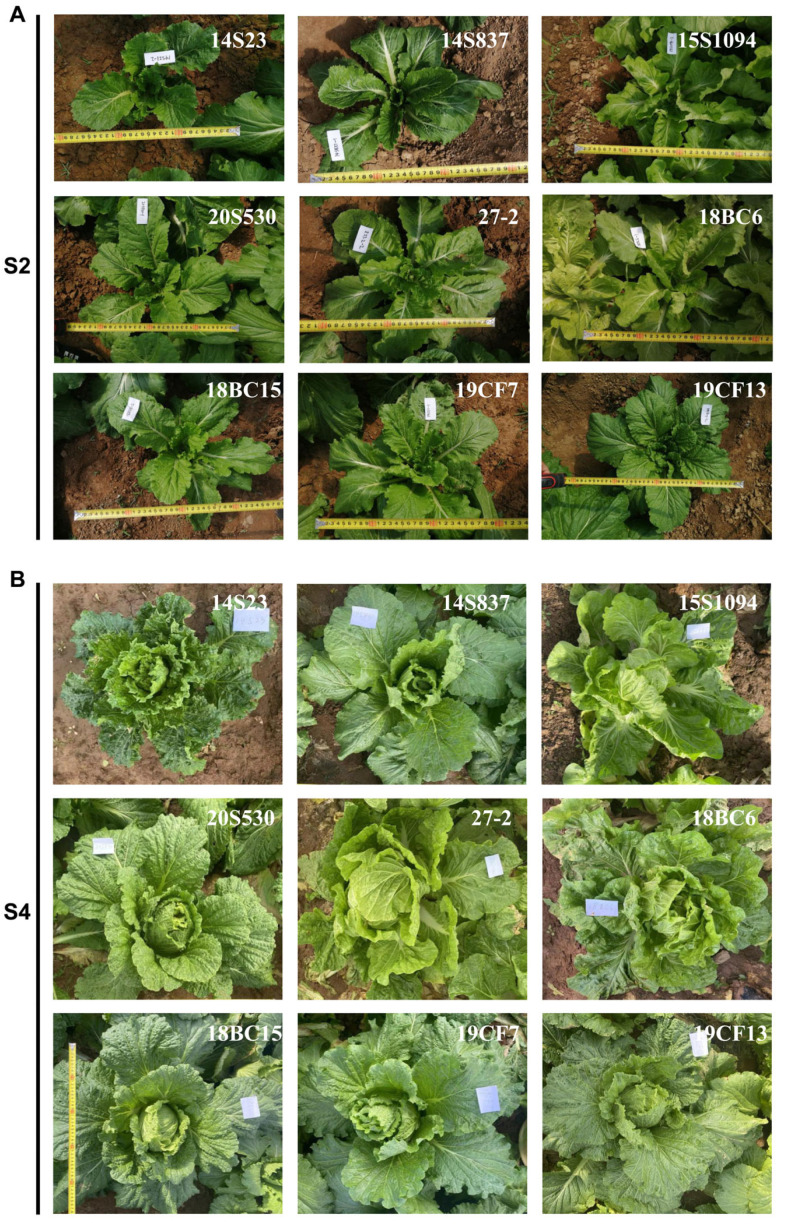
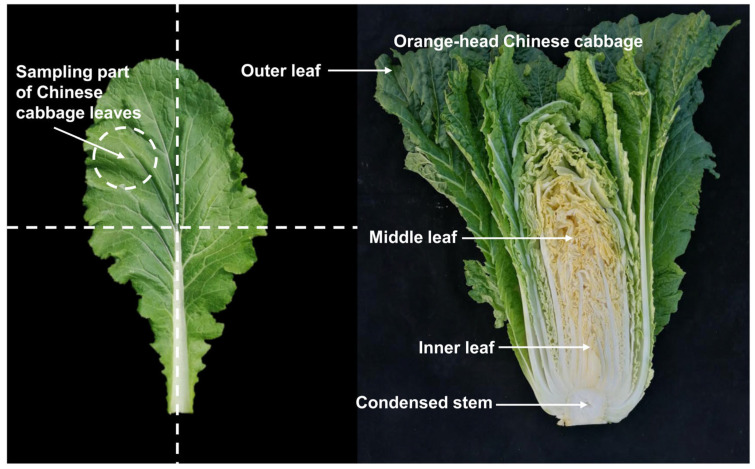
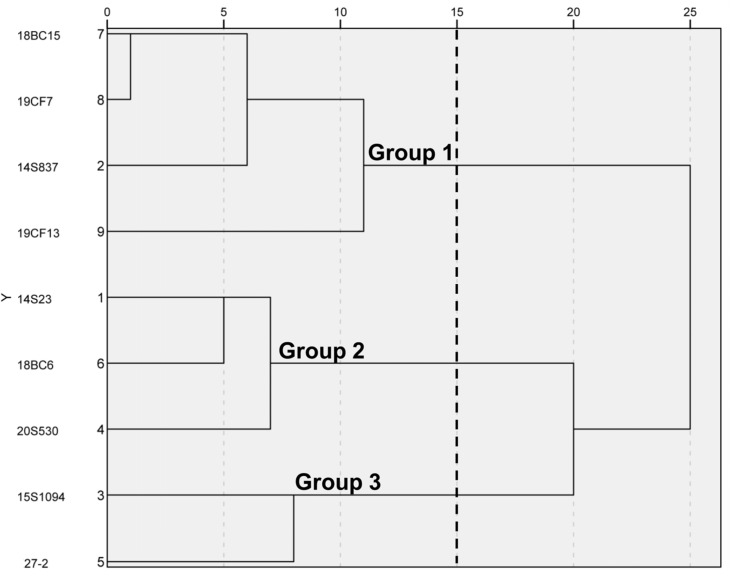
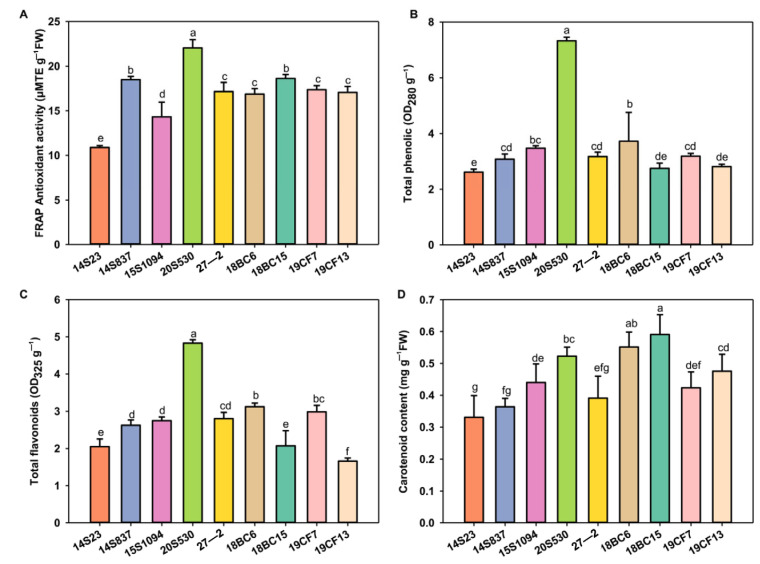
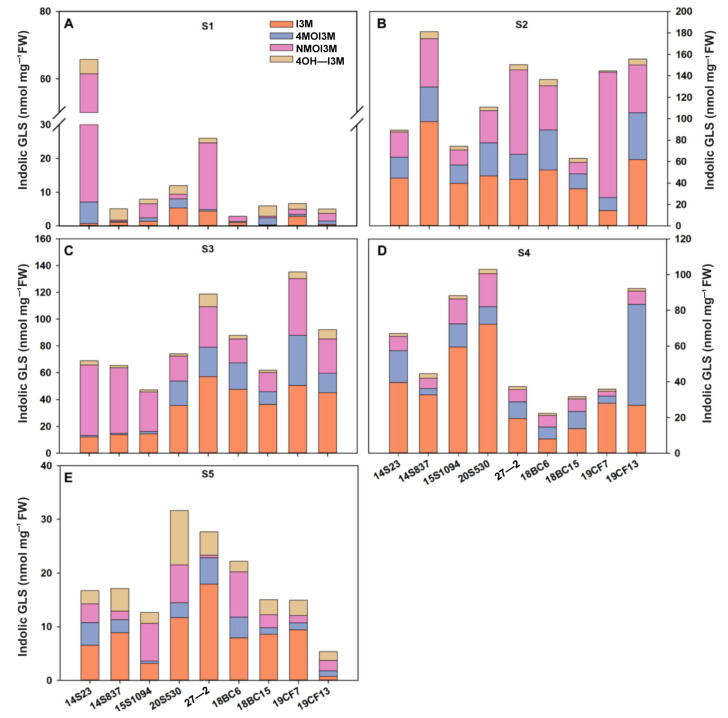
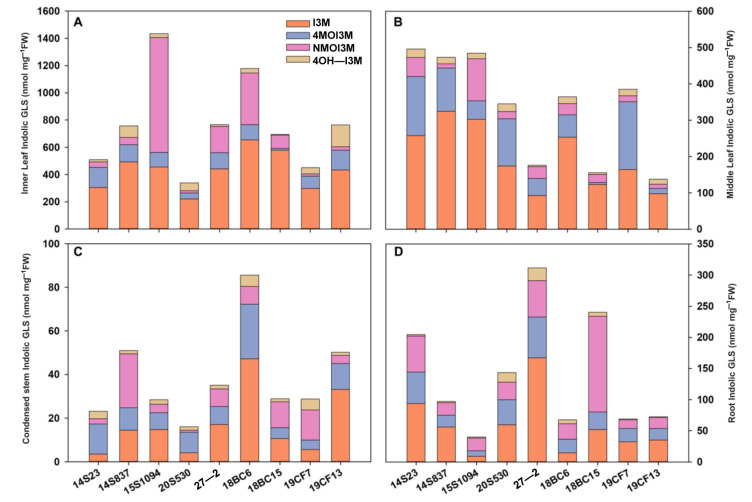
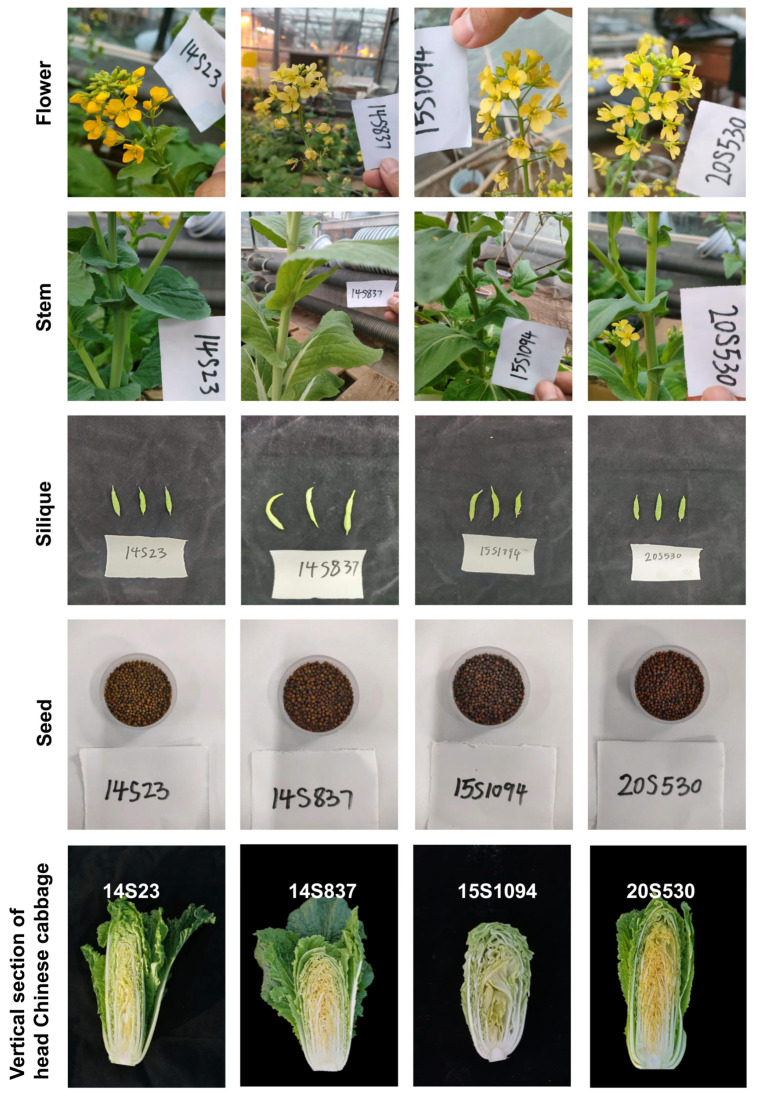
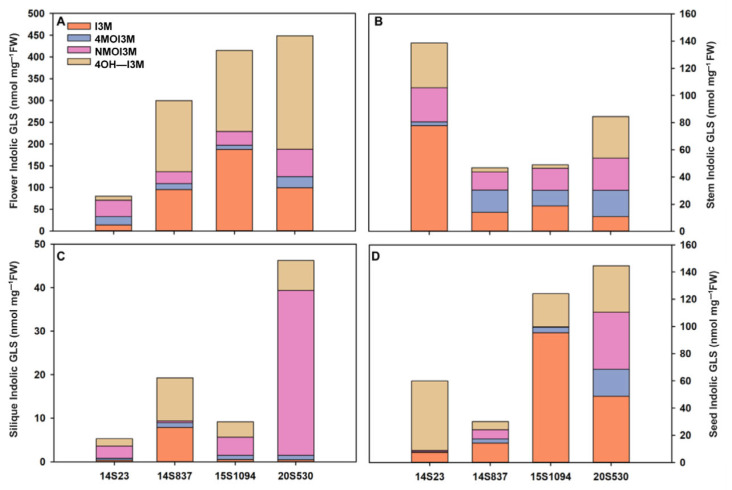
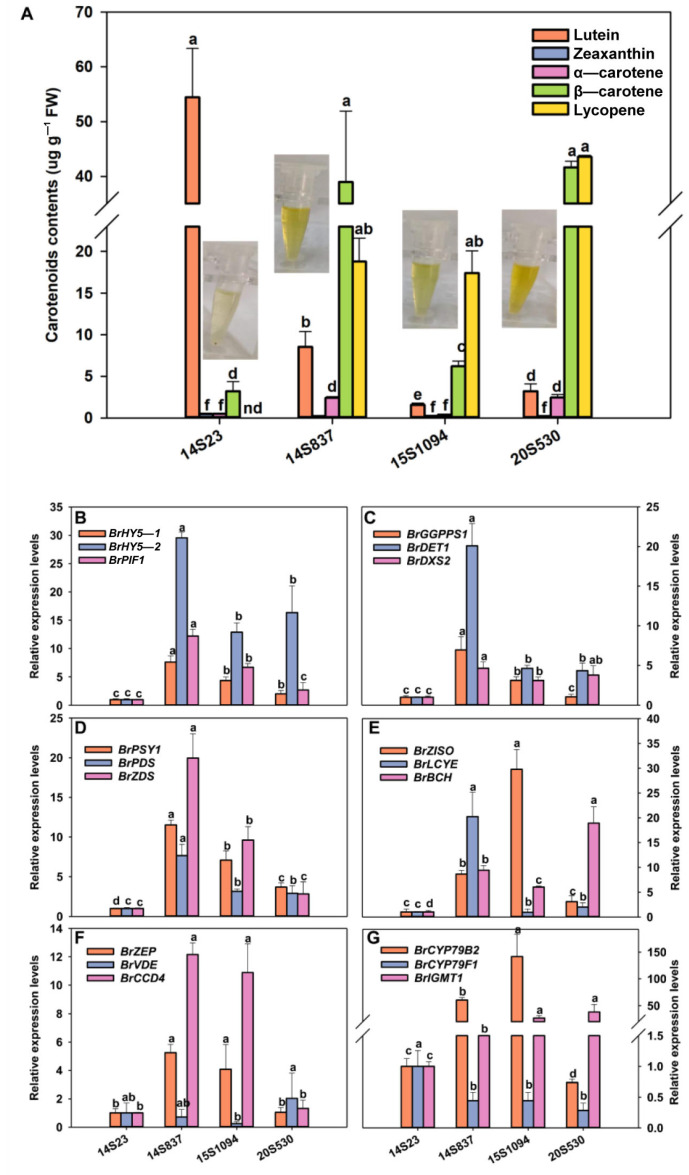
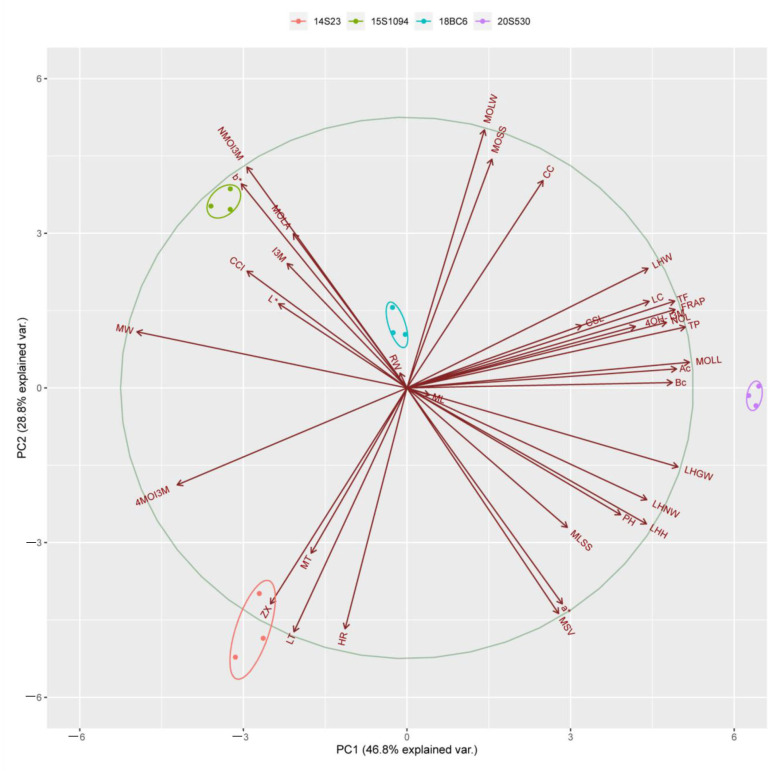
Orange Chinese cabbage ( L. ssp. ) is an excellent source of health-promoting nutrients that could reduce the risk of chronic diseases. This study mainly investigated the accumulation patterns of eight lines of orange Chinese cabbage for indolic glucosinolates (GLSs) and pigment content from representative plant organs across multiple developmental stages. The indolic GLSs were highly accumulated at the rosette stage (S2), especially in inner and middle leaves, and the order of indolic GLSs accumulation in non-edible organs was flower > seed > stem > silique. The expression levels of biosynthetic genes in light signaling, MEP, carotenoids, and GLS pathways were consistent with the metabolic accumulation patterns. The results of a principal component analysis show a clear separation of high indolic GLS lines (15S1094 and 18BC6) from low indolic GLS lines (20S530). A negative correlation between the accumulation of indolic GLS and carotenoids was identified in our study. Our work contributes to providing valuable knowledge required to breed, grow, and select orange Chinese cabbage varieties and their eatable organs with higher nutritional value.
橙色大白菜(L. ssp.)是促进健康营养物质的优质来源,能够降低患慢性病的风险。本研究主要调查了八份橙色大白菜品系在多个发育阶段代表性植物器官中吲哚族硫代葡萄糖苷(GLSs)的积累模式和色素含量。吲哚族硫代葡萄糖苷在莲座期(S2)高度积累,尤其是在内叶和中叶中,且在非食用器官中吲哚族硫代葡萄糖苷的积累顺序为花>种子>茎>角果。光信号、MEP、类胡萝卜素和GLS途径中生物合成基因的表达水平与代谢积累模式一致。主成分分析结果显示,高吲哚族硫代葡萄糖苷品系(15S1094和18BC6)与低吲哚族硫代葡萄糖苷品系(20S530)明显分离。本研究确定了吲哚族硫代葡萄糖苷与类胡萝卜素积累之间呈负相关。我们的工作有助于提供培育、种植和选择具有更高营养价值的橙色大白菜品种及其可食用器官所需的宝贵知识。