CAS Key Laboratory of Agro-Ecological Processes in Subtropical Region, Hunan Provincial Key Laboratory of Animal Nutritional Physiology and Metabolic Process, National Engineering Laboratory for Pollution Control and Waste Utilization in Livestock and Poultry Production, Institute of Subtropical Agriculture, Chinese Academy of Sciences, Changsha 410125, China.
College of Advanced Agricultural Sciences, University of Chinese Academy of Sciences, Beijing 100049, China.
Nutrients. 2023 May 30;15(11):2550. doi: 10.3390/nu15112550.
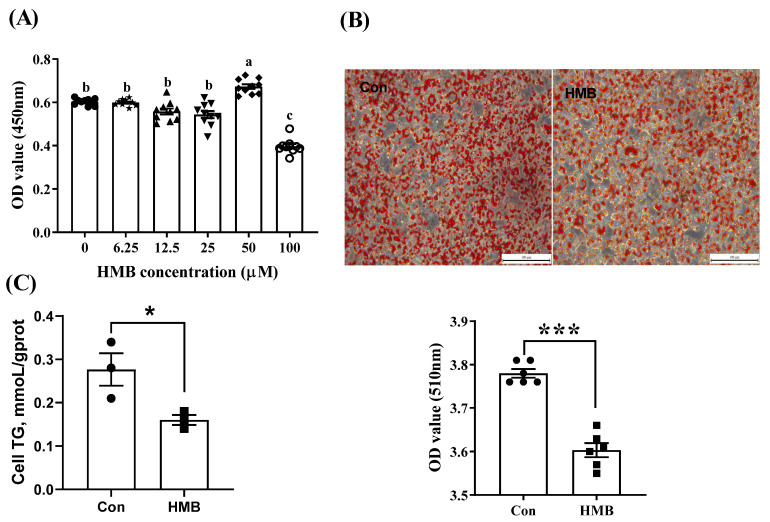
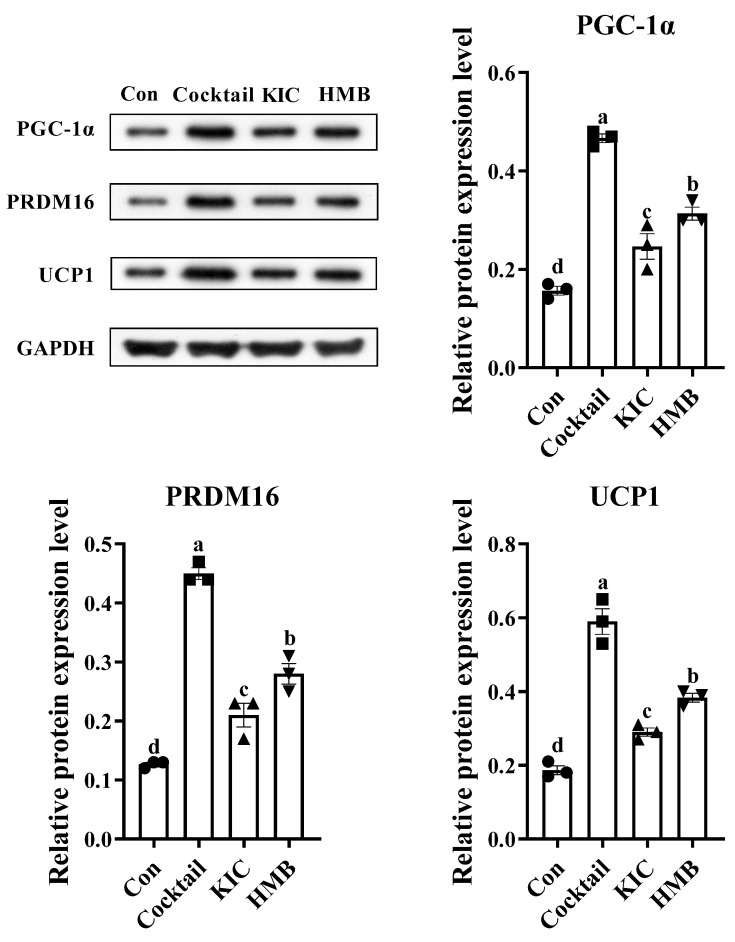
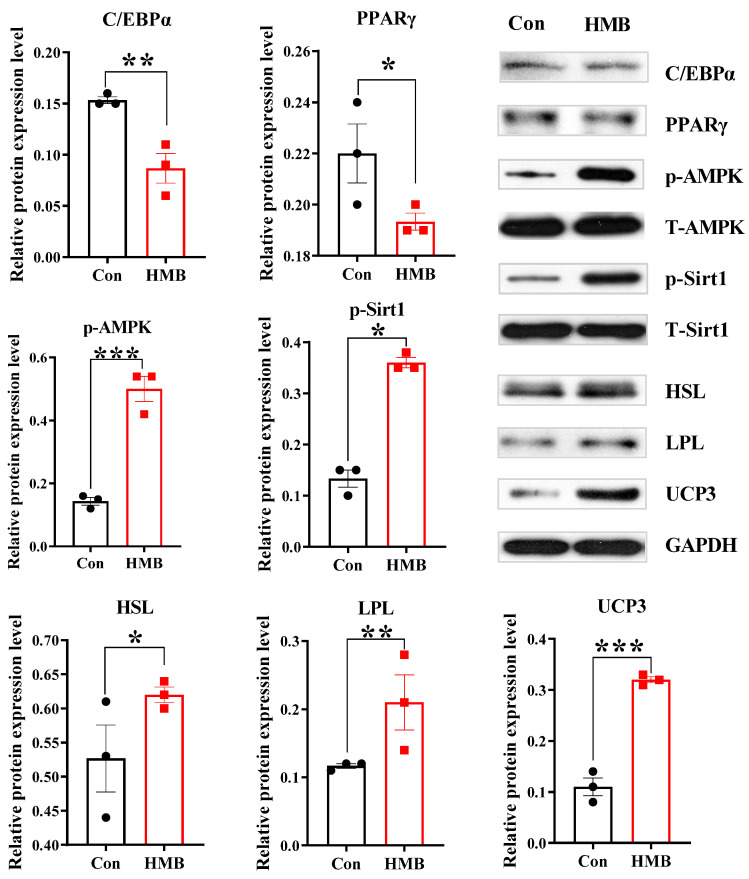
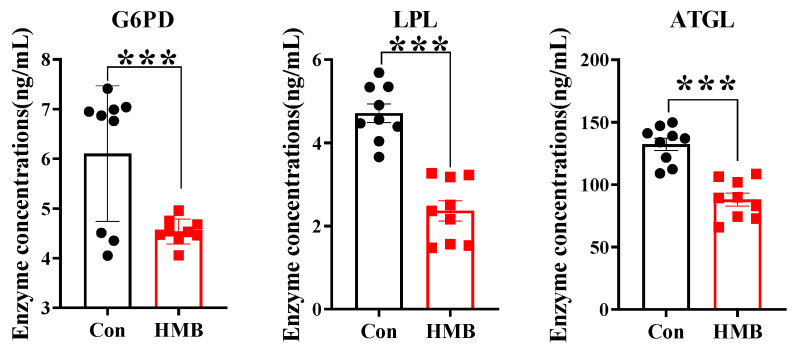
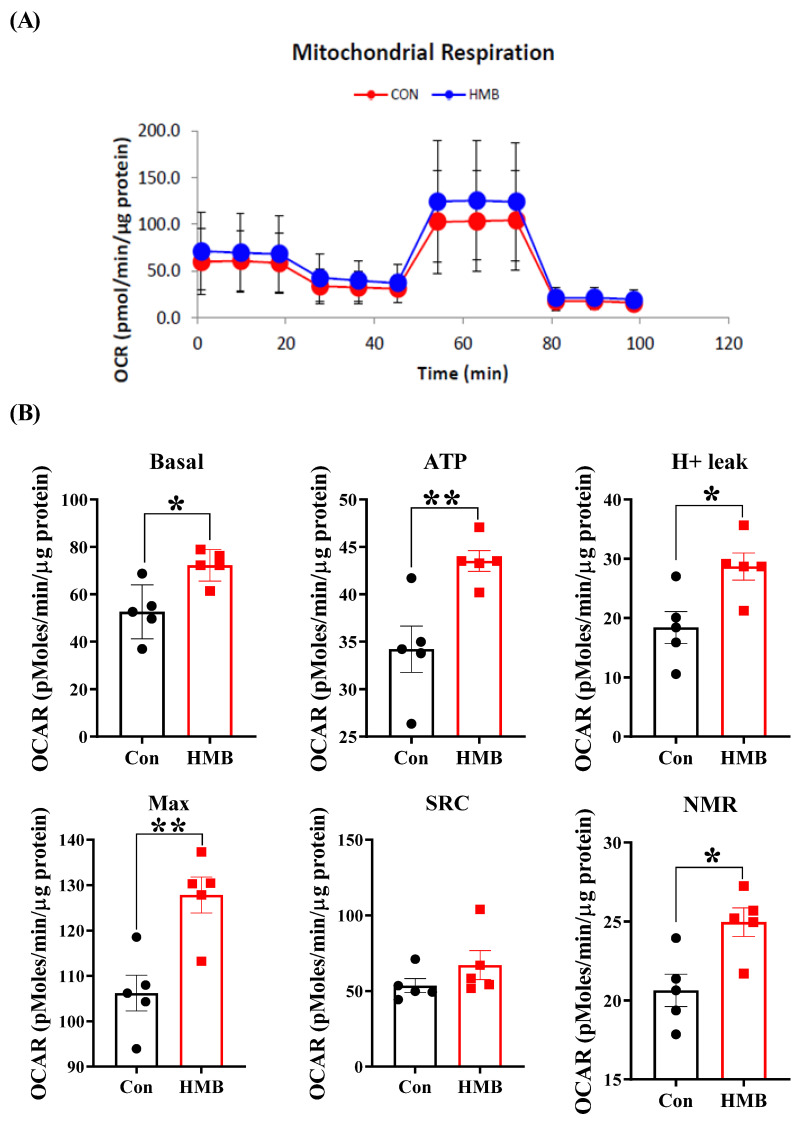
A growing number of in vivo studies demonstrated that β-hydroxy-β-methyl butyrate (HMB) can serve as a lipid-lowering nutrient. Despite this interesting observation, the use of adipocytes as a model for research is yet to be explored. To ascertain the effects of HMB on the lipid metabolism of adipocytes and elucidate the underlying mechanisms, the 3T3-L1 cell line was employed. Firstly, serial doses of HMB were added to 3T3-L1 preadipocytes to evaluate the effects of HMB on cell proliferation. HMB (50 µM) significantly promoted the proliferation of preadipocytes. Next, we investigated whether HMB could attenuate fat accumulation in adipocytes. The results show that HMB treatment (50 µM) reduced the triglyceride (TG) content. Furthermore, HMB was found to inhibit lipid accumulation by suppressing the expression of lipogenic proteins (C/EBPα and PPARγ) and increasing the expression of lipolysis-related proteins (p-AMPK, p-Sirt1, HSL, and UCP3). We also determined the concentrations of several lipid metabolism-related enzymes and fatty acid composition in adipocytes. The HMB-treated cells showed reduced G6PD, LPL, and ATGL concentrations. Moreover, HMB improved the fatty acid composition in adipocytes, manifested by increases in the contents of n6 and n3 PUFAs. The enhancement of the mitochondrial respiratory function of 3T3-L1 adipocytes was confirmed via Seahorse metabolic assay, which showed that HMB treatment elevated basal mitochondrial respiration, ATP production, H leak, maximal respiration, and non-mitochondrial respiration. In addition, HMB enhanced fat browning of adipocytes, and this effect might be associated with the activation of the PRDM16/PGC-1α/UCP1 pathway. Taken together, HMB-induced changes in the lipid metabolism and mitochondrial function may contribute to preventing fat deposition and improving insulin sensitivity.
越来越多的体内研究表明,β-羟基-β-甲基丁酸(HMB)可以作为一种降脂营养素。尽管这一有趣的观察结果表明,脂肪细胞作为研究模型尚未得到探索。为了确定 HMB 对脂肪细胞脂质代谢的影响并阐明其潜在机制,我们使用了 3T3-L1 细胞系。首先,我们向 3T3-L1 前体脂肪细胞中添加了一系列剂量的 HMB,以评估 HMB 对细胞增殖的影响。结果发现,50μM 的 HMB 显著促进了前体脂肪细胞的增殖。接下来,我们研究了 HMB 是否可以减轻脂肪细胞中的脂肪堆积。结果表明,HMB 处理(50μM)降低了甘油三酯(TG)含量。此外,HMB 通过抑制脂肪生成蛋白(C/EBPα 和 PPARγ)的表达和增加脂肪分解相关蛋白(p-AMPK、p-Sirt1、HSL 和 UCP3)的表达来抑制脂肪积累。我们还测定了脂肪细胞中几种脂质代谢相关酶和脂肪酸组成的浓度。HMB 处理的细胞中 G6PD、LPL 和 ATGL 的浓度降低。此外,HMB 改善了脂肪细胞中的脂肪酸组成,表现为 n6 和 n3PUFAs 的含量增加。通过 Seahorse 代谢测定证实了 HMB 增强了 3T3-L1 脂肪细胞的线粒体呼吸功能,结果表明 HMB 处理增加了基础线粒体呼吸、ATP 产生、H 渗漏、最大呼吸和非线粒体呼吸。此外,HMB 增强了脂肪细胞的棕色脂肪形成,这种作用可能与 PRDM16/PGC-1α/UCP1 途径的激活有关。综上所述,HMB 诱导的脂质代谢和线粒体功能变化可能有助于防止脂肪沉积和改善胰岛素敏感性。