MRC Human Genetics Unit, Institute of Genetics and Cancer, University of Edinburgh, Edinburgh EH4 2XU, UK.
School of Informatics, University of Edinburgh, Edinburgh EH8 9AB, UK.
Development. 2023 Aug 1;150(15). doi: 10.1242/dev.201432. Epub 2023 Aug 9.
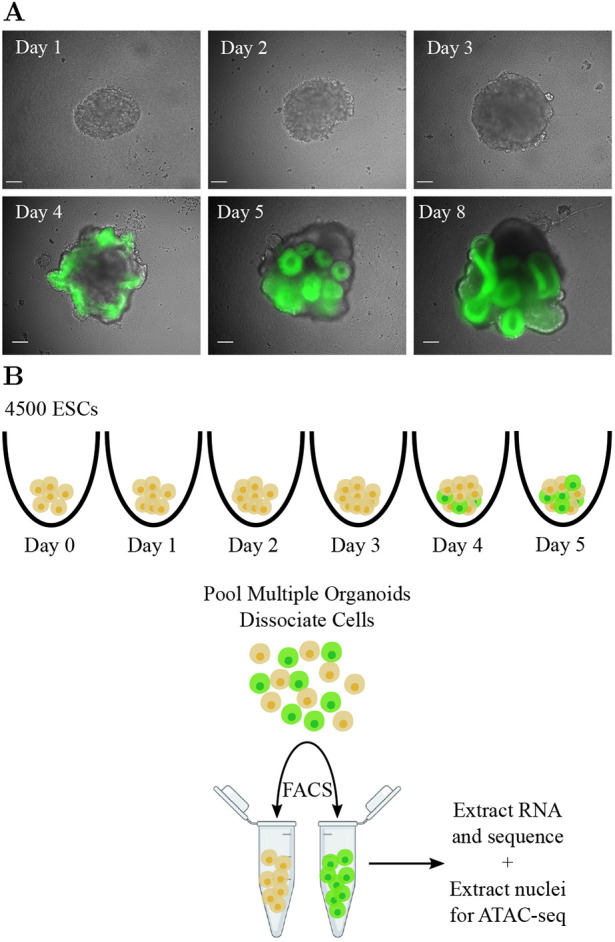
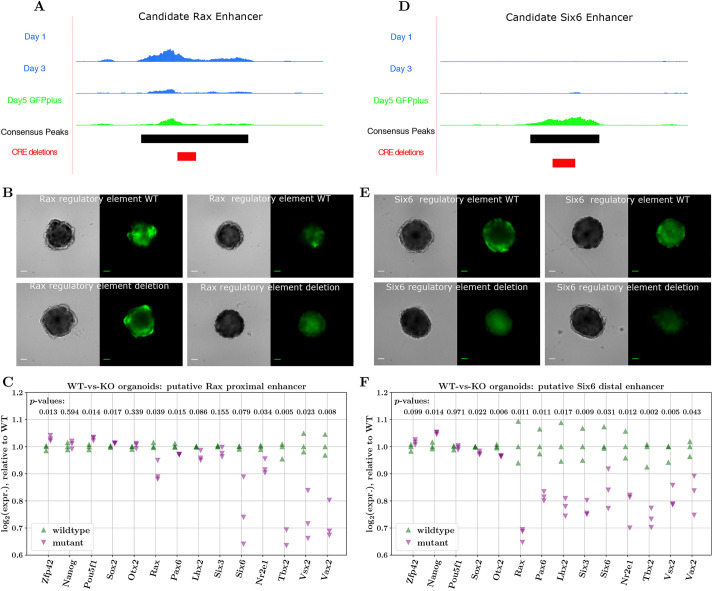
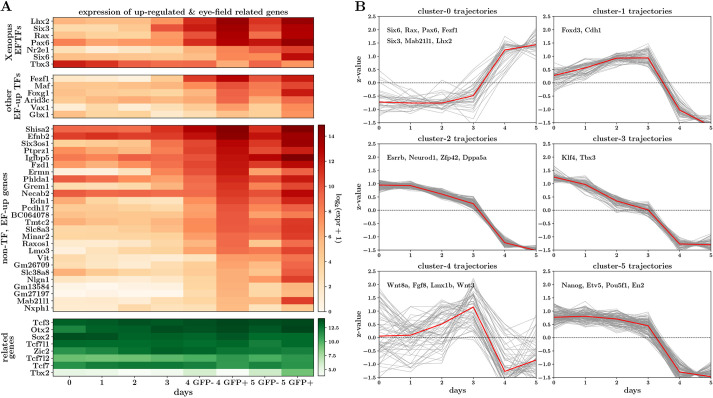
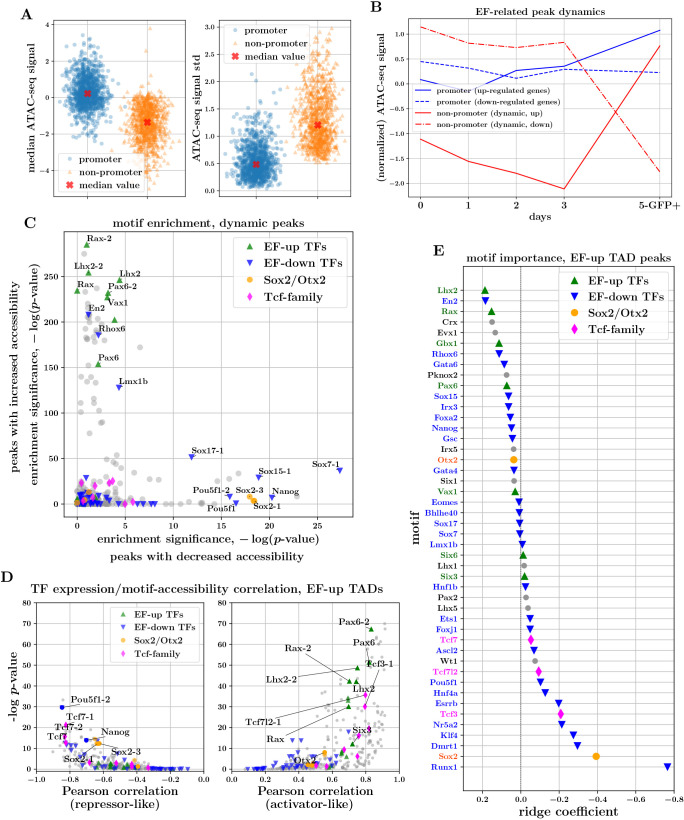
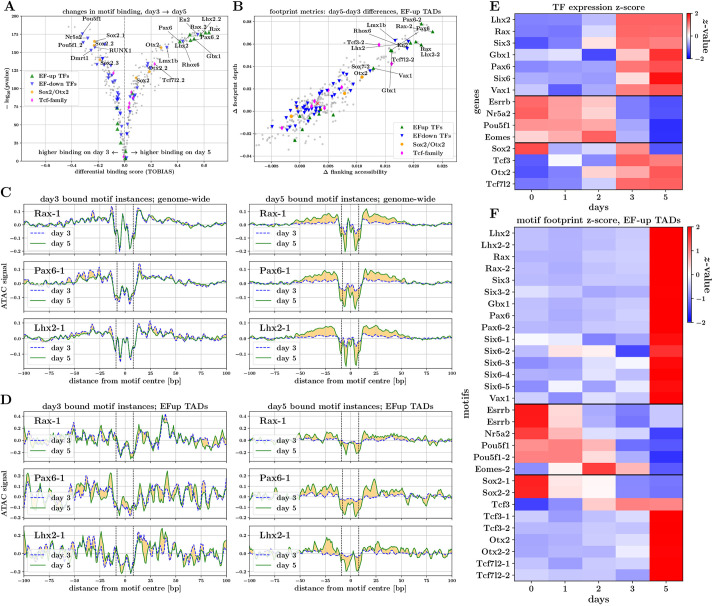
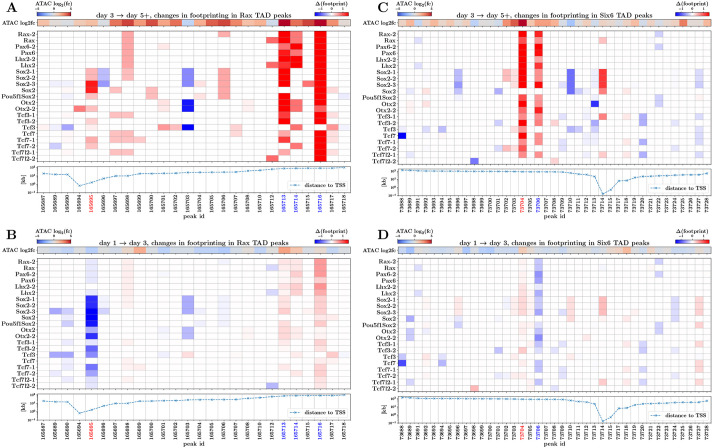
Specification of the eye field (EF) within the neural plate marks the earliest detectable stage of eye development. Experimental evidence, primarily from non-mammalian model systems, indicates that the stable formation of this group of cells requires the activation of a set of key transcription factors. This crucial event is challenging to probe in mammals and, quantitatively, little is known regarding the regulation of the transition of cells to this ocular fate. Using optic vesicle organoids to model the onset of the EF, we generate time-course transcriptomic data allowing us to identify dynamic gene expression programmes that characterize this cellular-state transition. Integrating this with chromatin accessibility data suggests a direct role of canonical EF transcription factors in regulating these gene expression changes, and highlights candidate cis-regulatory elements through which these transcription factors act. Finally, we begin to test a subset of these candidate enhancer elements, within the organoid system, by perturbing the underlying DNA sequence and measuring transcriptomic changes during EF activation.
眼区(EF)在神经板内的特化标志着眼睛发育最早可检测的阶段。主要来自非哺乳动物模型系统的实验证据表明,这群细胞的稳定形成需要一组关键转录因子的激活。这一关键事件在哺乳动物中难以探测,并且关于细胞向眼命运的转变的调控,从数量上看,我们知之甚少。使用视囊器官来模拟 EF 的起始,我们生成了时程转录组学数据,使我们能够识别出描述这种细胞状态转变的动态基因表达程序。将其与染色质可及性数据相结合表明,经典 EF 转录因子在调节这些基因表达变化中具有直接作用,并突出了候选顺式调控元件,这些转录因子通过这些元件发挥作用。最后,我们开始在器官样系统中通过扰动基础 DNA 序列并在 EF 激活期间测量转录组变化,来测试这些候选增强子元件中的一部分。