
益生菌ATCC - 7469无细胞滤液对从一份历史手稿中分离出的真菌菌株的抗真菌活性
Antifungal Activity of Cell-Free Filtrate of Probiotic Bacteria ATCC-7469 against Fungal Strains Isolated from a Historical Manuscript.
作者信息
Abdel-Nasser Mahmoud, Abdel-Maksoud Gomaa, Eid Ahmed M, Hassan Saad El-Din, Abdel-Nasser Aya, Alharbi Maha, Elkelish Amr, Fouda Amr
机构信息
Department of Manuscripts Conservation, Al-Azhar Al-Sharif Library, Cairo 11511, Egypt.
Conservation Department, Faculty of Archaeology, Cairo University, Giza 12613, Egypt.
出版信息
Microorganisms. 2023 Apr 23;11(5):1104. doi: 10.3390/microorganisms11051104.
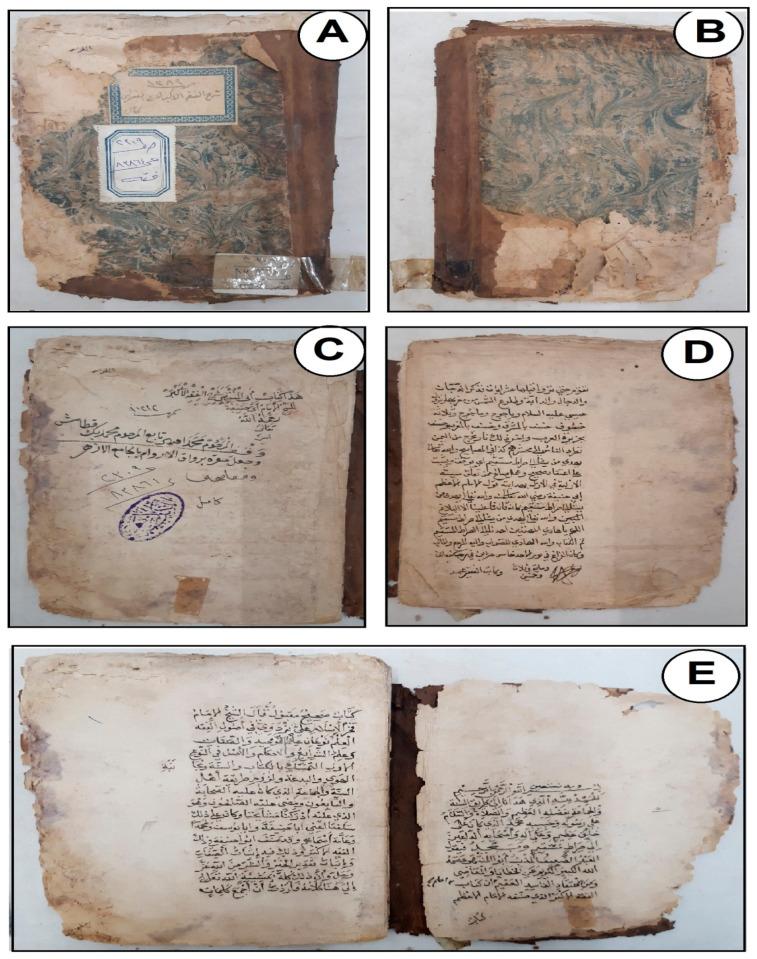
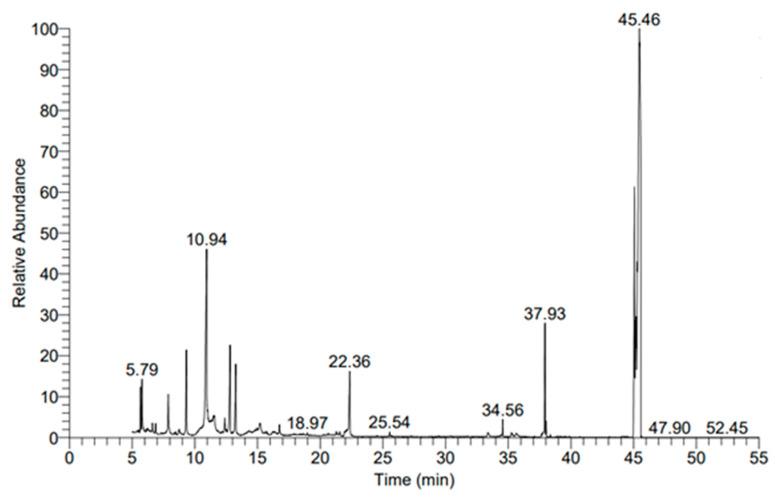
Herein, twelve fungal strains were isolated from a deteriorated historical manuscript dated back to the 18th century. The obtained fungal strains were identified, using the traditional method and ITS sequence analysis, as (two strains), (five strains), (one strain), (two strains), (one strain), and (one strain). The ability of these fungal strains to degrade the main components of the paper was investigated by their activity to secrete extracellular enzymes including cellulase, amylase, gelatinase, and pectinase. The cell-free filtrate (CFF) ability of the probiotic bacterial strain ATCC-7469 to inhibit fungal growth was investigated. The metabolic profile of CFF was detected by GC-MS analysis, which confirmed the low and high molecular weight of various active chemical compounds. The safe dose to be used for the biocontrol of fungal growth was selected by investigating the biocompatibility of CFF and two normal cell lines, Wi38 (normal lung tissue) and HFB4 (normal human skin melanocyte). Data showed that the CFF has a cytotoxic effect against the two normal cell lines at high concentrations, with IC values of 525.2 ± 9.8 and 329.1 ± 4.2 µg mL for Wi38 and HFB4, respectively. The antifungal activity showed that the CFF has promising activity against all fungal strains in a concentration-dependent manner. The highest antifungal activity (100%) was recorded for a concentration of 300 µg mL with a zone of inhibition (ZOI) in the ranges of 21.3 ± 0.6 to 17.7 ± 0.5 mm. At a concentration of 100 µg mL, the activity of CFF remained effective against all fungal strains (100%), but its effectiveness decreased to only inhibit the growth of eight strains (66%) out of the total at 50 µg mL. In general, probiotic bacterial strains containing CFF are safe and can be considered as a potential option for inhibiting the growth of various fungal strains. It is recommended that they be used in the preservation of degraded historical papers.
在此,从一份可追溯到18世纪的破损历史手稿中分离出了12株真菌菌株。使用传统方法和ITS序列分析,将获得的真菌菌株鉴定为(两株)、(五株)、(一株)、(两株)、(一株)和(一株)。通过这些真菌菌株分泌包括纤维素酶、淀粉酶、明胶酶和果胶酶在内的细胞外酶的活性,研究了它们降解纸张主要成分的能力。研究了益生菌菌株ATCC - 7469的无细胞滤液(CFF)抑制真菌生长的能力。通过气相色谱 - 质谱分析检测了CFF的代谢谱,证实了各种活性化合物的低分子量和高分子量。通过研究CFF与两种正常细胞系Wi38(正常肺组织)和HFB4(正常人皮肤黑素细胞)的生物相容性,选择了用于生物防治真菌生长的安全剂量。数据显示,CFF在高浓度下对这两种正常细胞系具有细胞毒性作用,Wi38和HFB4的IC值分别为525.2±9.8和329.1±4.2μg/mL。抗真菌活性表明,CFF对所有真菌菌株具有良好的浓度依赖性活性。在浓度为300μg/mL时,记录到最高抗真菌活性(100%),抑菌圈(ZOI)范围为21.3±0.6至17.7±0.5mm。在浓度为100μg/mL时,CFF的活性对所有真菌菌株仍然有效(100%),但在50μg/mL时,其有效性仅降低到抑制总数中的8株菌株(66%)生长。总体而言,含有CFF的益生菌菌株是安全的,可以被视为抑制各种真菌菌株生长的潜在选择。建议将它们用于保存已降解的历史纸张。




 Zotero 插件