Zhou Lingli, Luo Yingying, Wang Yan, Cheng Yao, Zhang Rui, Zhang Simin, Gong Siqian, Han Xueyao, Ji Linong
Department of Endocrinology and Metabolism, Peking University People's Hospital, Beijing, China.
Department of Endocrinology and Metabolism, People's Hospital of Deyang City, Deyang, Sichuan, China.
Front Clin Diabetes Healthc. 2023 May 30;4:1172208. doi: 10.3389/fcdhc.2023.1172208. eCollection 2023.
This study aimed to investigate the clinical implications of fasting serum insulin (FINS) levels in subjects with type 2 diabetes who were receiving insulin therapy.
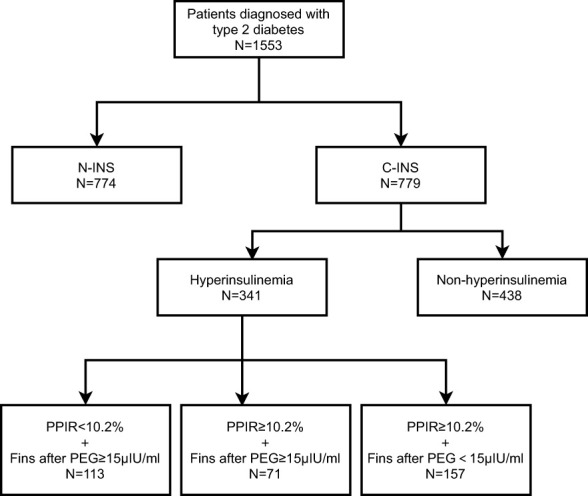
A total of 1,553 subjects with type 2 diabetes [774 subjects who had never received insulin treatment (N-INS) and 779 subjects who were receiving insulin therapy (constant insulin treatment, C-INS)] admitted to the Department of Endocrinology and Metabolism of Peking University People's Hospital were enrolled in this study. Their FINS levels were measured and those with hyperinsulinemia were identified. The underlying mechanisms of hyperinsulinemia were revealed by measuring insulin antibodies (IAs) and analyzing changes in FINS levels before and after polyethylene glycol (PEG) precipitation. In addition, the clinical characteristics of patients with different types of hyperinsulinemia were compared.
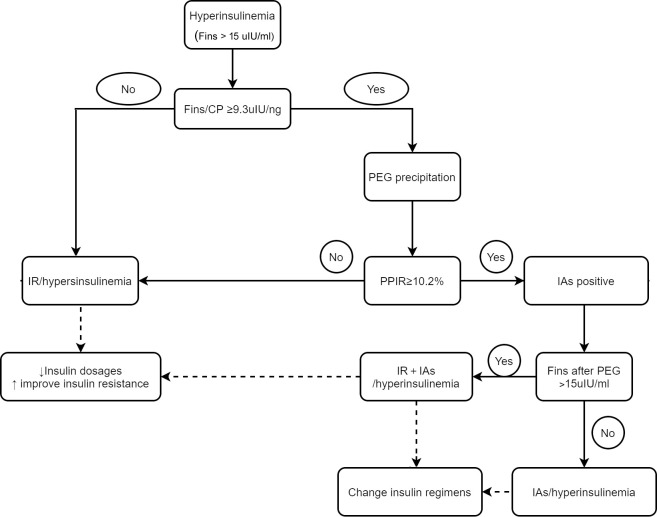
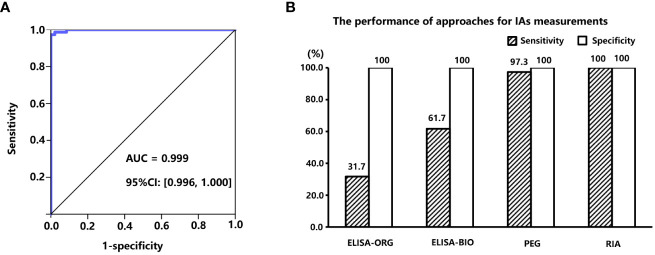
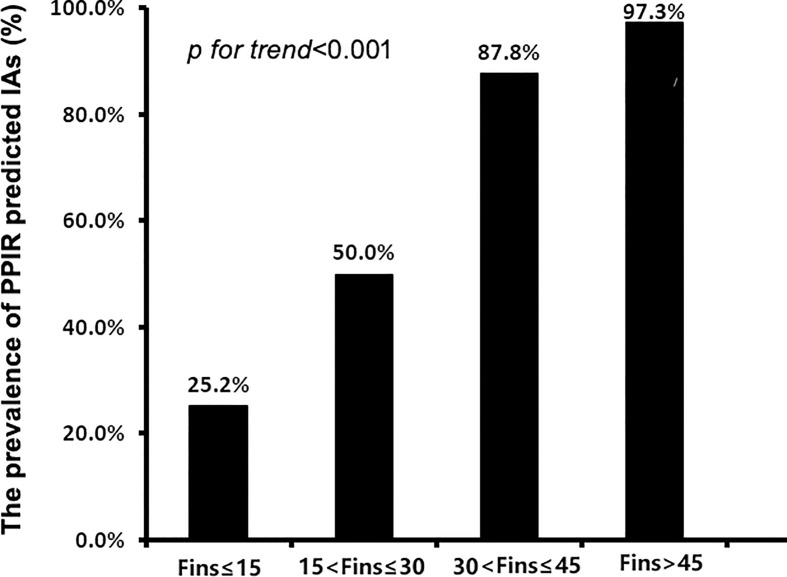
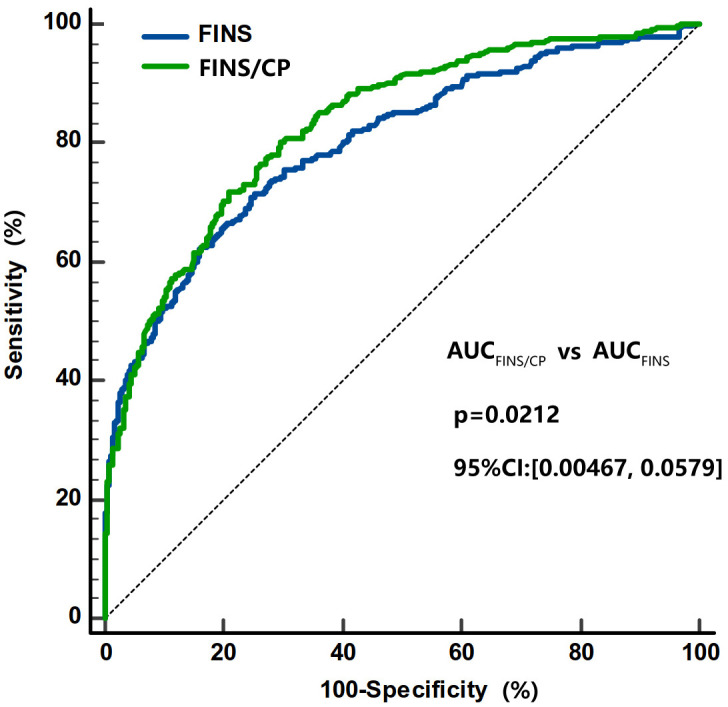
Higher FINS levels and a higher incidence (43.8%, 341/779) of hyperinsulinemia (FINS > 15μIU/mL) were observed in subjects with C-INS than in subjects with N-INS. Among subjects with C-INS and hyperinsulinemia, 66.9% (228/341) were IAs positive, and the incidence of IAs was found to be positively associated with FINS level. By performing PEG precipitation, we found that all subjects without IAs (i.e., those with real hyperinsulinemia) and 31.1% of subjects (71/228) with IAs (i.e., those with both real and IAs-related hyperinsulinemia) still had hyperinsulinemia after PEG precipitation, whereas FINS levels in the other 68.9% of subjects (157/228) with IAs were normal (IAs-related hyperinsulinemia) after PEG precipitation. Comparisons between the groups showed that subjects with real hyperinsulinemia showed more obvious insulin resistance characteristics, including higher lipid levels, BMIs, and homoeostasis model assessment2-estimated insulin resistance (HOMA2-IR) index, and were more likely to have hypertension, obesity, and metabolic syndromes ( < 0.05). However, the risk of hypoglycemia and glucose variability increased significantly in subjects with IAs compared with those without IAs. A cutoff of FINS to serum C-peptide ratio (≥ 9.3μIU/ng) could be used to screen IAs in clinical practice with 83.3% sensitivity and 70% specificity.
It is necessary to measure FINS in subjects with C-INS to distinguish between types of hyperinsulinemia, which should help to tailor treatment regimens.
本研究旨在探讨接受胰岛素治疗的2型糖尿病患者空腹血清胰岛素(FINS)水平的临床意义。
北京大学人民医院内分泌代谢科收治的1553例2型糖尿病患者[774例从未接受过胰岛素治疗的患者(N-INS)和779例接受胰岛素治疗的患者(持续胰岛素治疗,C-INS)]纳入本研究。测量他们的FINS水平,并识别出高胰岛素血症患者。通过检测胰岛素抗体(IAs)并分析聚乙二醇(PEG)沉淀前后FINS水平的变化,揭示高胰岛素血症的潜在机制。此外,比较不同类型高胰岛素血症患者的临床特征。
与N-INS患者相比,C-INS患者的FINS水平更高,高胰岛素血症(FINS>15μIU/mL)的发生率更高(43.8%,341/779)。在C-INS和高胰岛素血症患者中,66.9%(228/341)的IAs呈阳性,且IAs的发生率与FINS水平呈正相关。通过进行PEG沉淀,我们发现所有无IAs的患者(即真正的高胰岛素血症患者)和31.1%的有IAs的患者(71/228,即既有真正的高胰岛素血症又有IAs相关的高胰岛素血症患者)在PEG沉淀后仍有高胰岛素血症,而其他68.9%的有IAs的患者(157/228)在PEG沉淀后的FINS水平正常(IAs相关的高胰岛素血症)。组间比较显示,真正的高胰岛素血症患者表现出更明显的胰岛素抵抗特征,包括更高的血脂水平、体重指数和稳态模型评估2-估计胰岛素抵抗(HOMA2-IR)指数,并且更有可能患有高血压、肥胖症和代谢综合征(<0.05)。然而,与无IAs的患者相比,有IAs的患者低血糖和血糖变异性的风险显著增加。FINS与血清C肽比值的临界值(≥9.3μIU/ng)可用于临床实践中筛查IAs,灵敏度为83.3%,特异度为70%。
有必要对C-INS患者测量FINS以区分高胰岛素血症的类型,这有助于制定治疗方案。