Kodippili Kasun, Rudnicki Michael A
The Sprott Centre for Stem Cell Research, Regenerative Medicine Program, Ottawa Hospital Research Institute, Ottawa, ON, Canada.
Department of Cellular and Molecular Medicine, Faculty of Medicine, University of Ottawa, Ottawa, ON, Canada.
Front Physiol. 2023 May 30;14:1180980. doi: 10.3389/fphys.2023.1180980. eCollection 2023.
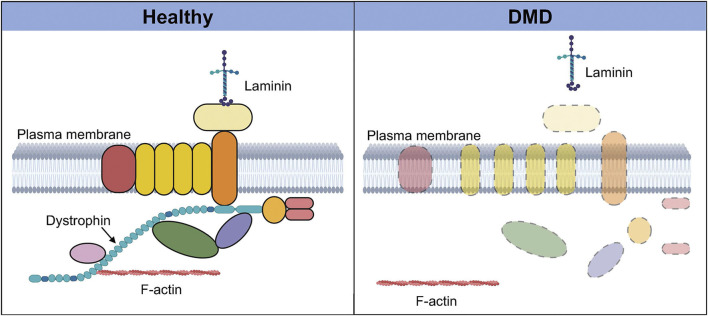
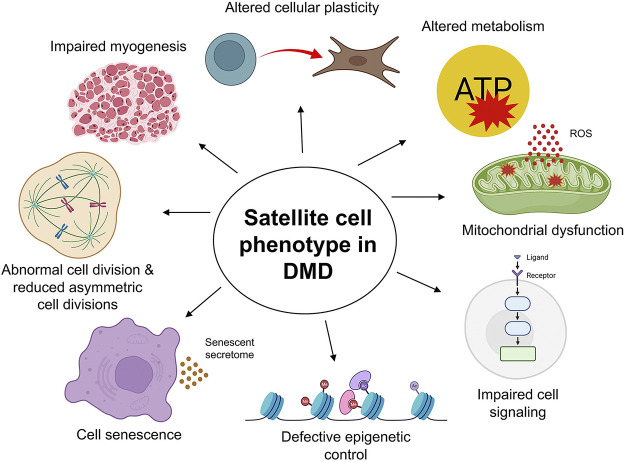
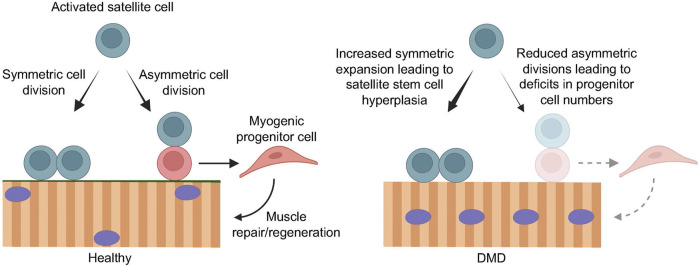
Progressive muscle weakness and degeneration characterize Duchenne muscular dystrophy (DMD), a lethal, x-linked neuromuscular disorder that affects 1 in 5,000 boys. Loss of dystrophin protein leads to recurrent muscle degeneration, progressive fibrosis, chronic inflammation, and dysfunction of skeletal muscle resident stem cells, called satellite cells. Unfortunately, there is currently no cure for DMD. In this mini review, we discuss how satellite cells in dystrophic muscle are functionally impaired, and how this contributes to the DMD pathology, and the tremendous potential of restoring endogenous satellite cell function as a viable treatment strategy to treat this debilitating and fatal disease.
进行性肌肉无力和变性是杜氏肌营养不良症(DMD)的特征,这是一种致命的X连锁神经肌肉疾病,每5000名男孩中就有1人受影响。肌营养不良蛋白的缺失会导致反复的肌肉变性、进行性纤维化、慢性炎症以及骨骼肌驻留干细胞(即卫星细胞)功能障碍。不幸的是,目前尚无治愈DMD的方法。在这篇小型综述中,我们讨论了营养不良肌肉中的卫星细胞在功能上是如何受损的,以及这如何导致DMD的病理变化,还讨论了恢复内源性卫星细胞功能作为治疗这种使人衰弱且致命疾病的可行治疗策略的巨大潜力。