Kisthardt Samantha C, Thanissery Rajani, Pike Colleen M, Foley Matthew H, Theriot Casey M
North Carolina State University, College of Veterinary Medicine, Department of Population Health and Pathobiology, Raleigh, NC.
Department of Food, Bioprocessing and Nutrition Sciences, College of Agriculture and Life Sciences, North Carolina State University, Raleigh, NC, USA.
bioRxiv. 2023 Jun 7:2023.06.06.543867. doi: 10.1101/2023.06.06.543867.
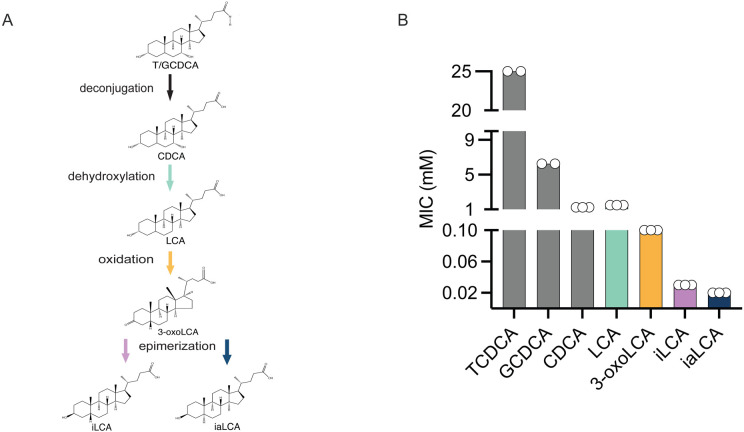
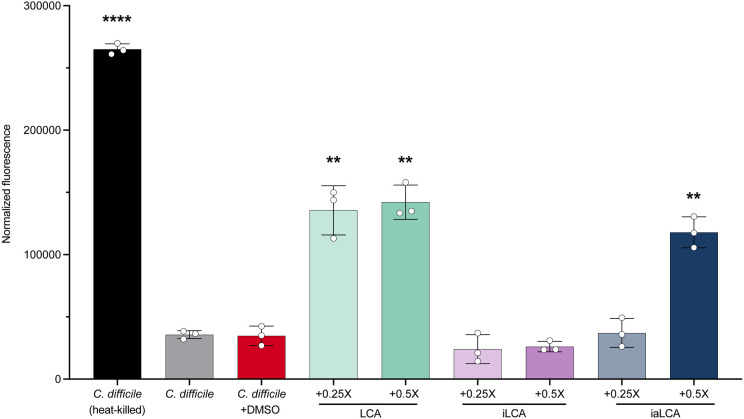
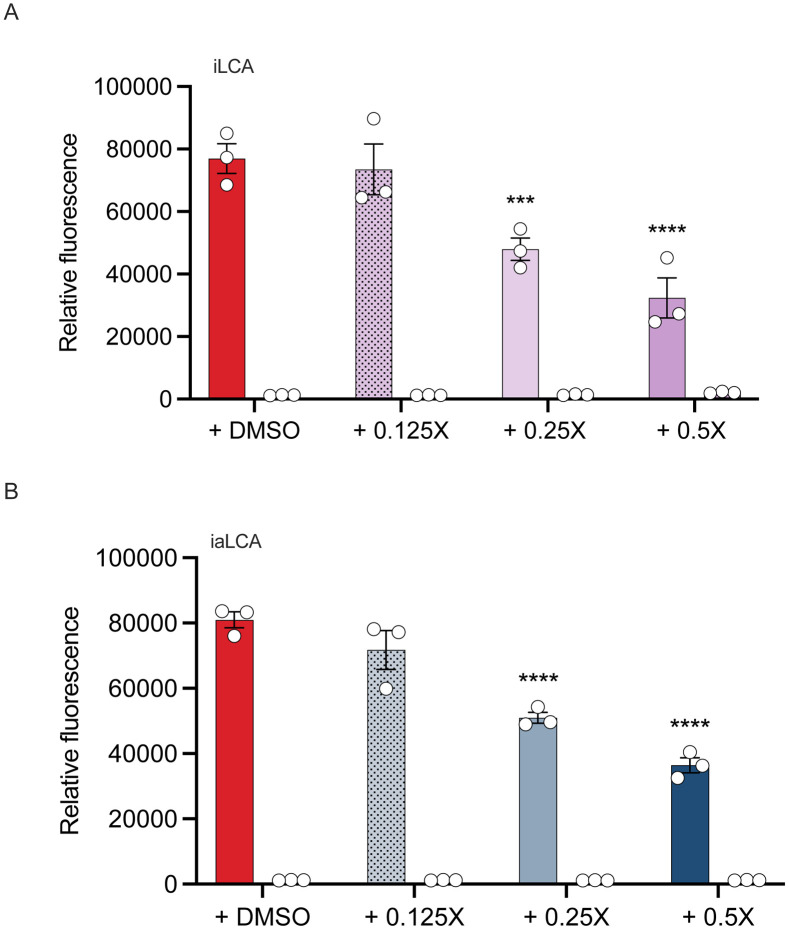
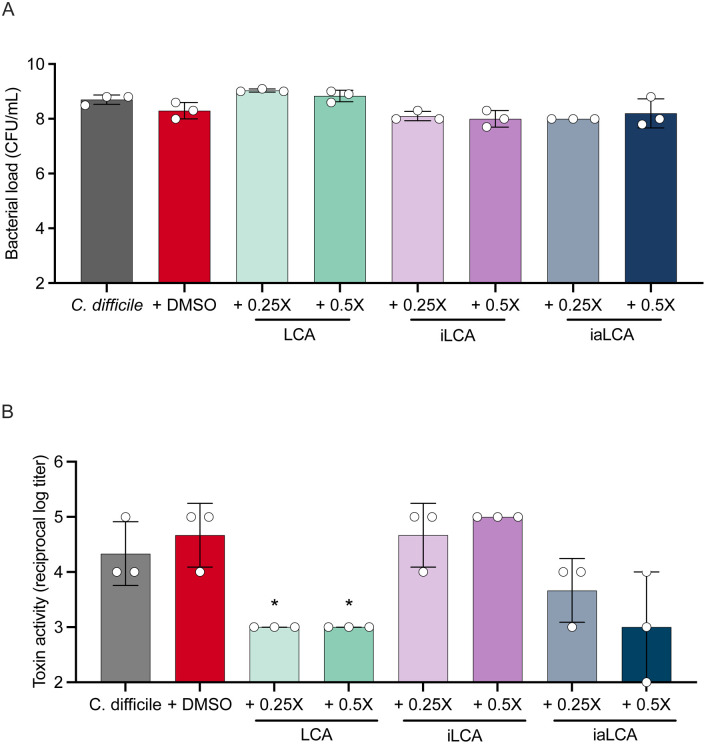
infection (CDI) is associated with antibiotic usage, which disrupts the indigenous gut microbiota and causes the loss of microbial derived secondary bile acids that normally provide protection against colonization. Previous work has shown that the secondary bile acid lithocholate (LCA) and its epimer isolithocholate (iLCA) have potent inhibitory activity against clinically relevant strains. To further characterize the mechanisms by which LCA and its epimers iLCA and isoallolithocholate (iaLCA) inhibit we tested their minimum inhibitory concentration (MIC) against R20291, and a commensal gut microbiota panel. We also performed a series of experiments to determine the mechanism of action by which LCA and its epimers inhibit through bacterial killing and effects on toxin expression and activity. Here we show that epimers iLCA and iaLCA strongly inhibit growth while sparing most commensal Gram-negative gut microbes. We also show that iLCA and iaLCA have bactericidal activity against and these epimers cause significant bacterial membrane damage at subinhibitory concentrations. Finally, we observe that iLCA and iaLCA decrease the expression of the large cytotoxin while LCA significantly reduces toxin activity. Although iLCA and iaLCA are both epimers of LCA, they have distinct mechanisms for inhibiting . LCA epimers, iLCA and iaLCA, represent promising compounds that target with minimal effects on members of the gut microbiota that are important for colonization resistance.
In the search for a novel therapeutic that targets , bile acids have become a viable solution. Epimers of bile acids are particularly attractive as they may provide protection against while leaving the indigenous gut microbiota largely unaltered. This study shows that iLCA and iaLCA specifically are potent inhibitors of , affecting key virulence factors including growth, toxin expression and activity. As we move toward the use of bile acids as therapeutics, further work will be required to determine how best to deliver these bile acids to a target site within the host intestinal tract.
艰难梭菌感染(CDI)与抗生素使用有关,抗生素使用会破坏肠道内的微生物群,并导致微生物衍生的次级胆汁酸流失,而这些次级胆汁酸通常可提供抵御定植的保护作用。先前的研究表明,次级胆汁酸石胆酸(LCA)及其差向异构体异石胆酸(iLCA)对临床相关菌株具有强大的抑制活性。为了进一步阐明LCA及其差向异构体iLCA和异去氢石胆酸(iaLCA)抑制艰难梭菌的机制,我们测试了它们对艰难梭菌菌株R20291以及一组肠道共生微生物群的最低抑菌浓度(MIC)。我们还进行了一系列实验,以确定LCA及其差向异构体通过细菌杀伤以及对毒素表达和活性的影响来抑制艰难梭菌的作用机制。在此我们表明,差向异构体iLCA和iaLCA强烈抑制艰难梭菌的生长,同时对大多数共生革兰氏阴性肠道微生物无影响。我们还表明,iLCA和iaLCA对艰难梭菌具有杀菌活性,并且这些差向异构体在亚抑菌浓度下会导致明显的细菌膜损伤。最后,我们观察到iLCA和iaLCA会降低大细胞毒素的表达,而LCA会显著降低毒素活性。尽管iLCA和iaLCA都是LCA的差向异构体,但它们抑制艰难梭菌的机制不同。LCA的差向异构体iLCA和iaLCA是有前景的化合物,它们靶向艰难梭菌,对肠道微生物群中对定植抗性很重要的成员影响最小。
在寻找靶向艰难梭菌的新型疗法的过程中,胆汁酸已成为一种可行的解决方案。胆汁酸的差向异构体特别有吸引力,因为它们可能在很大程度上不改变肠道内的微生物群的情况下提供抵御艰难梭菌的保护作用。这项研究表明,iLCA和iaLCA是艰难梭菌的有效抑制剂,会影响包括生长、毒素表达和活性在内的关键毒力因子。随着我们朝着将胆汁酸用作治疗方法的方向发展,将需要进一步的研究来确定如何以最佳方式将这些胆汁酸递送至宿主肠道内的靶位点。