Department of General Surgery, The First Affiliated Hospital of Dalian Medical University, Dalian, Liaoning, People's Republic of China.
Institute (College) of Integrative Medicine, Dalian Medical University, Dalian, Liaoning, People's Republic of China.
Microbiol Spectr. 2023 Aug 17;11(4):e0366422. doi: 10.1128/spectrum.03664-22. Epub 2023 Jun 20.
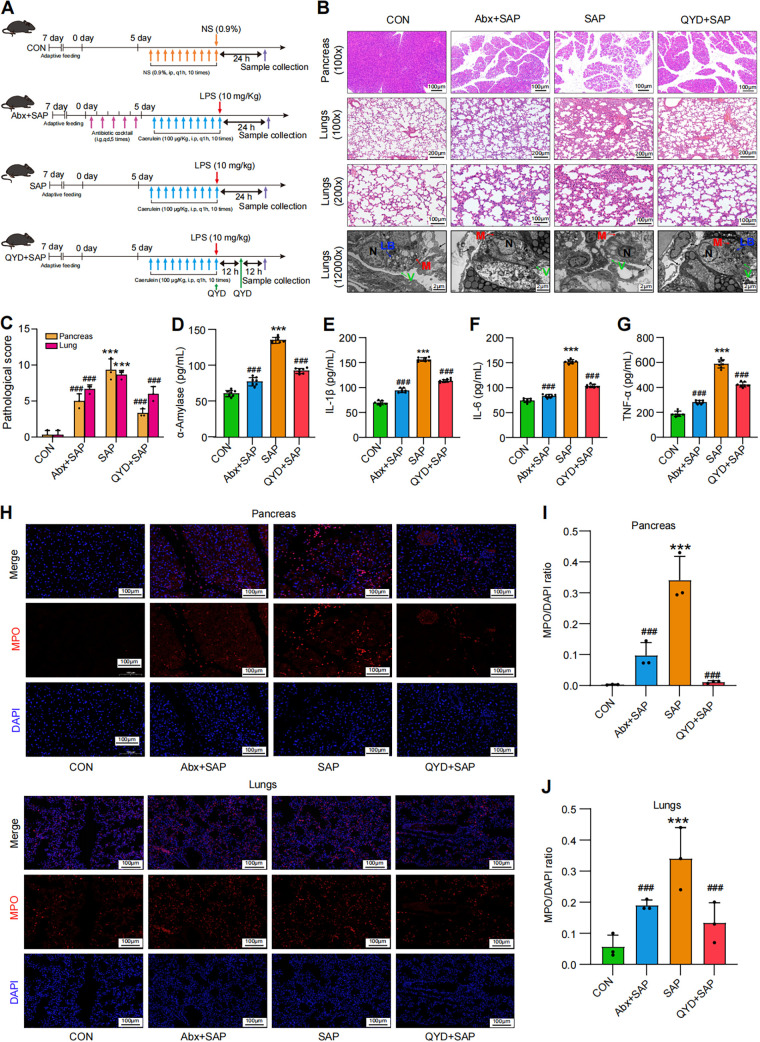
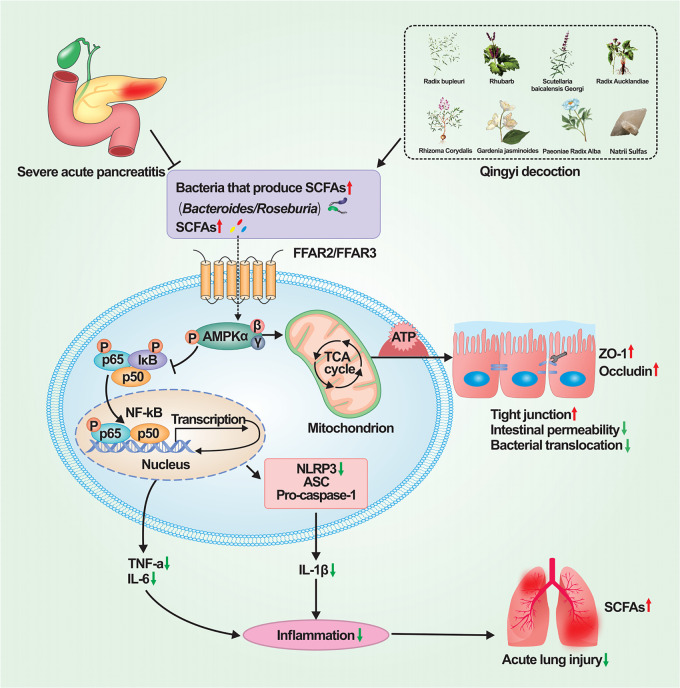
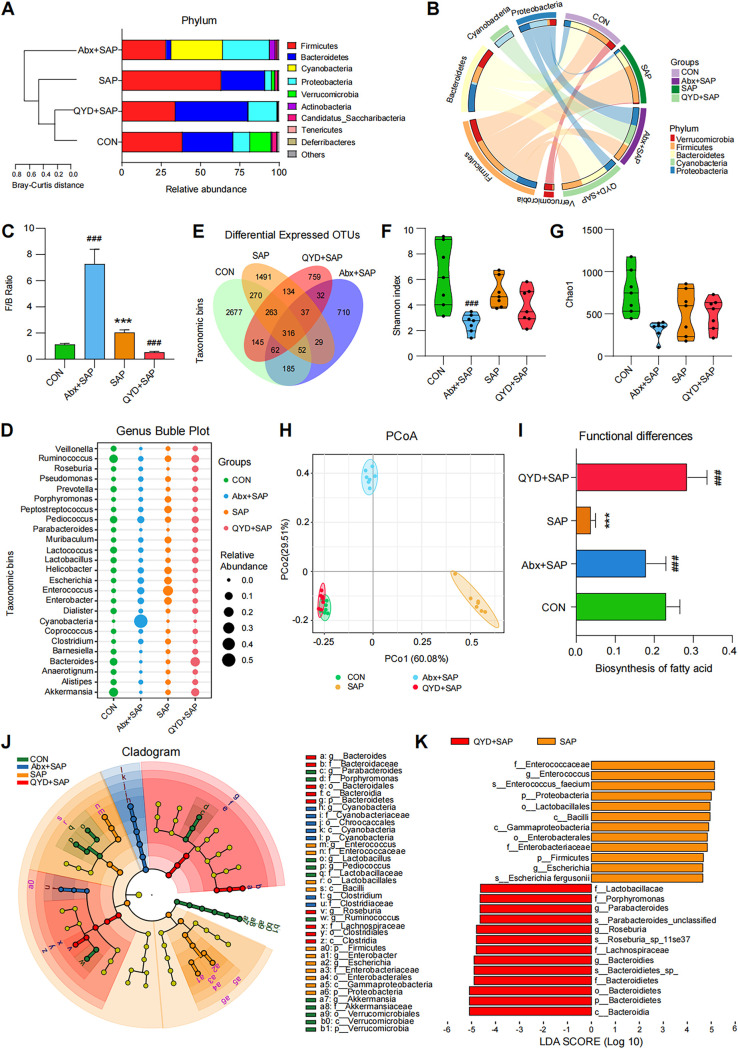
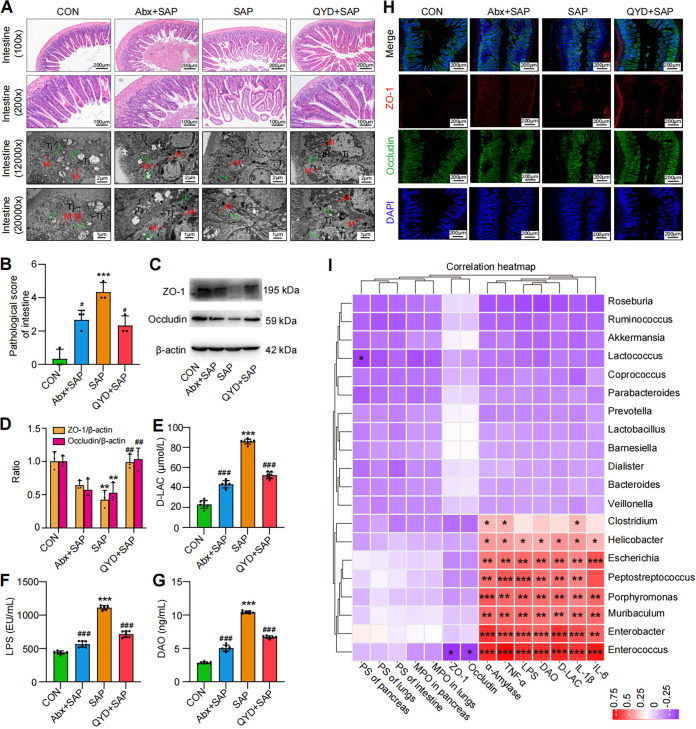
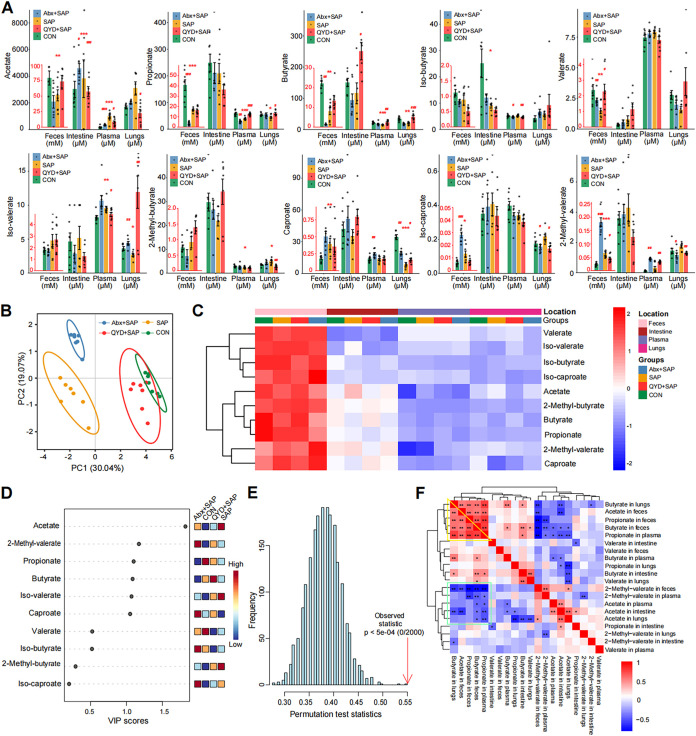
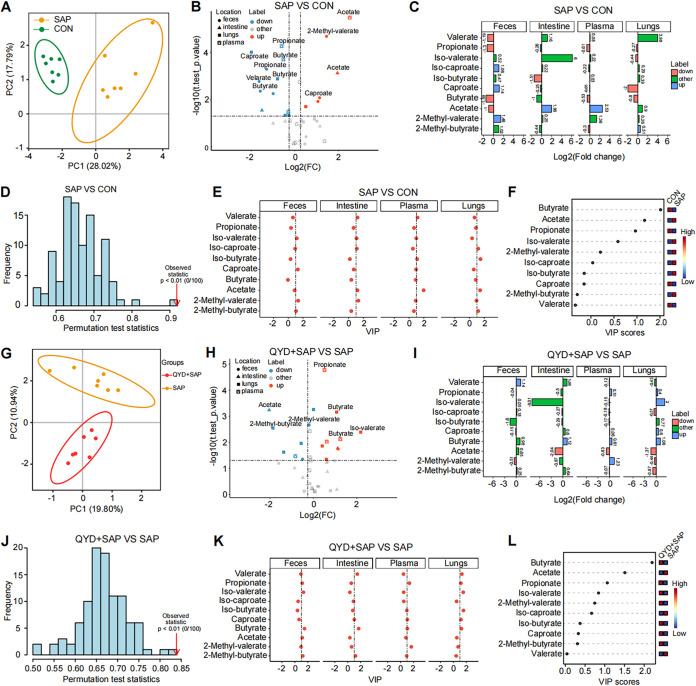
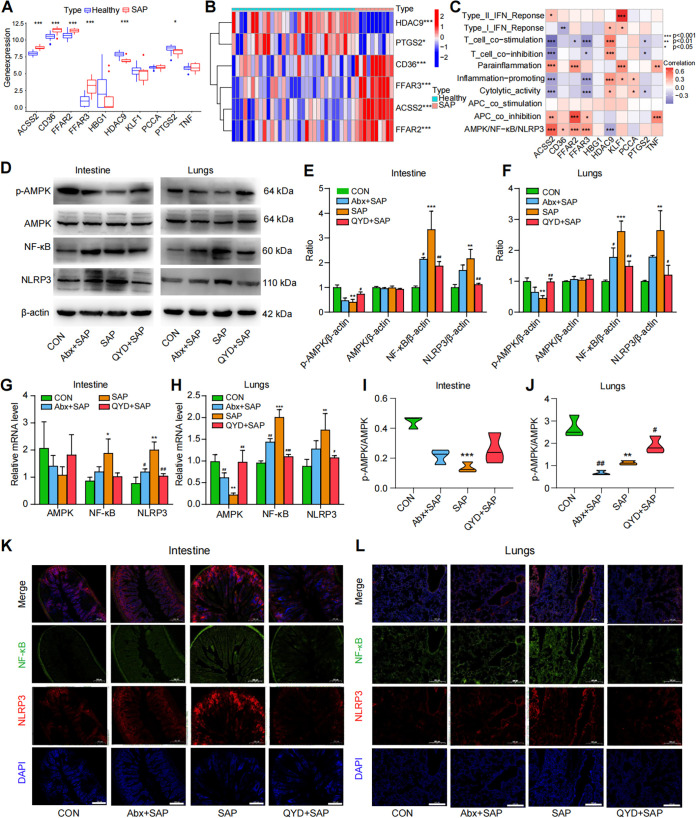
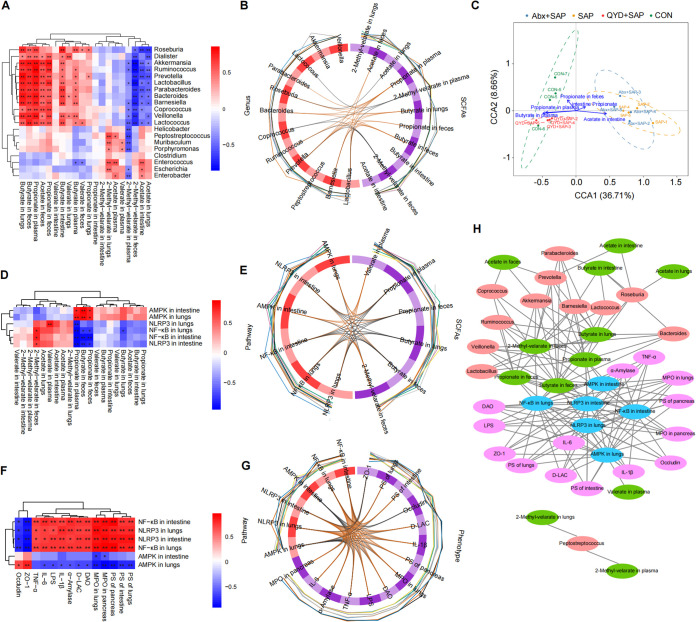
The pivotal roles of gut microbiota in severe acute pancreatitis-associated acute lung injury (SAP-ALI) are increasingly revealed, and recent discoveries in the gut-lung axis have provided potential approaches for treating SAP-ALI. Qingyi decoction (QYD), a traditional Chinese medicine (TCM), is commonly used in clinical to treat SAP-ALI. However, the underlying mechanisms remain to be fully elucidated. Herein, by using a caerulein plus lipopolysaccharide (LPS)-induced SAP-ALI mice model and antibiotics (Abx) cocktail-induced pseudogermfree mice model, we tried to uncover the roles of the gut microbiota by administration of QYD and explored its possible mechanisms. Immunohistochemical results showed that the severity of SAP-ALI and intestinal barrier functions could be affected by the relative depletion of intestinal bacteria. The composition of gut microbiota was partially recovered after QYD treatment with decreased / ratio and increased relative abundance in short-chain fatty acids (SCFAs)-producing bacteria. Correspondingly increased levels of SCFAs (especially propionate and butyrate) in feces, gut, serum, and lungs were observed, generally consistent with changes in microbes. Western-blot analysis and RT-qPCR results indicated that the AMPK/NF-κB/NLRP3 signaling pathway was activated after oral administration of QYD, which was found to be possibly related to the regulatory effects on SCFAs in the intestine and lungs. In conclusion, our study provides new insights into treating SAP-ALI through modulating the gut microbiota and has prospective practical value for clinical use in the future. Gut microbiota affects the severity of SAP-ALI and intestinal barrier function. During SAP, a significant increase in the relative abundance of gut pathogens (Escherichia, , Enterobacter, , ) was observed. At the same time, QYD treatment decreased pathogenic bacteria and increased the relative abundance of SCFAs-producing bacteria (, , , , ). In addition, The AMPK/NF-κB/NLRP3 pathway mediated by SCFAs along the gut-lung axis may play an essential role in preventing the pathogenesis of SAP-ALI, which allows for reduced systemic inflammation and restoration of the intestinal barrier.
肠道微生物群在重症急性胰腺炎相关性急性肺损伤(SAP-ALI)中的关键作用日益凸显,而肠道-肺部轴的最新发现为治疗 SAP-ALI 提供了潜在方法。清胰汤(QYD)是一种常用的中药(TCM),用于临床治疗 SAP-ALI。然而,其潜在机制仍有待充分阐明。在此,我们通过使用鹅脱氧胆酸钠加脂多糖(LPS)诱导的 SAP-ALI 小鼠模型和抗生素(Abx)鸡尾酒诱导的无菌小鼠模型,尝试通过给予 QYD 来揭示肠道微生物群的作用,并探讨其可能的机制。免疫组织化学结果表明,肠道细菌的相对耗竭可影响 SAP-ALI 的严重程度和肠道屏障功能。QYD 治疗后,肠道微生物群的组成部分得到恢复,短链脂肪酸(SCFA)产生菌的/比值降低,相对丰度增加。粪便、肠道、血清和肺部中的 SCFA(特别是丙酸盐和丁酸盐)水平相应升高,与微生物变化基本一致。Western blot 分析和 RT-qPCR 结果表明,口服 QYD 后激活了 AMPK/NF-κB/NLRP3 信号通路,这可能与 QYD 对肠道和肺部 SCFA 的调节作用有关。总之,本研究通过调节肠道微生物群为治疗 SAP-ALI 提供了新的思路,对未来临床应用具有潜在的实用价值。
肠道微生物群影响 SAP-ALI 的严重程度和肠道屏障功能。在 SAP 期间,观察到肠道病原体(大肠杆菌、肠杆菌、克雷伯菌、变形杆菌)的相对丰度显著增加。同时,QYD 治疗降低了致病菌的丰度,增加了 SCFA 产生菌(双歧杆菌、拟杆菌、乳酸杆菌、真杆菌)的相对丰度。此外,SCFA 沿肠道-肺部轴通过 AMPK/NF-κB/NLRP3 通路可能在预防 SAP-ALI 发病机制中发挥重要作用,从而减少全身炎症反应和恢复肠道屏障。