Department of Neurology, Massachusetts General Hospital, Boston, MA, USA.
Harvard Medical School, Cambridge, MA, USA.
Acta Neuropathol. 2023 Aug;146(2):191-210. doi: 10.1007/s00401-023-02600-1. Epub 2023 Jun 21.
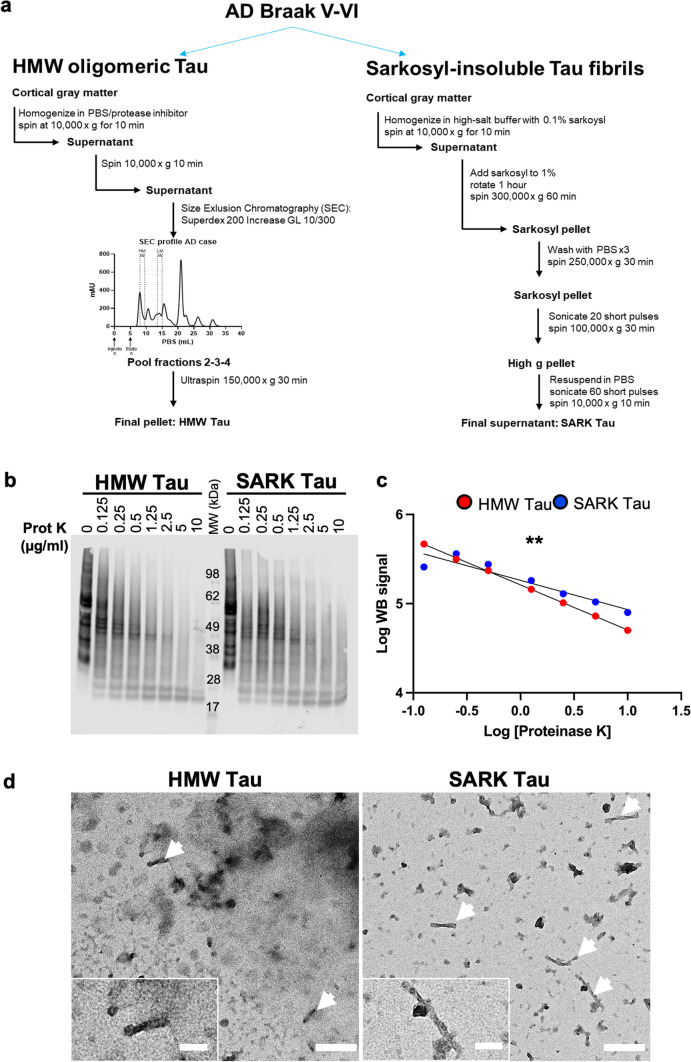
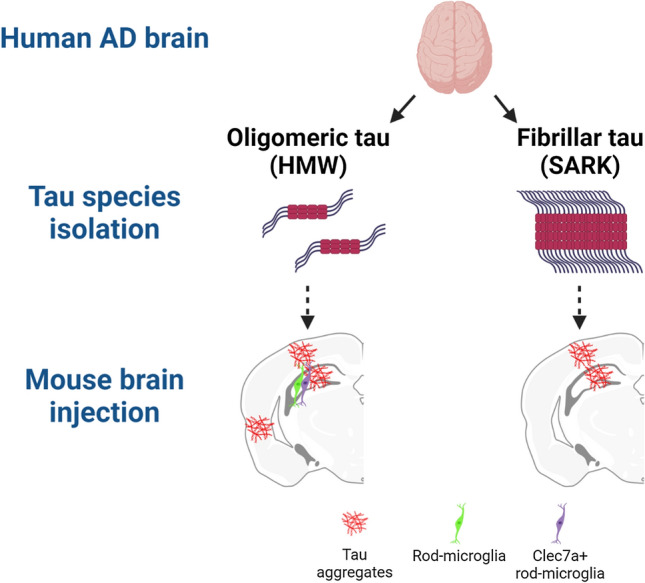
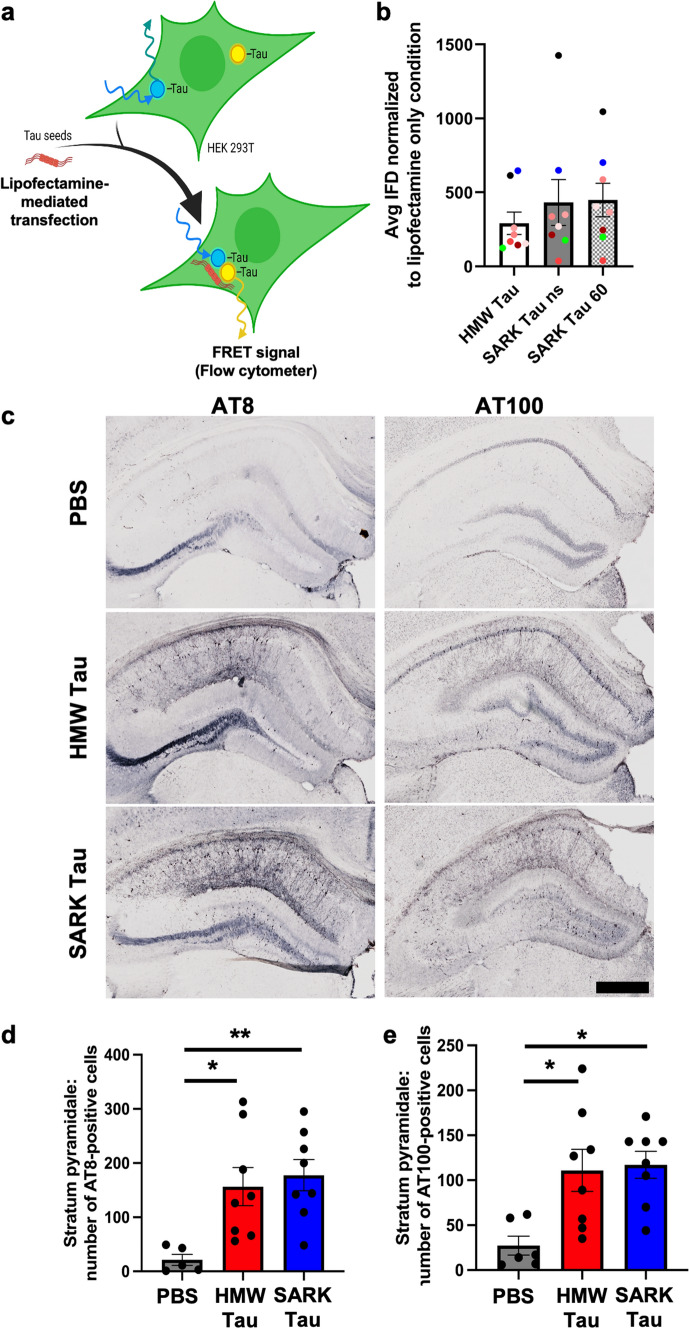
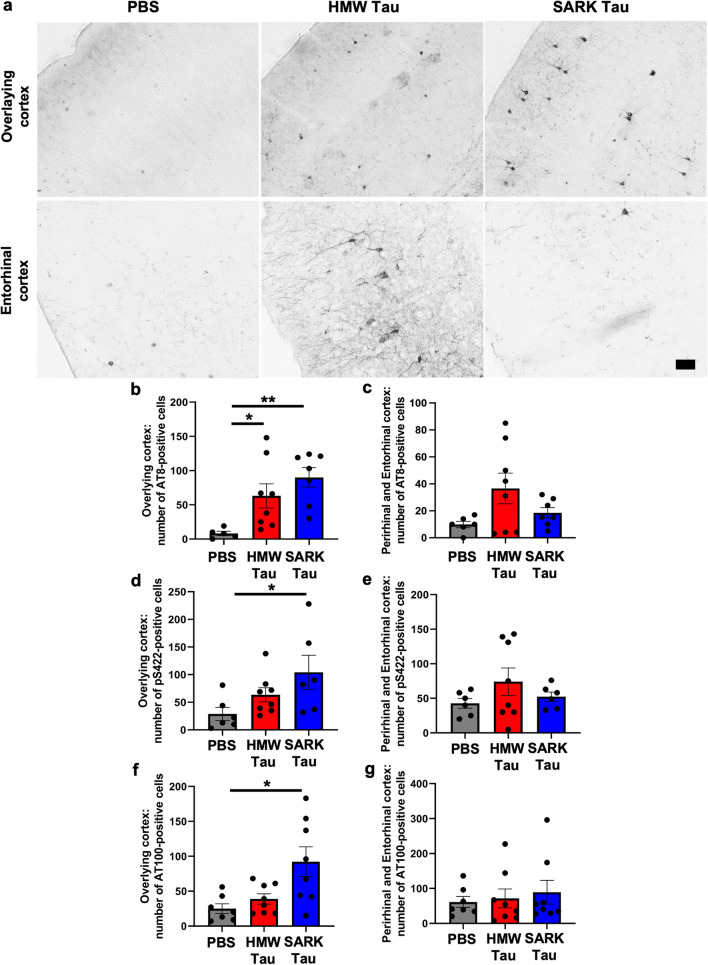
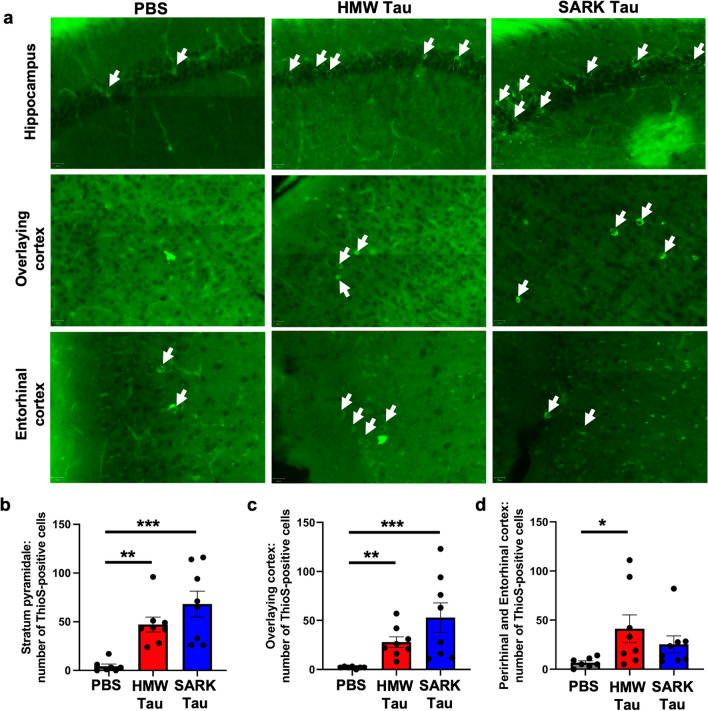
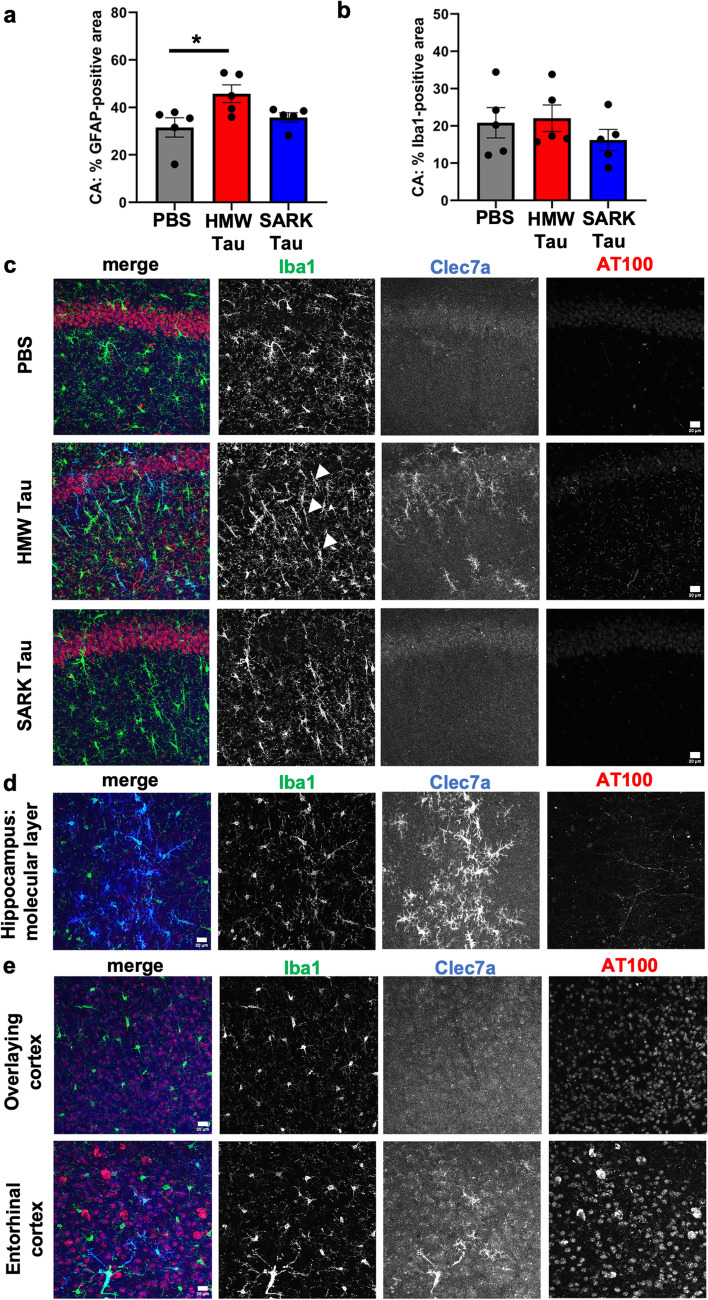
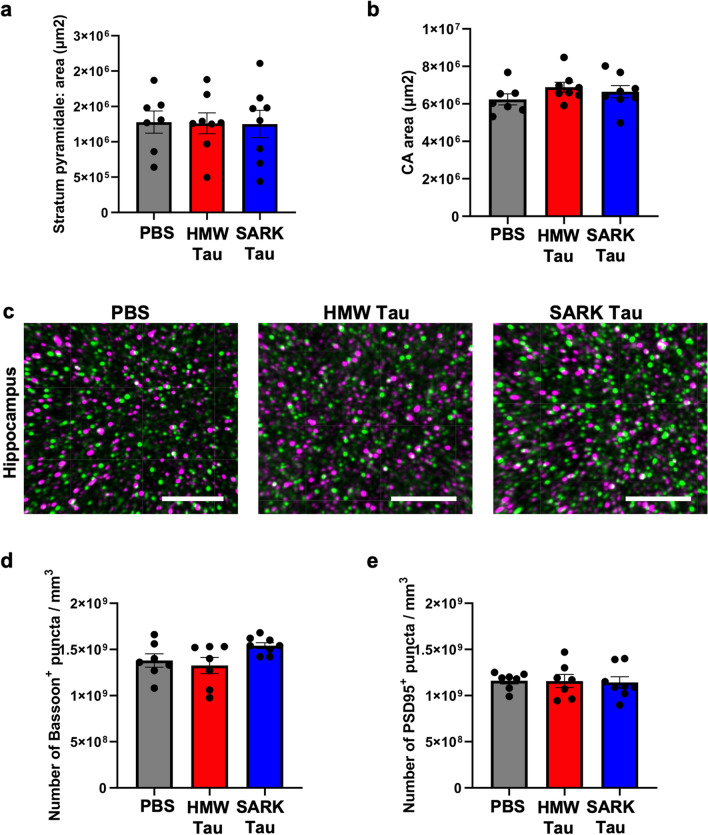
Insoluble fibrillar tau, the primary constituent of neurofibrillary tangles, has traditionally been thought to be the biologically active, toxic form of tau mediating neurodegeneration in Alzheimer's disease. More recent studies have implicated soluble oligomeric tau species, referred to as high molecular weight (HMW), due to their properties on size-exclusion chromatography, in tau propagation across neural systems. These two forms of tau have never been directly compared. We prepared sarkosyl-insoluble and HMW tau from the frontal cortex of Alzheimer patients and compared their properties using a variety of biophysical and bioactivity assays. Sarkosyl-insoluble fibrillar tau comprises abundant paired-helical filaments (PHF) as quantified by electron microscopy (EM) and is more resistant to proteinase K, compared to HMW tau, which is mostly in an oligomeric form. Sarkosyl-insoluble and HMW tau are nearly equivalent in potency in HEK cell bioactivity assay for seeding aggregates, and their injection reveals similar local uptake into hippocampal neurons in PS19 Tau transgenic mice. However, the HMW preparation appears to be far more potent in inducing a glial response including Clec7a-positive rod microglia in the absence of neurodegeneration or synapse loss and promotes more rapid propagation of misfolded tau to distal, anatomically connected regions, such as entorhinal and perirhinal cortices. These data suggest that soluble HMW tau has similar properties to fibrillar sarkosyl-insoluble tau with regard to tau seeding potential, but may be equal or even more bioactive with respect to propagation across neural systems and activation of glial responses, both relevant to tau-related Alzheimer phenotypes.
不溶性纤维状 tau 是神经原纤维缠结的主要成分,传统上被认为是介导阿尔茨海默病神经退行性变的生物活性、毒性形式的 tau。最近的研究表明,可溶性寡聚 tau 物种,由于其在尺寸排阻色谱上的特性而被称为高分子量(HMW),与 tau 在神经系统中的传播有关。这两种形式的 tau 从未被直接比较过。我们从阿尔茨海默病患者的额皮质中制备了 Sarkosyl 不溶性和 HMW tau,并使用各种生物物理和生物活性测定方法比较了它们的性质。Sarkosyl 不溶性纤维状 tau 包含大量的双螺旋丝(PHF),这可以通过电子显微镜(EM)来定量,并比 HMW tau 更能抵抗蛋白酶 K,HMW tau 主要以寡聚形式存在。Sarkosyl 不溶性和 HMW tau 在 HEK 细胞生物活性测定中用于接种聚集体的效力几乎相当,并且它们的注射显示出在 PS19 Tau 转基因小鼠中类似的局部摄取到海马神经元。然而,与 Sarkosyl 不溶性 tau 相比,HMW 制剂在诱导神经胶质反应方面似乎更为有效,包括无神经退行性变或突触丧失的 Clec7a 阳性杆状小胶质细胞,并促进错误折叠的 tau 更迅速地向远距离、解剖连接的区域传播,如内嗅皮质和旁嗅皮质。这些数据表明,可溶性 HMW tau 在 tau 接种潜力方面与纤维状 Sarkosyl 不溶性 tau 具有相似的性质,但在跨神经系统传播和激活神经胶质反应方面可能具有同等甚至更高的生物活性,这与 tau 相关的阿尔茨海默病表型有关。