Pearce David R, Akarca Ayse U, De Maeyer Roel P H, Kostina Emily, Huebner Ariana, Sivakumar Monica, Karasaki Takahiro, Shah Kavina, Janes Sam M, McGranahan Nicholas, Reddy Venkat, Akbar Arne N, Moore David A, Marafioti Teresa, Swanton Charles, Hynds Robert E
Cancer Research UK (CRUK) Lung Cancer Centre of Excellence, UCL Cancer Institute, University College London, London, United Kingdom.
Cancer Evolution and Genome Stability Laboratory, The Francis Crick Institute, London, United Kingdom.
Front Oncol. 2023 Jun 5;13:1156743. doi: 10.3389/fonc.2023.1156743. eCollection 2023.
Patient-derived xenograft (PDX) models involve the engraftment of tumour tissue in immunocompromised mice and represent an important pre-clinical oncology research method. A limitation of non-small cell lung cancer (NSCLC) PDX model derivation in NOD- IL2Rgamma (NSG) mice is that a subset of initial engraftments are of lymphocytic, rather than tumour origin.
The immunophenotype of lymphoproliferations arising in the lung TRACERx PDX pipeline were characterised. To present the histology data herein, we developed a Python-based tool for generating patient-level pathology overview figures from whole-slide image files; PATHOverview is available on GitHub (https://github.com/EpiCENTR-Lab/PATHOverview).
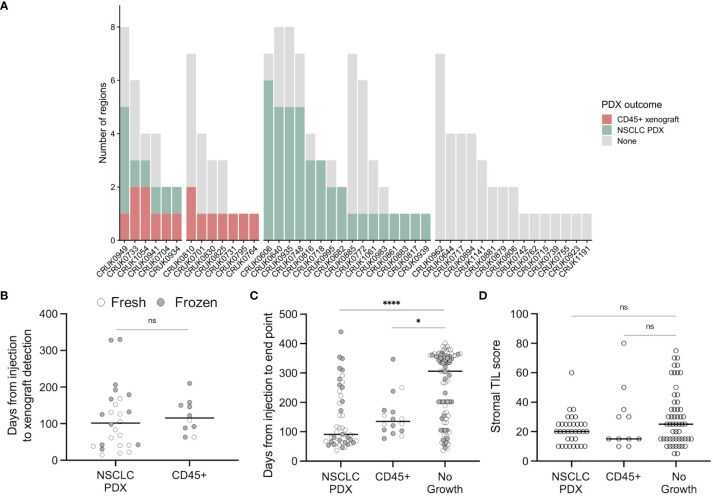
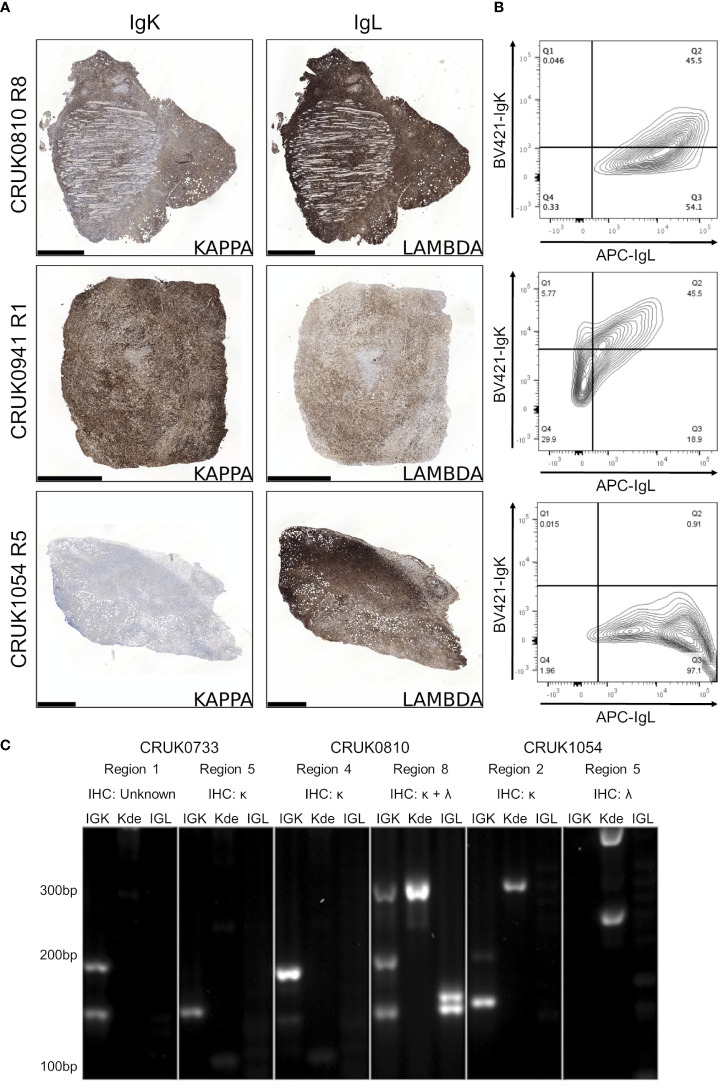
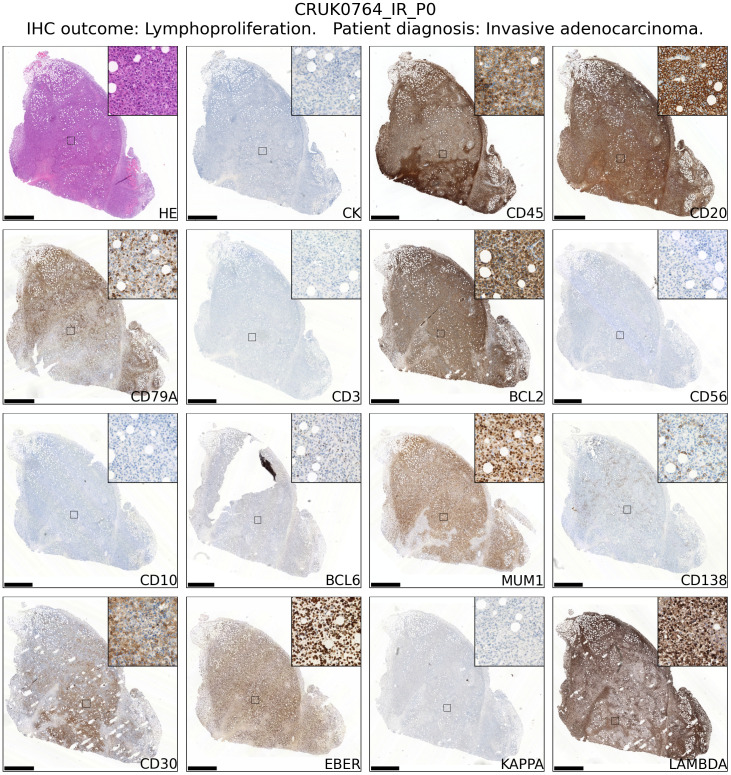
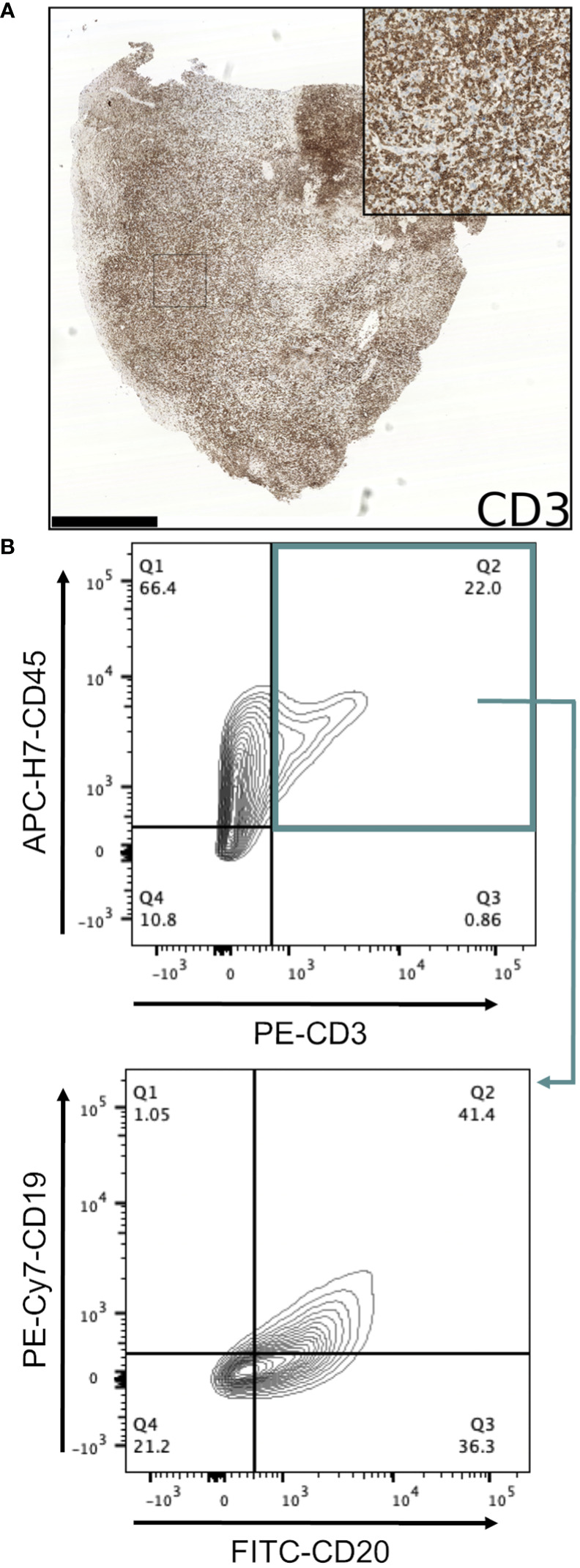
Lymphoproliferations occurred in 17.8% of lung adenocarcinoma and 10% of lung squamous cell carcinoma transplantations, despite none of these patients having a prior or subsequent clinical history of lymphoproliferative disease. Lymphoproliferations were predominantly human CD20+ B cells and had the immunophenotype expected for post-transplantation diffuse large B cell lymphoma with plasma cell features. All lymphoproliferations expressed Epstein-Barr-encoded RNAs (EBER). Analysis of immunoglobulin light chain gene rearrangements in three tumours where multiple tumour regions had resulted in lymphoproliferations suggested that each had independent clonal origins.
Overall, these data suggest that B cell clones with lymphoproliferative potential are present within primary NSCLC tumours, and that these are under continuous immune surveillance. Since these cells can be expanded following transplantation into NSG mice, our data highlight the value of quality control measures to identify lymphoproliferations within xenograft pipelines and support the incorporation of strategies to minimise lymphoproliferations during the early stages of xenograft establishment pipelines.
患者来源的异种移植(PDX)模型涉及将肿瘤组织移植到免疫缺陷小鼠体内,是临床前肿瘤学研究的一种重要方法。在NOD-IL2Rγ(NSG)小鼠中建立非小细胞肺癌(NSCLC)PDX模型的一个局限性在于,最初移植的一部分是淋巴细胞源性而非肿瘤源性。
对在肺TRACERx PDX流程中出现的淋巴细胞增殖的免疫表型进行了表征。为了展示本文的组织学数据,我们开发了一种基于Python的工具,用于从全切片图像文件生成患者水平的病理概况图;PATHOverview可在GitHub上获取(https://github.com/EpiCENTR-Lab/PATHOverview)。
在17.8%的肺腺癌和10%的肺鳞癌移植中出现了淋巴细胞增殖,尽管这些患者均无淋巴细胞增殖性疾病的既往或后续临床病史。淋巴细胞增殖主要是人类CD20+B细胞,具有移植后弥漫性大B细胞淋巴瘤伴浆细胞特征的预期免疫表型。所有淋巴细胞增殖均表达爱泼斯坦-巴尔病毒编码的RNA(EBER)。对三个肿瘤中多个肿瘤区域导致淋巴细胞增殖的免疫球蛋白轻链基因重排分析表明,每个肿瘤都有独立的克隆起源。
总体而言,这些数据表明原发性NSCLC肿瘤中存在具有淋巴细胞增殖潜力的B细胞克隆,并且这些克隆处于持续的免疫监视之下。由于这些细胞在移植到NSG小鼠后可以扩增,我们的数据突出了质量控制措施在识别异种移植流程中淋巴细胞增殖方面的价值,并支持在异种移植建立流程的早期阶段纳入尽量减少淋巴细胞增殖的策略。